V
Nowa Huta
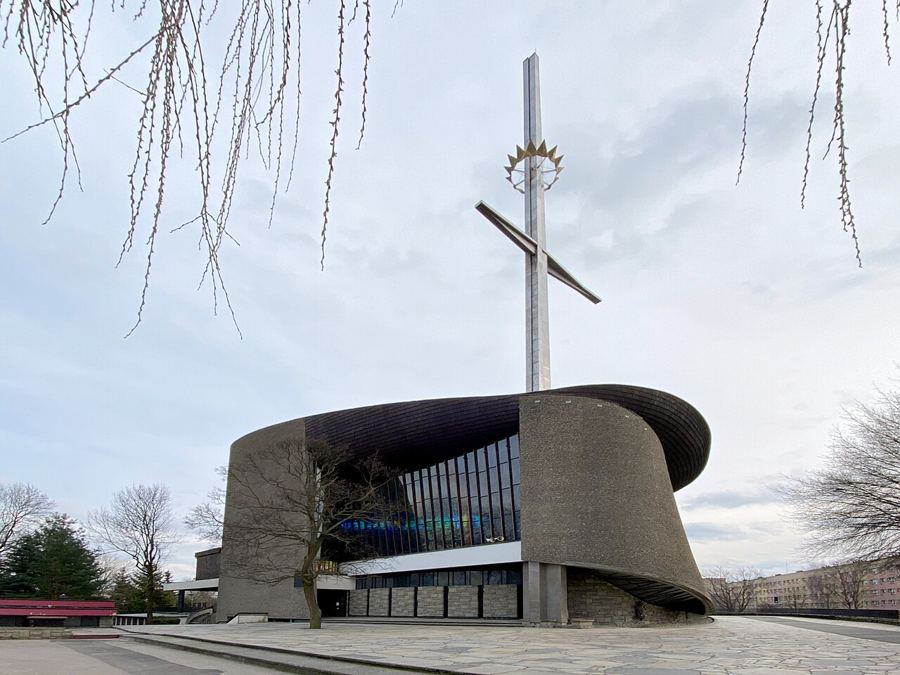
Planned from 1949 as a new town for steelworkers east of Kraków, Nowa Huta centres on Plac Centralny, from which its avenues radiate in a plan inspired by ideal cities. Its residents fought for and built their own church, Arka Pana. At the edge lies medieval Mogiła, with its abbey and mound.
The planned town
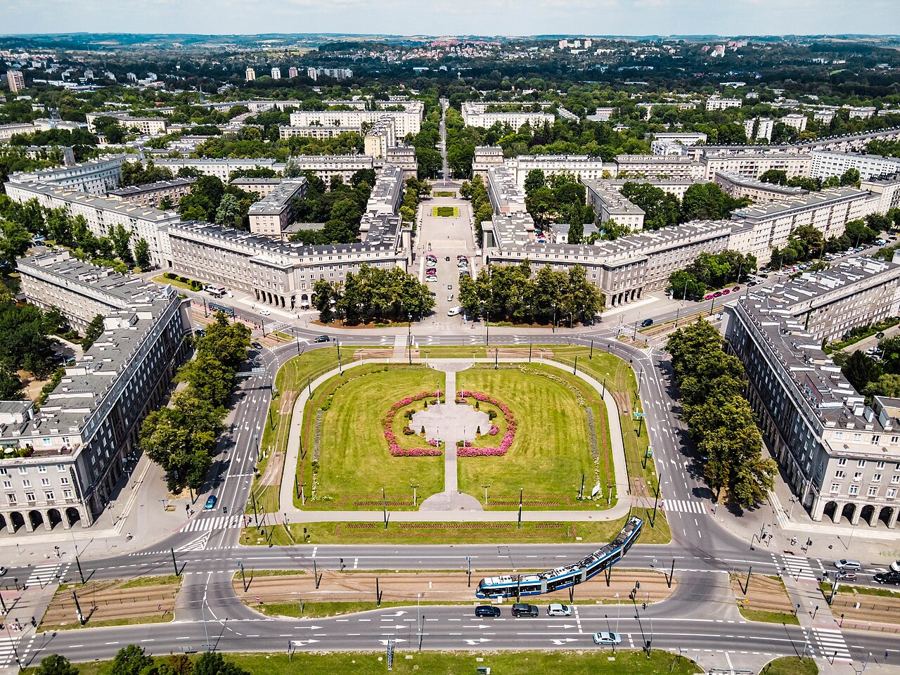 Plac Centralny and the idea of an ideal townNowa Huta began as a planned town for steelworkers. At Plac Centralny, its radiating avenues and socialist realist façades make the plan legible.1949-1950s · 35 min by tram from the Rynek
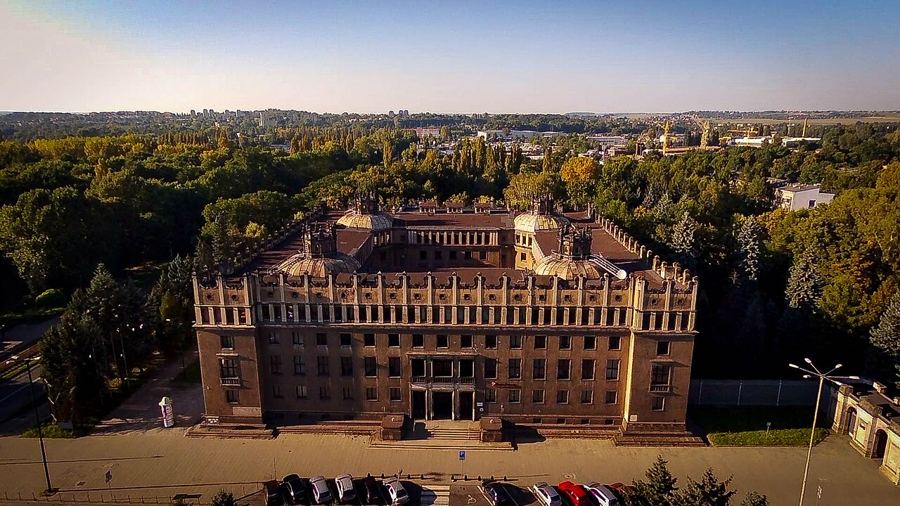 What makes the steelworks’ gate look like a palace?At the main entrance to the Nowa Huta steelworks, two administrative buildings turn a factory approach into an unexpected meeting with Renaissance forms.1950s · 45 min by tram from the Rynek
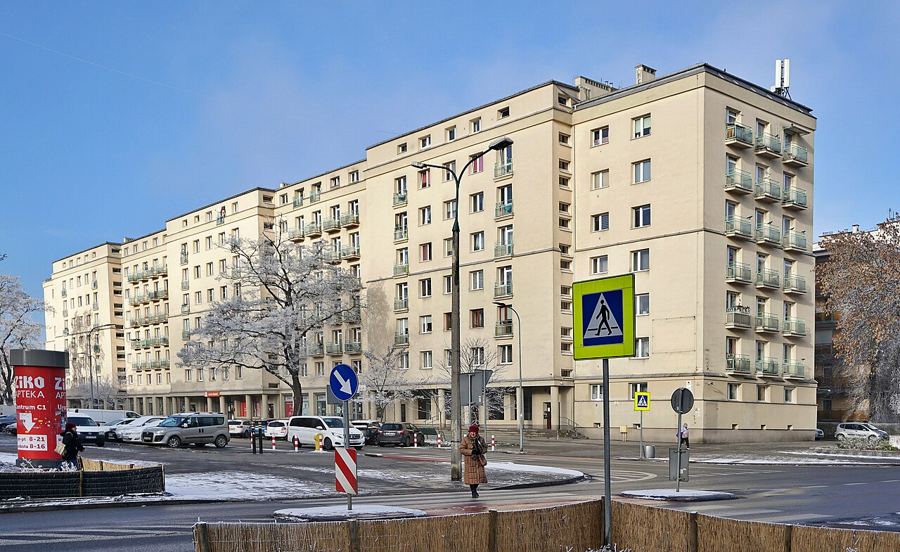 What do the courtyards of Nowa Huta still hold?Built as self-contained estates, Nowa Huta’s housing still carries the imprint of its original plan: schools, shops and green courtyards inside rings of blocks.1950s · 35 min by tram from the Rynek
A church built by hand
Old Mogiła
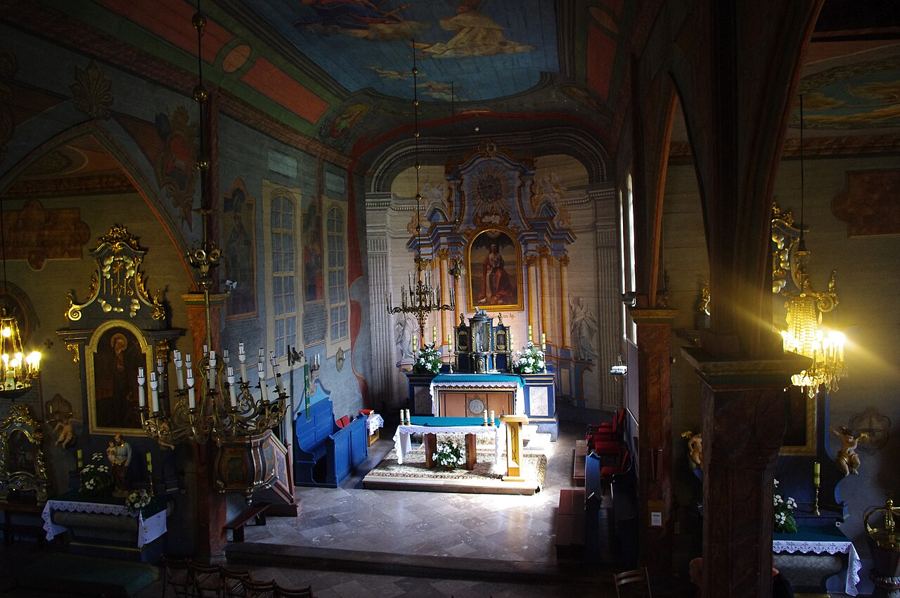 The Cistercians of MogiłaAt Kraków’s eastern edge, a living Cistercian abbey and a wooden church preserve Mogiła’s older story beside Nowa Huta.13th-16th century · 45 min by tram from the Rynek
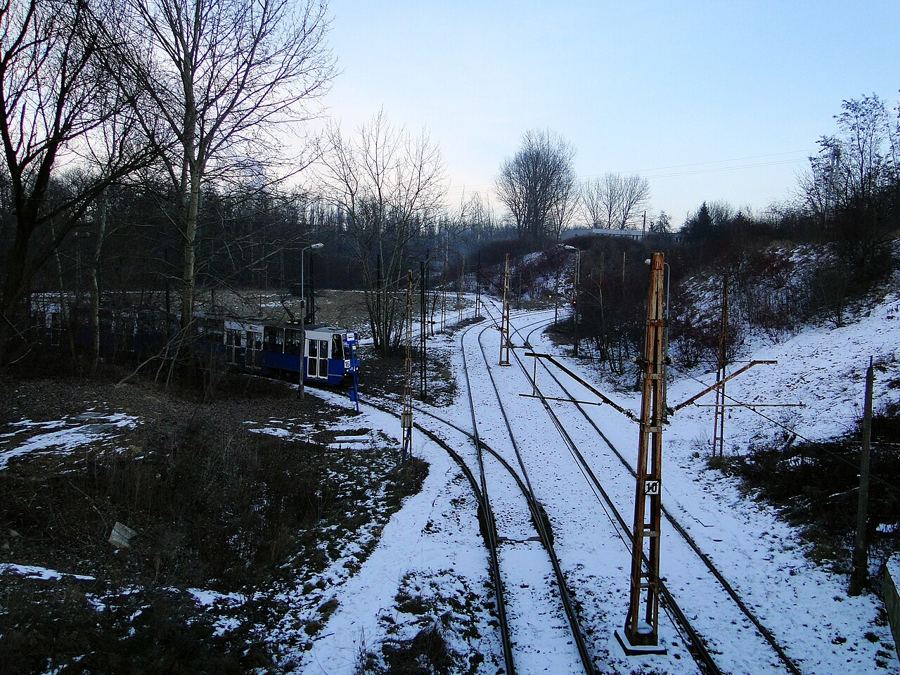 Wanda Mound and the white eagleAt Kraków’s eastern edge, a princess’s legend stands beside the steelworks, beneath a stone monument designed by Jan Matejko and topped with a white eagle.legend; 1890 · 50 min by tram from the Rynek
Photographs used: Piotr Tomaszewski-Guillon / dronographyapplied.com — Creative Commons BY-SA 4.0; TomRollauer — Creative Commons BY-SA 4.0; Igor123121 — Creative Commons BY-SA 4.0; Minderbinder — Creative Commons BY-SA 4.0; Jacek555 (Jacek Plewa) — Creative Commons BY 3.0; Mateusz Giełczyński — Creative Commons BY-SA 4.0