- Period
- 13th-16th century
- Distance
- 45 min by tram from the Rynek
The Cistercians of Mogiła
At Kraków’s eastern edge, a living Cistercian abbey and a wooden church preserve Mogiła’s older story beside Nowa Huta.
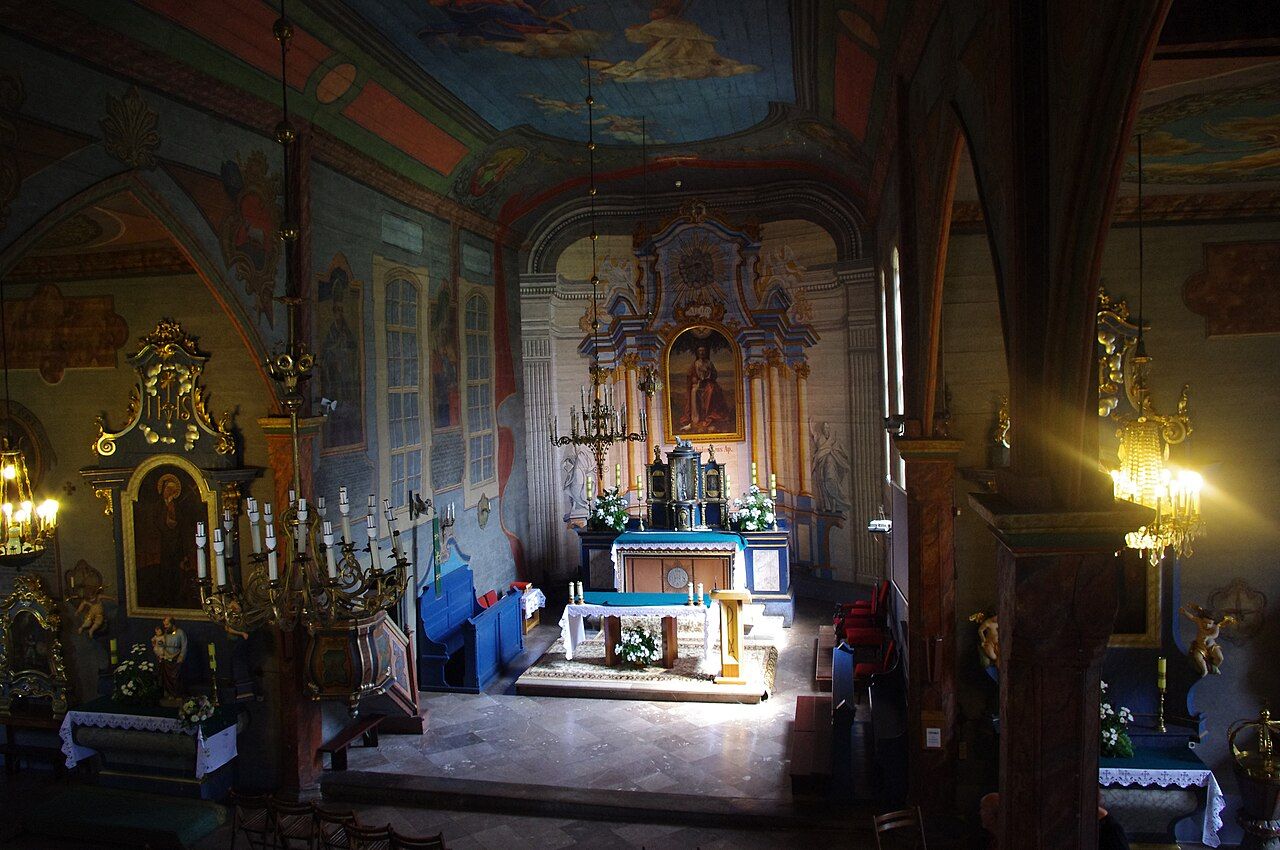
Bishop Iwo Odrowąż brought Cistercian monks to Mogiła in the 1220s. Today, Mogiła lies on the eastern edge of Kraków, beside Nowa Huta, and monks still live at the abbey. I find that fact gives the place a particular weight. Its history is not only something held in old walls; a community is still here, keeping the abbey in the present.
What is the story of Mogiła?
The abbey belongs to a history that reaches back to the 1220s, long before the neighbouring town was part of the picture. I think of Mogiła as a place where different periods sit close together without becoming the same thing. The abbey is here, and Nowa Huta is beside it. That is the simple geography; the feeling of time layered over it comes from the facts themselves.
The story of Kraków’s past has other remembered figures, too, including the mound of the princess who refused a German. Mogiła’s story is quieter in its own way: the monks remain, and the buildings hold their separate histories across the road from one another.
What is inside the abbey church?
The abbey church is dedicated to the Assumption of the Virgin Mary and St Wenceslaus. Inside, a Gothic crucifix is venerated as miraculous. Wall paintings by Stanisław Samostrzelnik from the 16th century also survive in the abbey. I like how these details resist being reduced to a single date or label. Devotion, painting and the continuing life of the monks belong to the same place, though each carries its own kind of time.
What is useful to know?
- Mogiła is 45 min by tram from Rynek.
- The abbey’s era is 13th–16th century.
- The wooden Church of St Bartholomew stands opposite the abbey.
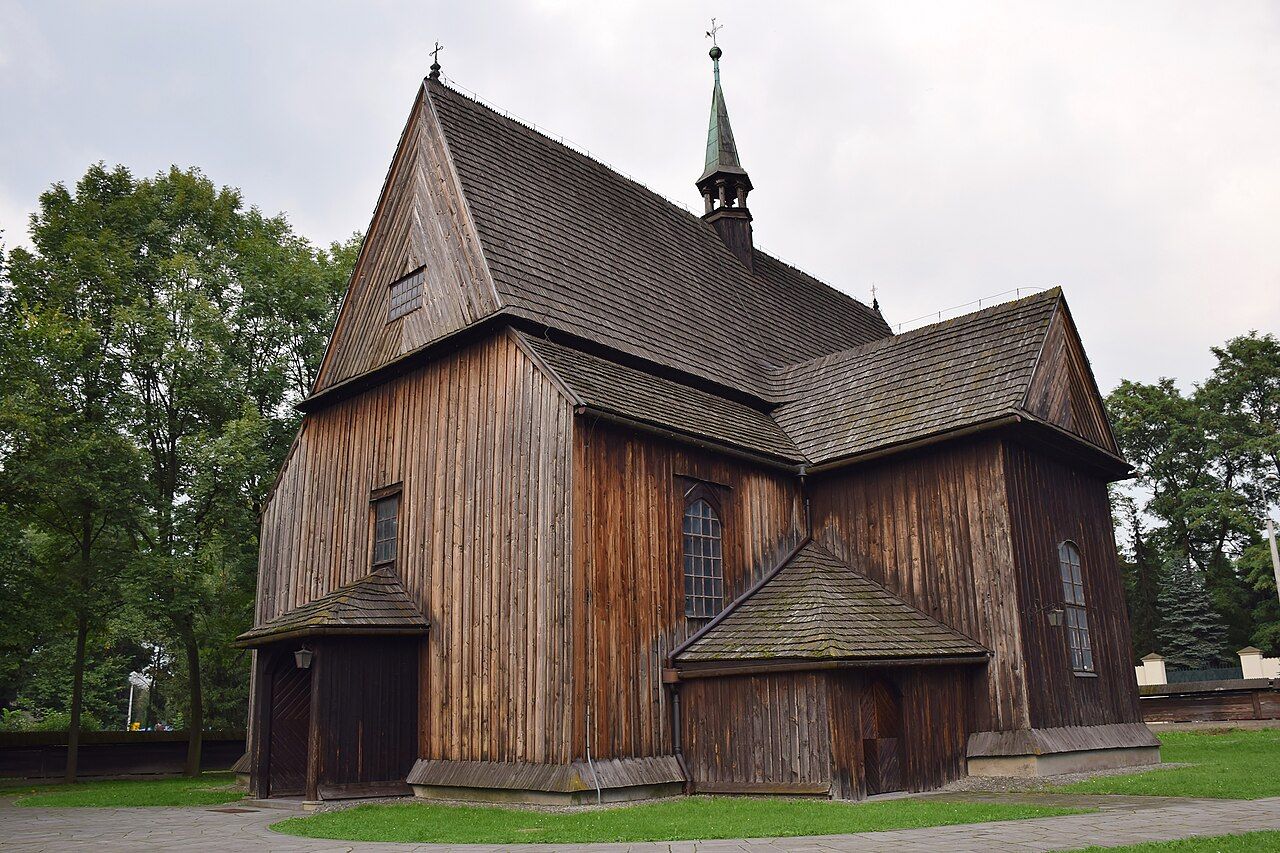
What stands across the road?
Opposite the abbey is the wooden Church of St Bartholomew, built in 1466. It is one of the oldest wooden churches in Poland. The builder, Maciej Mączka, signed the church with an inscription. I find the across-the-road arrangement easy to hold in mind: one church, then the other, each with its own story and its own place in Mogiła. There is no need to make them into one monument. Their closeness is enough.
When does Mogiła’s annual fair take place?
An indulgence fair is held at Mogiła each September around the feast of the Exaltation of the Cross. This is another strand in the place’s life, distinct from the abbey’s paintings and the wooden church’s age. I imagine the fair as a point in the year that returns to Mogiła, though the facts tell me only its timing and name. That is enough to make the calendar feel present here, not merely historical.
What stays with me is the uncommon closeness of these facts: monks still living at the abbey, a church opposite, and a fair returning each September. Mogiła has not been displaced from its own story by its neighbour.
I like that Mogiła keeps its older life beside Nowa Huta.
More from Nowa Huta and beyond
 Old MogiłaWanda Mound and the white eagle
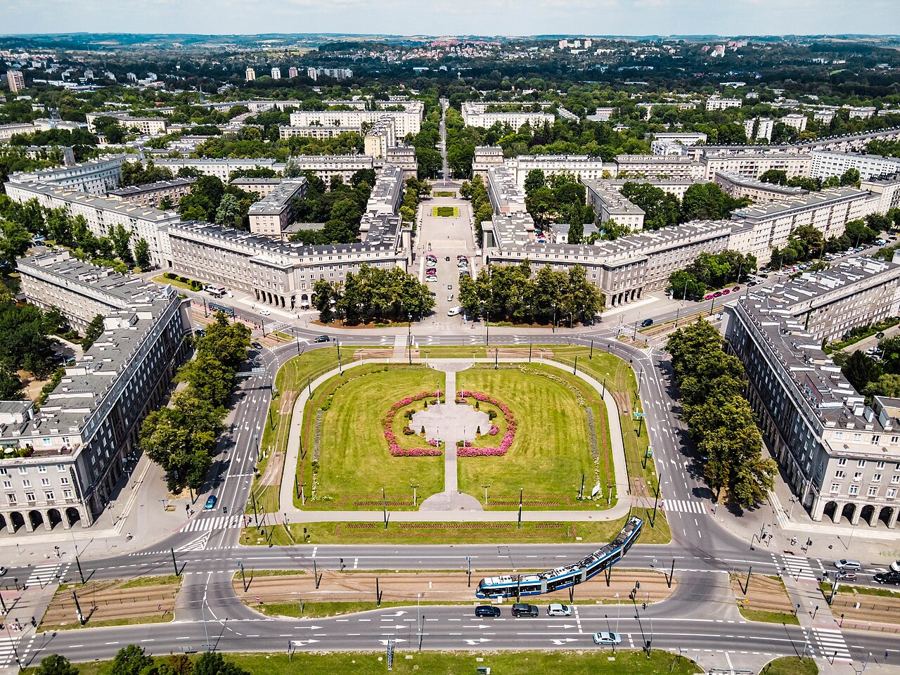 The planned townPlac Centralny and the idea of an ideal town
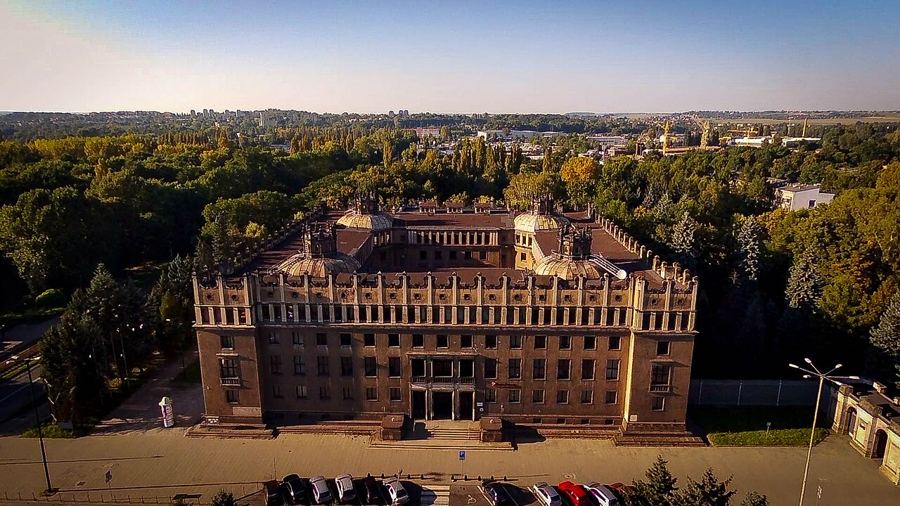 The planned townWhat makes the steelworks’ gate look like a palace?
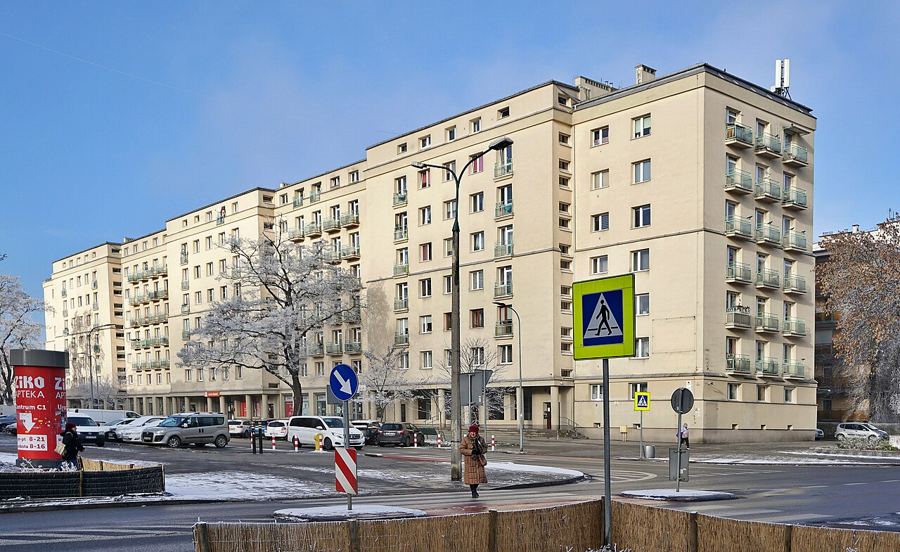 The planned townWhat do the courtyards of Nowa Huta still hold?
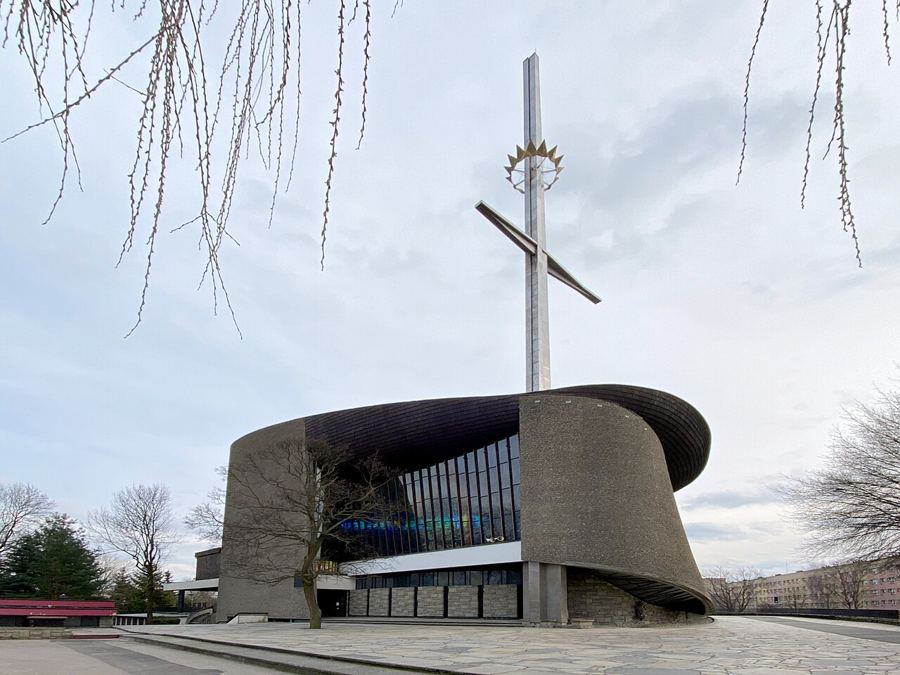 A church built by handArka Pana: the church Nowa Huta built by hand
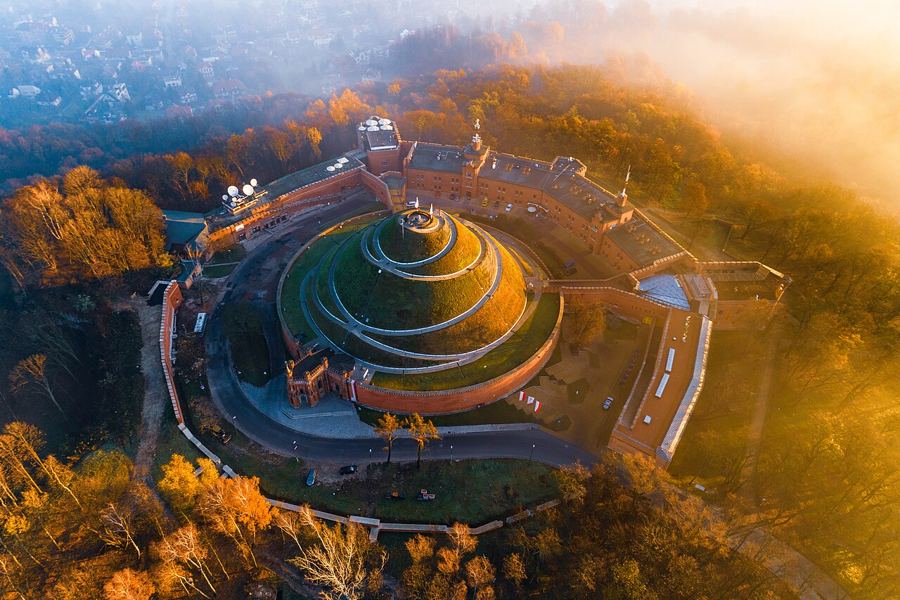 MoundsA mound built for Kościuszko
Photographs used: Mateusz Giełczyński — Creative Commons BY-SA 4.0; Piotr Tomaszewski-Guillon / dronographyapplied.com — Creative Commons BY-SA 4.0; TomRollauer — Creative Commons BY-SA 4.0; Igor123121 — Creative Commons BY-SA 4.0; Minderbinder — Creative Commons BY-SA 4.0; Pawelsuder — Creative Commons BY-SA 4.0