- Period
- 1942-1945
- Distance
- 40 min from the Rynek
What does the monument hold at Płaszów?
A walk across grassland and scrub, past the 1964 monument and smaller memorials, follows the history held in the open ground of the former camp.
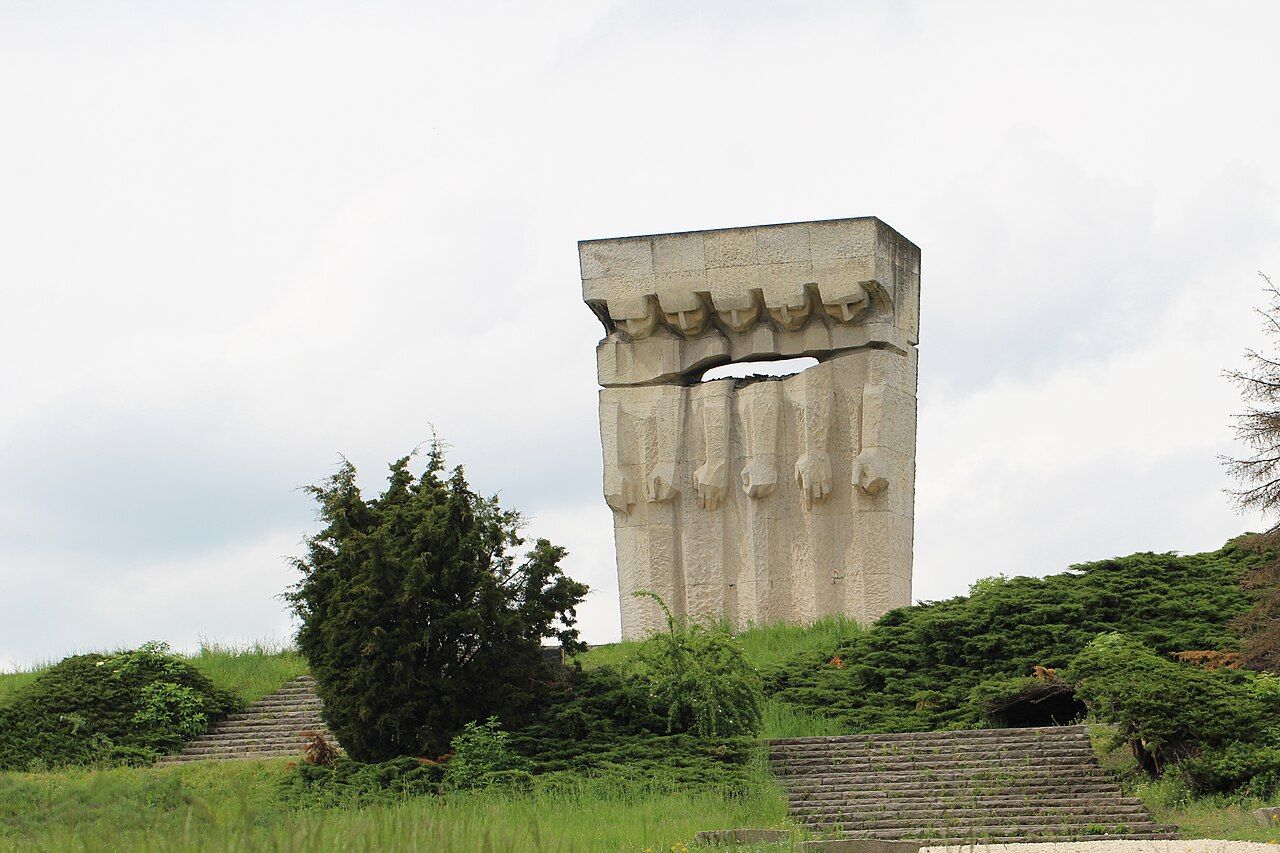
Most of the former Płaszów camp ground is open grassland and scrub. The Monument to the Victims of Fascism stands on this plain ground: a massive stone figure split by a band, with bowed human figures carved into it. I begin by looking at the ground and the monument together. Neither is easy to hold apart from the other.
How can I follow the story of this place?
First, take in the open ground. The grassland and scrub occupy most of the former camp site, leaving the monument in a broad landscape rather than among buildings. I find myself returning to that contrast: ground that seems so plain, and the weight of what happened here.
Then begin with the camp’s origins. The German occupiers set up Płaszów in 1942 on the site of two Jewish cemeteries. Płaszów became a concentration camp in 1944. Thousands of prisoners were murdered here or died from hunger and disease.
Keep the end of the camp in view, too. It was dismantled as the Red Army approached at the end of 1944 and in January 1945. The dates sit close together in the story; the open ground now gives them room to be remembered without filling in what is no longer there.
Finally, return to the memorials. The Monument to the Victims of Fascism, by Witold Cęckiewicz, was unveiled on the site in 1964. Smaller memorials commemorate Jewish victims, among them Hungarian Jewish women murdered here. The thought of [the square of bronze chairs] comes to me beside these carved figures, another form for holding memory.
What dates stay with me?
- 1942: Płaszów was set up on the site of two Jewish cemeteries.
- 1944: It became a concentration camp.
- End of 1944 and January 1945: The camp was dismantled as the Red Army approached.
- 1964: The monument was unveiled.
I move between those facts and the physical shape of the memorial: the split in the stone, the bowed figures, the grass and scrub around it. The site does not resolve into a single image. Its openness is part of what stays with me; the land is present, but it cannot make the history feel distant.
I leave the dates beside the names and forms of the memorials, without trying to make the ground say more than it can. The place remains open, and the memory here does not.
More from Podgórze and beyond
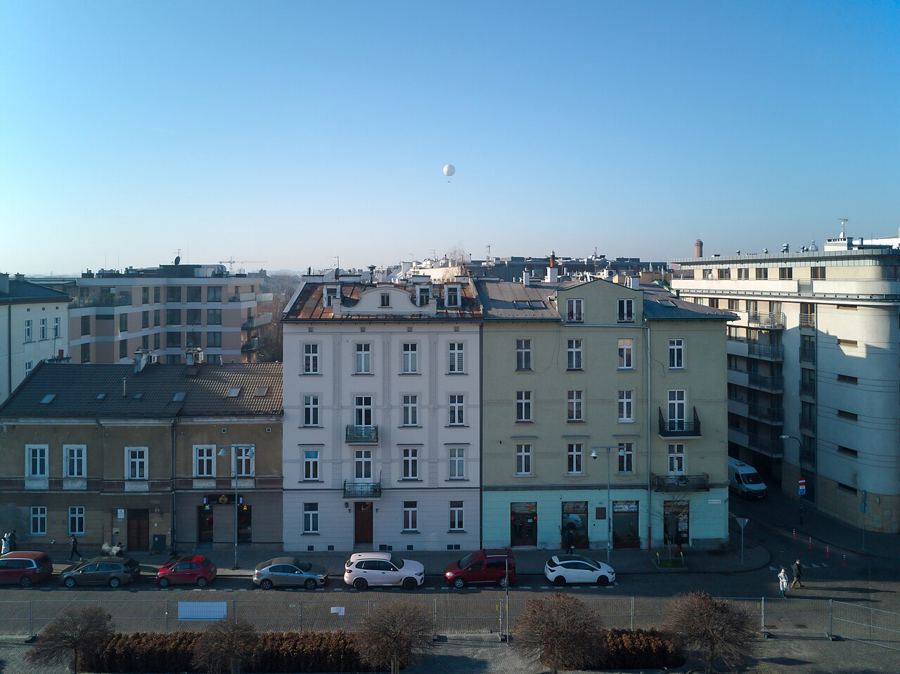 Town, ghetto and campPodgórze, the town across the Vistula
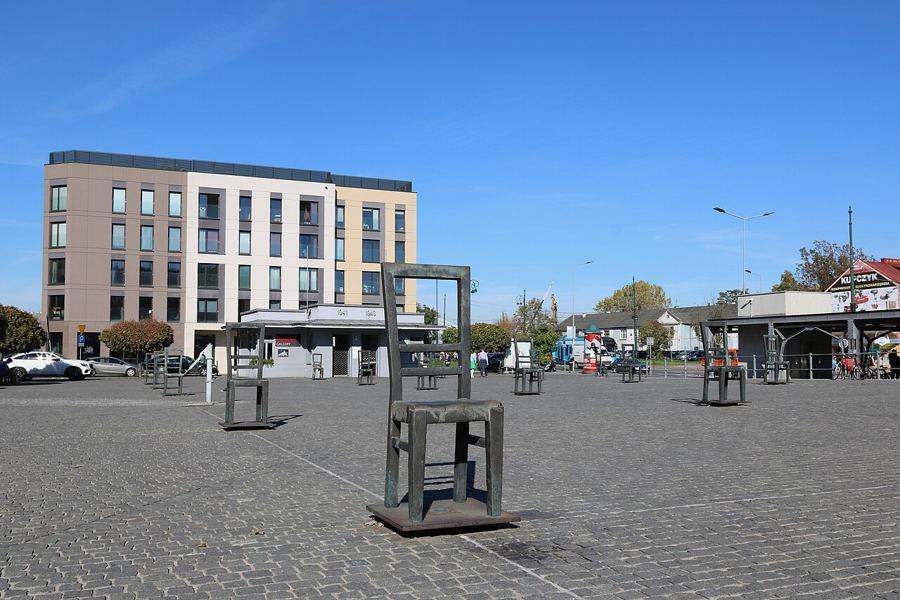 Town, ghetto and campWhat do the empty chairs remember?
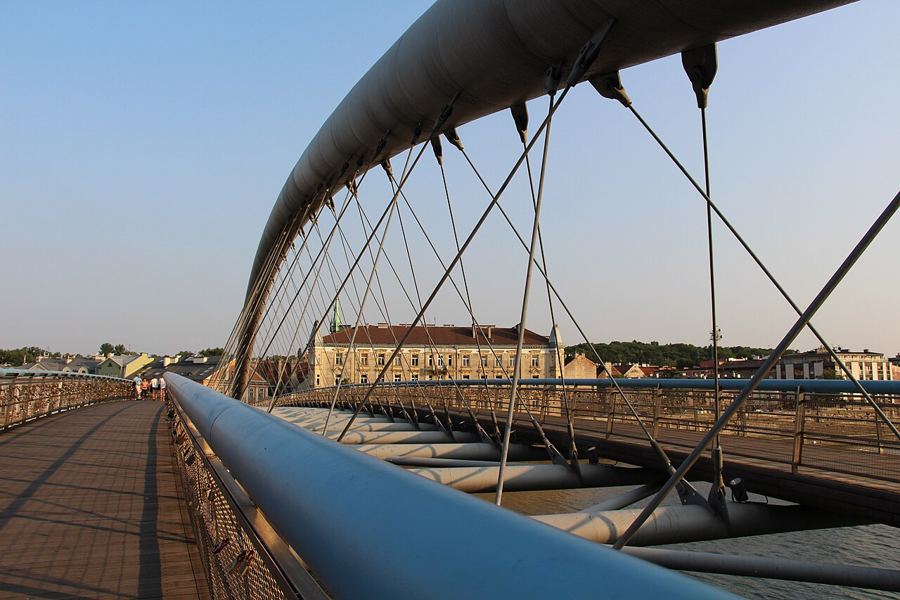 Town, ghetto and campFather Bernatek’s footbridge, joining Kazimierz and Podgórze
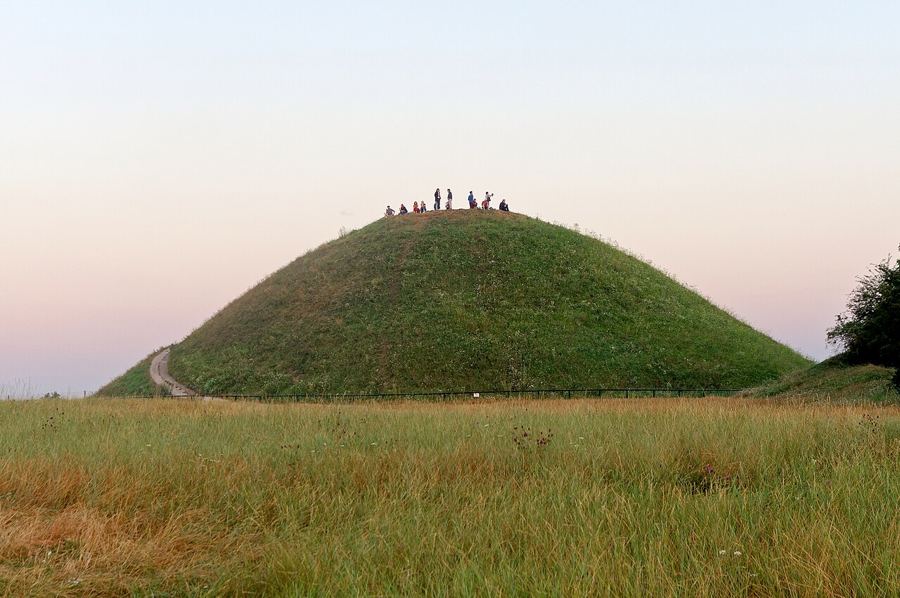 Mound and quarryThe hill that keeps its oldest question
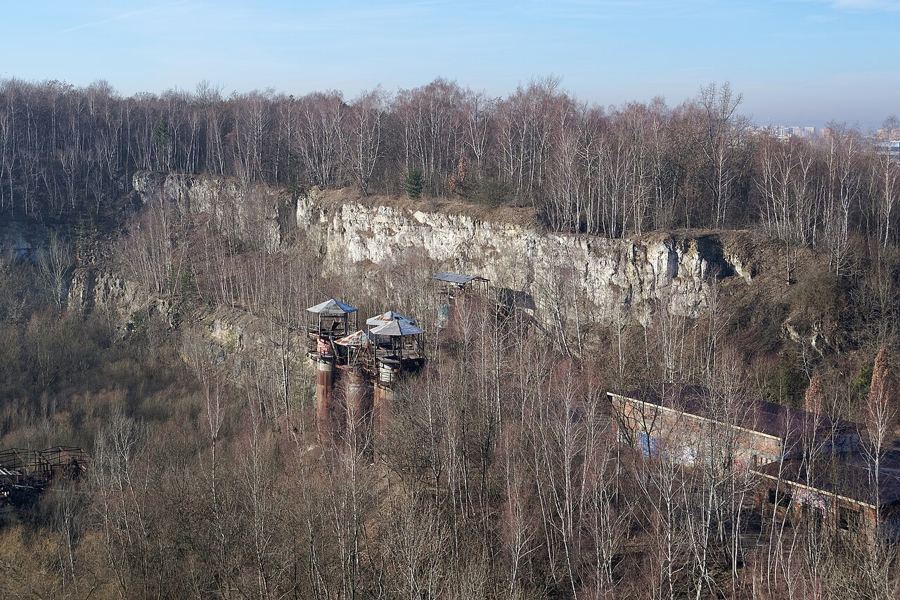 Mound and quarryThe Liban quarry: a hole in the hill with many pasts
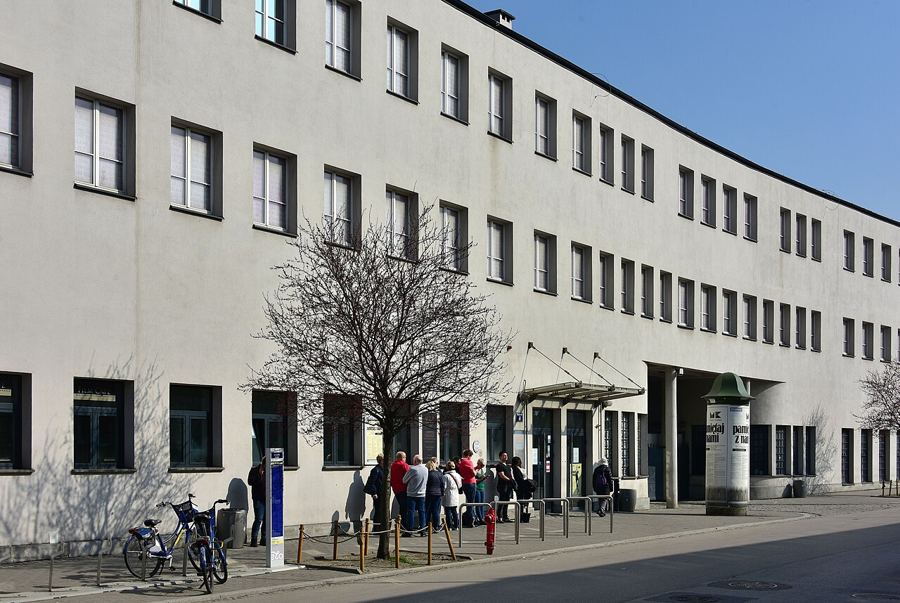 Museums on the right bankA city under occupation, inside Schindler’s factory
Photographs used: Igor123121 — Creative Commons BY 4.0; Ingo Mehling — Creative Commons BY-SA 4.0; Fred Romero from Paris, France — Creative Commons BY 2.0; Jakub Hałun — Creative Commons BY-SA 4.0; Jakub Hałun — Creative Commons BY-SA 4.0; Adrian Grycuk — Creative Commons BY-SA 3.0