- Period
- 14th century to today
- Distance
- on the Rynek itself
The trumpet call that stops mid-note
The hejnał sounds from St Mary's taller tower every hour. Its broken phrase carries a legend, while the city record offers a quieter account.
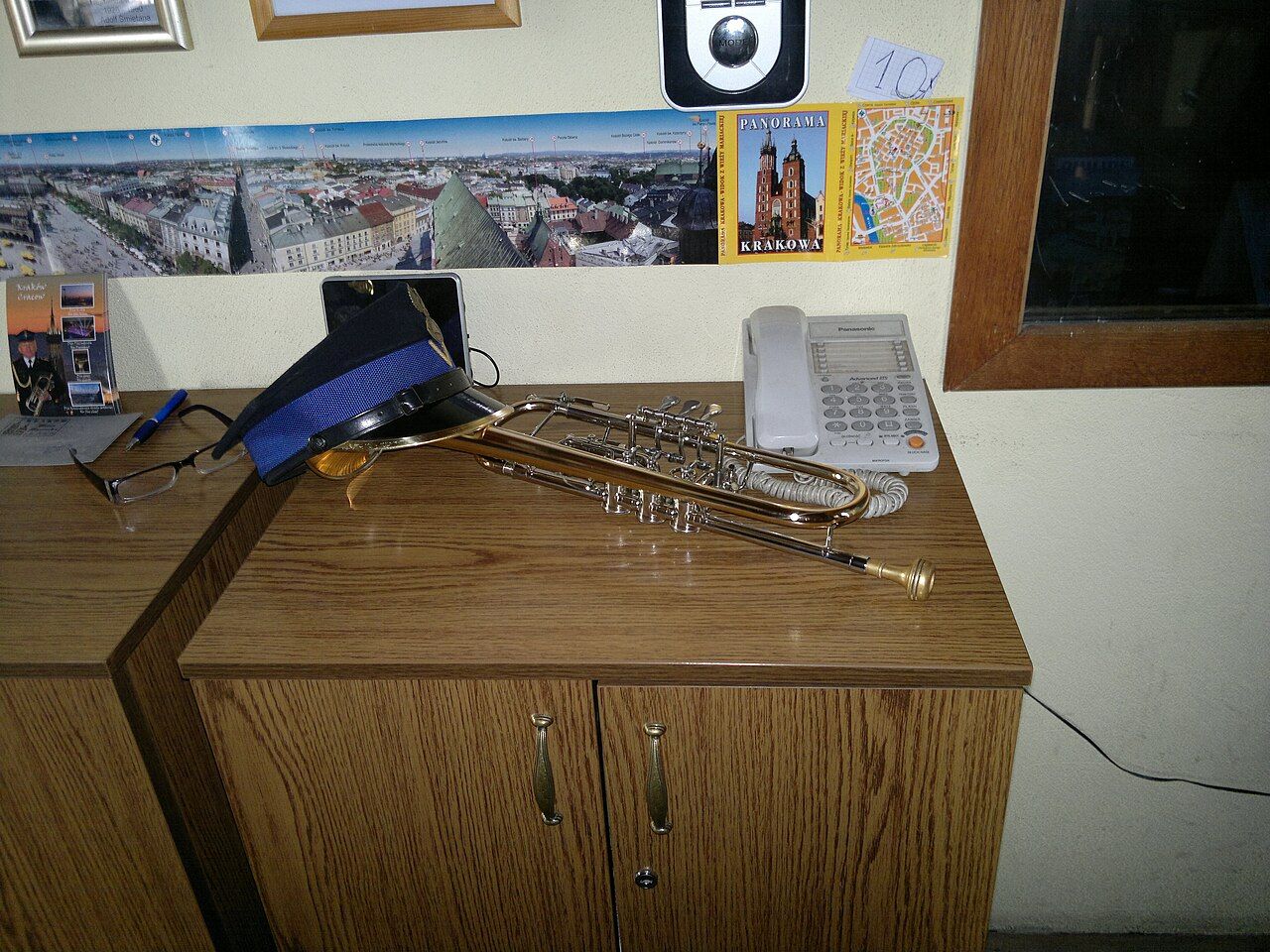
A trumpet melody sounds from above, then stops in the middle of its phrase. The pause is part of the hejnał mariacki, played every hour from the taller of two Gothic towers of St Mary's Basilica. I find the abrupt ending hard to separate from the story told about it. The sound is brief; the explanation has travelled much further.
What is the hejnał?
It is a short trumpet melody played from the tower every hour. The trumpeter plays it four times each hour, once from a window facing each direction. The tune does not finish in the ordinary sense. It breaks off in the middle of a phrase, and that stopping point is the feature most people remember.
I like the plainness of the arrangement: a melody, a tower, the hour. Then comes the cut. It gives the call a shape unlike a tune that resolves neatly, and leaves a little space for the mind to go looking for a reason.
Why does the melody stop?
A popular legend says that in 1241 a watchman was sounding the alarm when a Tatar arrow struck him in the throat. The hejnał, in this telling, ends at the point where the watchman could no longer play. It is an affecting account, made more so by the musical break that seems to fit it.
The story became widely known through Eric P. Kelly's 1928 novel The Trumpeter of Krakow. That is a record of how the legend travelled into popular knowledge, rather than proof of the arrow story itself. I can hear why the explanation holds on: it gives a sudden ending a human cause, and makes the cut feel like a message carried forward.
What do the city records say?
City records from the late 14th century mention a watchman's trumpet signal from the tower. They establish that a signal was being sounded there; they do not, in the facts handed down here, establish the Tatar arrow account. The record and the legend answer different questions. One places a trumpet signal in the city's written record. The other explains the broken phrase through a dramatic moment.
I find that distinction worth keeping. The record does not need to displace the legend, and the legend does not turn into a documented event simply because the melody stops where its story says it does. The call sits between those accounts, audible as a present-day practice and shadowed by an explanation whose fame came through a novel.
How is the call heard now?
The trumpeters who play the hejnał today are members of the Kraków fire service. Day and night, through every season, the melody is played on the hour. Polish Radio has broadcast the noon hejnał across the country since 1927. The same short call therefore belongs both to the tower and to a broadcast heard well beyond it.
The practical details are simple:
- The hejnał is played every hour, four times, from windows facing each direction.
- The noon hejnał has been broadcast across the country by Polish Radio since 1927.
- The trumpeters reach a watch room near the top by climbing a long wooden staircase.
What does the tower ask of its trumpeter?
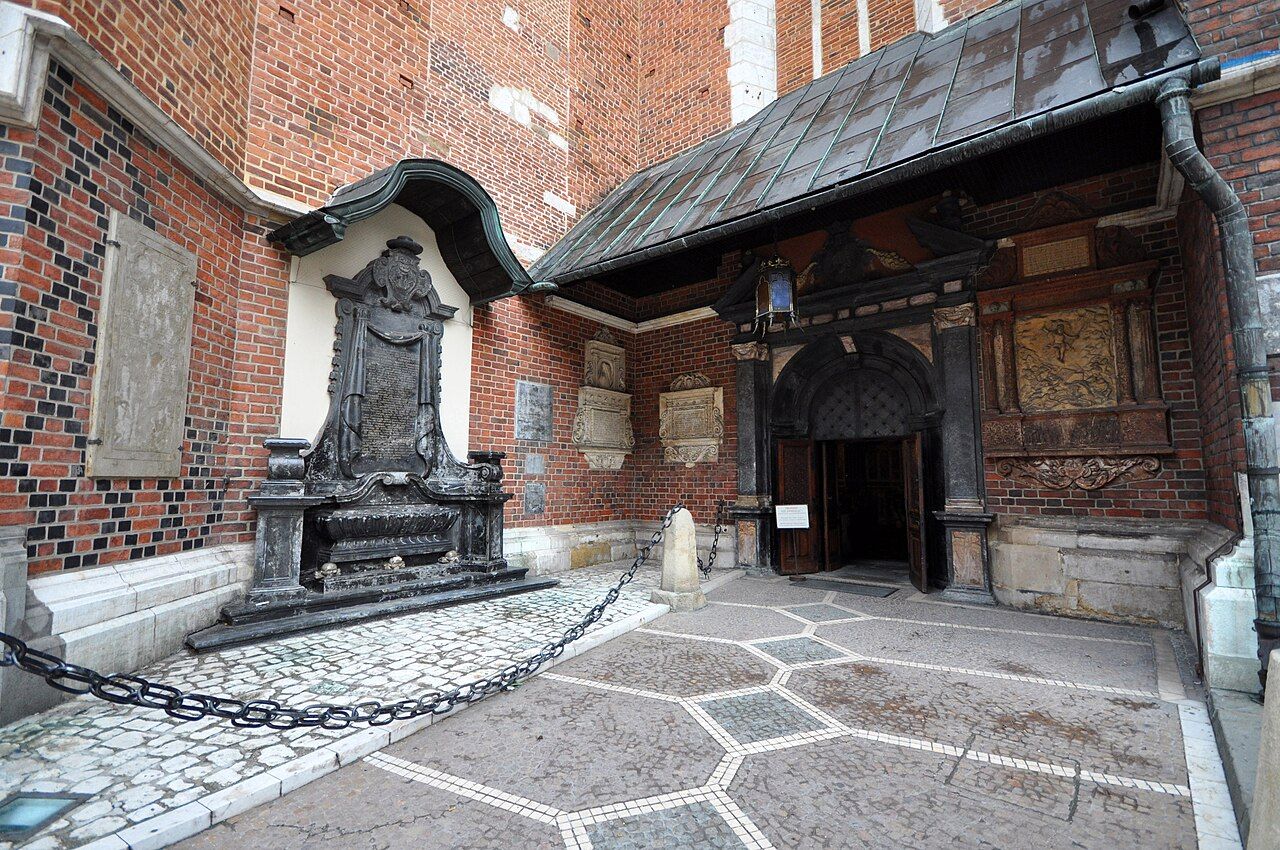
The climb ends in a watch room near the top of the tower. A long wooden staircase leads there. I picture the repeated effort implied by that route, though the facts are spare: the trumpeters climb up, and the melody is played on the hour, day and night, through every season. There is a lovely steadiness in that small account of a task repeated, while the legend supplies its sudden interruption.
The melody itself remains short. It faces each direction, four times in the hour, and breaks off before the phrase is complete. I do not need to decide whether the legend or the record has the better claim on the sound. The record gives the signal a place in time; the legend gives its ending a story.
I like that the broken note leaves room for both.
More from Old Town and beyond
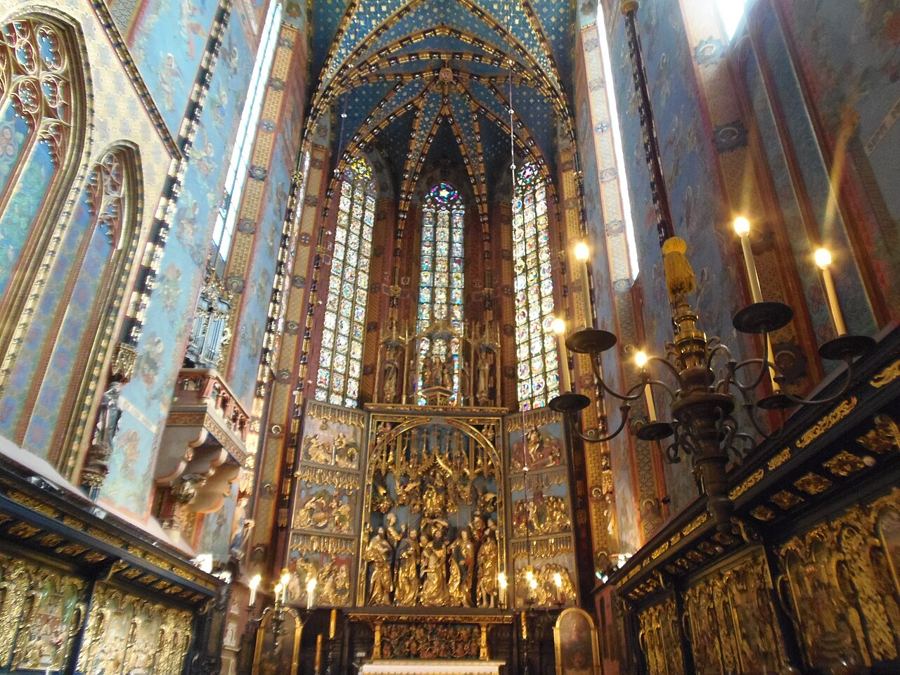 Churches and the bugleWhat happened to Veit Stoss’s altar at St Mary’s Basilica?
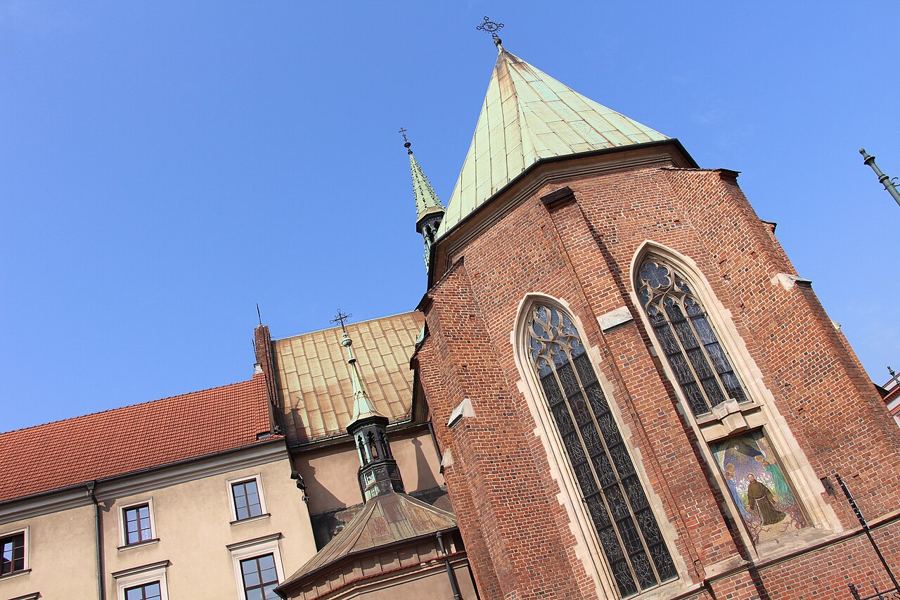 Churches and the bugleWyspiański’s glass at the Franciscan Basilica
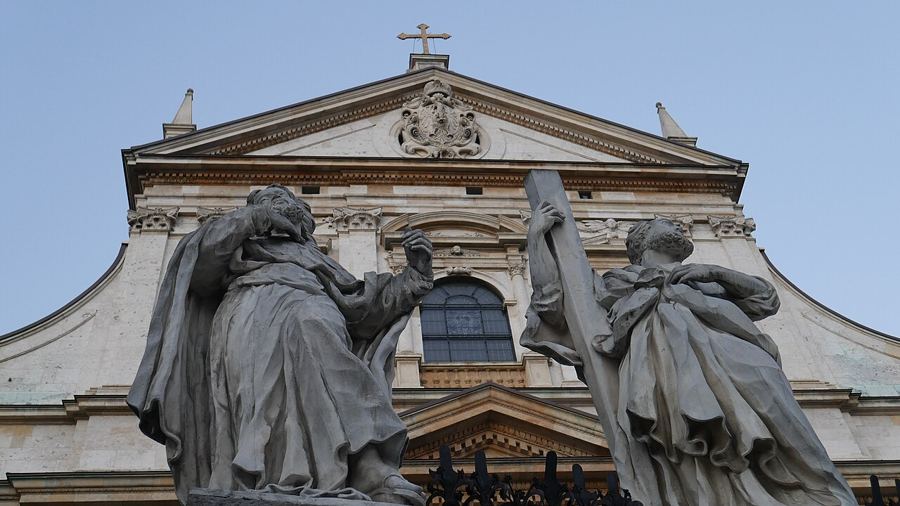 Churches and the bugleTwelve apostles on Grodzka Street
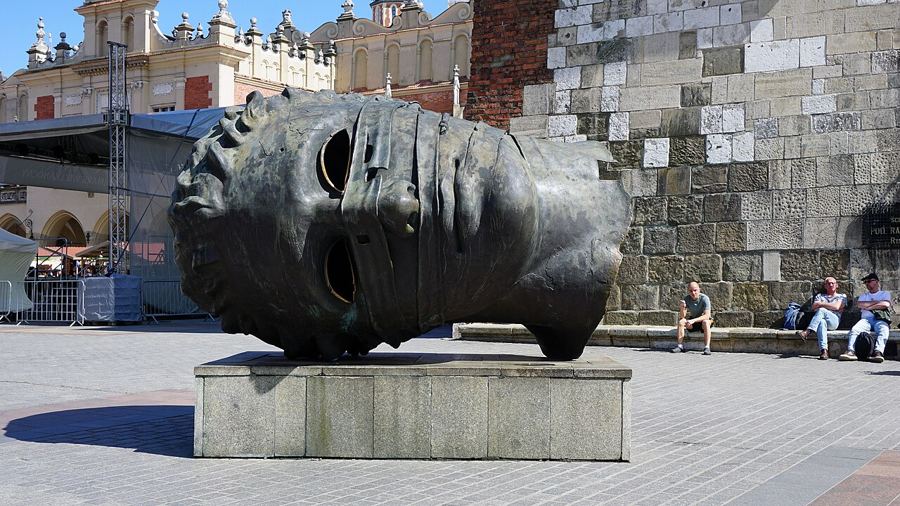 The Main SquareHow was Rynek Główny measured out in 1257?
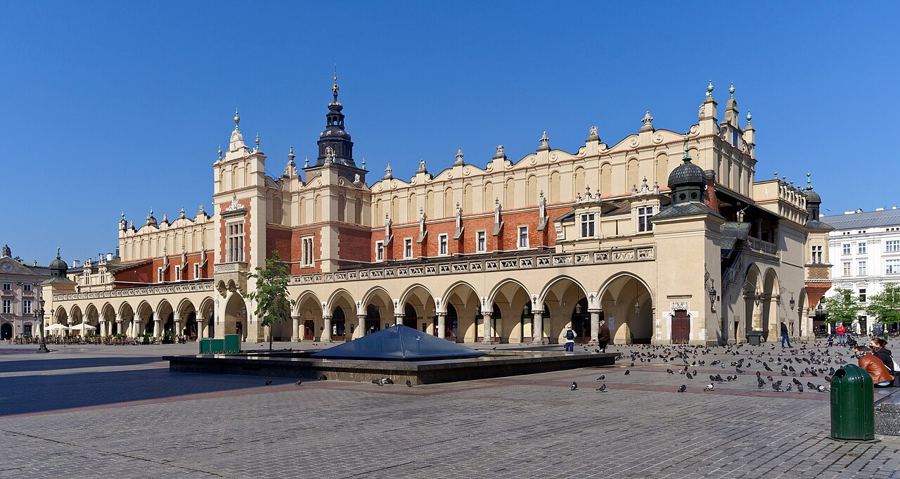 The Main SquareThe Sukiennice: two lives under one roofThe Main SquareBeneath the square: the Rynek Underground
Photographs used: Mielon — Creative Commons BY-SA 3.0; Fred Romero from Paris, France — Creative Commons BY 2.0; Piotrek Przyborowski — Creative Commons BY-SA 4.0; Igor123121 — Creative Commons BY-SA 4.0; Jakub Hałun — Creative Commons BY-SA 4.0