- Period
- 13th century onward
- Distance
- on the Rynek itself
How was Rynek Główny measured out in 1257?
A step-by-step reading of the square as a medieval plan: its charter, its streets, and the layers of history still marked within its open space.
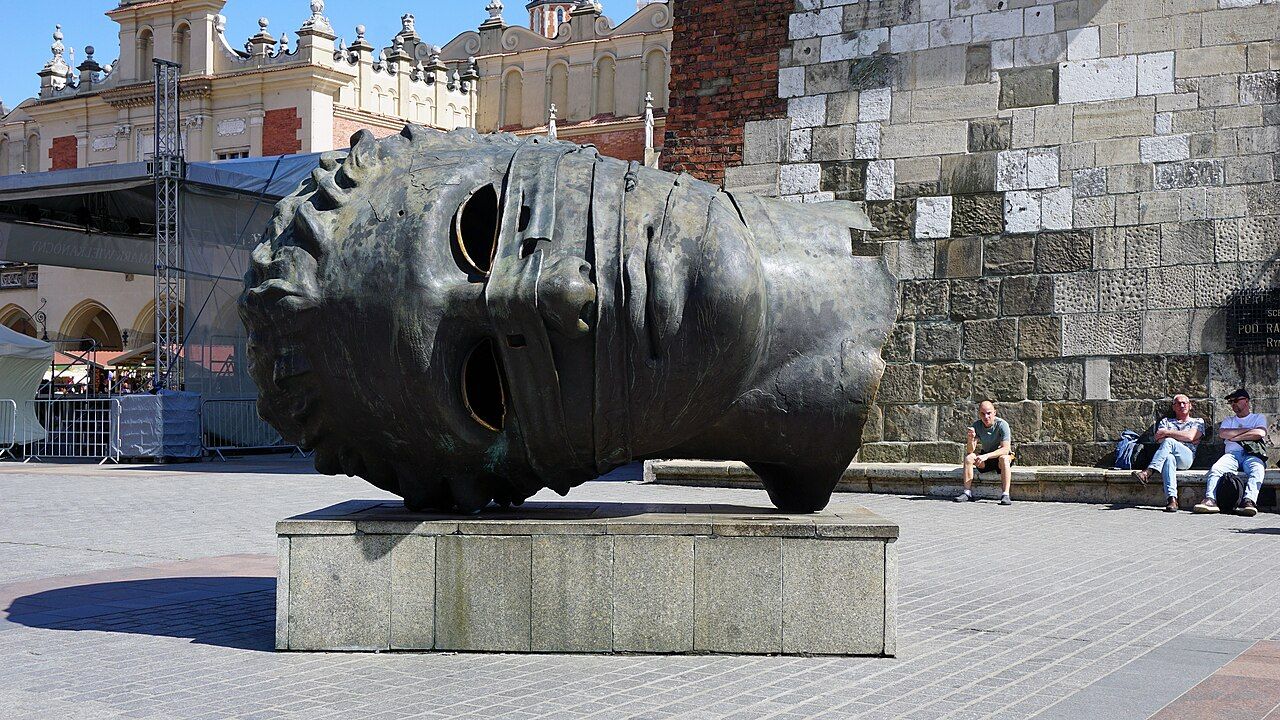
The square opens around a measured idea: a central market, streets set out in a regular grid, and a small church that does not quite follow its lines. I read Rynek Główny as a document laid across the city, with its old decisions still legible in the plan.
How should I begin with the charter?
Step one: begin with the date. On 5 June 1257, Duke Bolesław V the Chaste granted Kraków its town charter under Magdeburg law. The charter laid out a regular grid of streets around the central market square, the Rynek Główny. The square was not simply an open space left between buildings; it belonged to a plan.
That distinction changes how I read the centre. A market square can seem like an easy place to gather the city’s attention. Here, the date and the arrangement give it another quality: it is also a record of decisions made at the beginning of a new urban pattern. I like to keep the charter in mind before looking for individual monuments.
What does the plan leave visible?
Step two: follow the lines outwards. Three streets leave each side of the square, a pattern fixed by the 1257 layout. The Rynek Główny measures roughly 200 metres on each side and covers about 4 hectares. It counts among the largest medieval town squares in Europe. These are figures that make the square easier to imagine, but the repeated street pattern is what lets the plan speak for itself.
The contrast is clearest at the small Romanesque Church of St Adalbert. It is older than the square and stands at an angle to its grid. Its floor lies about 2 metres below the present level of the square, which has risen over the centuries. The older building and the planned streets sit together without becoming the same thing. I find that small disagreement of angles a useful reminder that the charter organised a place with a past already in it.
Alongside the story
- From Rynek: 0 min
- Era: 13th century onward
There is a particular pleasure in reading a plan that has not flattened every earlier trace. The church is both part of the square’s present arrangement and a marker of what came before the charter. Its lower floor makes the rising level of the square tangible, without needing a long account of how centuries pass. I return to that detail in my mind: the street grid is regular, but the ground beneath it carries its own measure.
Which events belong to the square’s record?
Step three: read the square as a civic stage, in date order. On 10 April 1525, Albrecht Hohenzollern, Duke of Prussia, paid homage to King Sigismund I the Old on the Rynek Główny. Kraków remained the seat of the royal court; King Sigismund III Vasa moved it to Warsaw late in the 16th century. The square’s central position makes sense beside this history, though the dates and names do the real work.
On 24 March 1794, Tadeusz Kościuszko swore his oath as leader of the national uprising on the square. A plaque in the paving marks the spot. It is a direct kind of annotation: an event, a place, and a mark set into the surface that carries the square’s ordinary pattern. I read it as one more line in the document, not as a separate story from the plan.
The square is both a plan and a record of what has happened within it.
The square is both a plan and a record of what has happened within it. The phrase feels especially apt beside a marker in the paving: the surface is not blank, and the grid does not stop history from accumulating there.
How do the monuments add another layer?
Step four: notice the change from civic ceremony to public memory. The Adam Mickiewicz Monument by Teodor Rygier was unveiled on the square in 1898, a century after the poet’s birth. German occupiers pulled down the monument in 1940, and a reconstruction returned to the square in 1955. Those dates make the monument’s presence more than a fixed feature; its absence and return belong to its story too.
Other parts of the square’s built life offer their own points of reference: the Renaissance trading hall and the start of the Royal Route. The Historic Centre of Kraków was among the first twelve places entered on the World Heritage List, in 1978. I find it useful to hold that wider recognition beside the small details: the angled church, the lower floor, the plaque, the returned monument.
How can I put the layers together?
Step five: read from the broad plan towards the marks it contains. Begin with the 1257 charter and its streets. Then notice the older church set at an angle, the square’s raised level, the plaque, and the monument with its interrupted history. The order matters to me because it moves from design to use, and from use to memory, without pretending that any one layer explains the whole place.
That is how Rynek Główny got under my skin: not through a single grand story, but through the way its lines and dates keep meeting at the same centre. The grid gives the square a strong, readable shape. The church complicates it; the events and monuments add further entries. I can think of the charter as a first page, not a final one. The square remains legible precisely because its history has kept writing over the plan, while leaving enough of the original arrangement visible to read beneath it.
For me, Rynek Główny is most affecting as a plan that never became only a plan.
More from Old Town and beyond
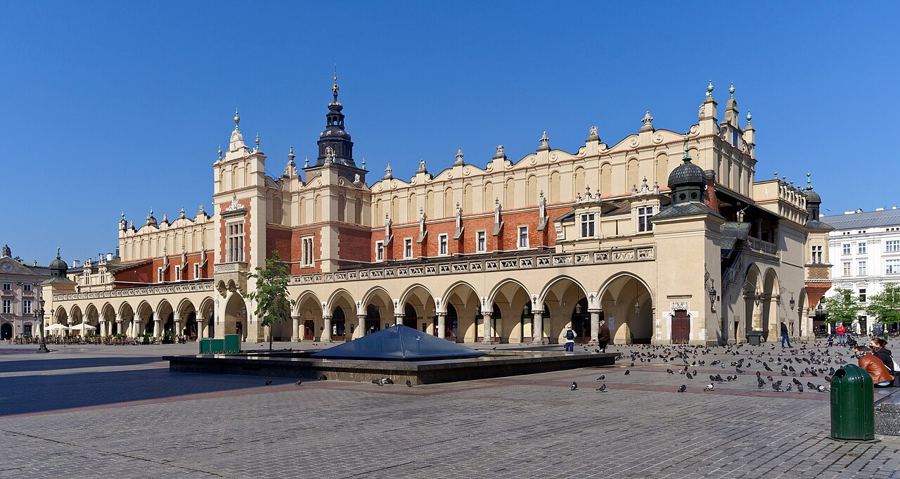 The Main SquareThe Sukiennice: two lives under one roofThe Main SquareBeneath the square: the Rynek Underground
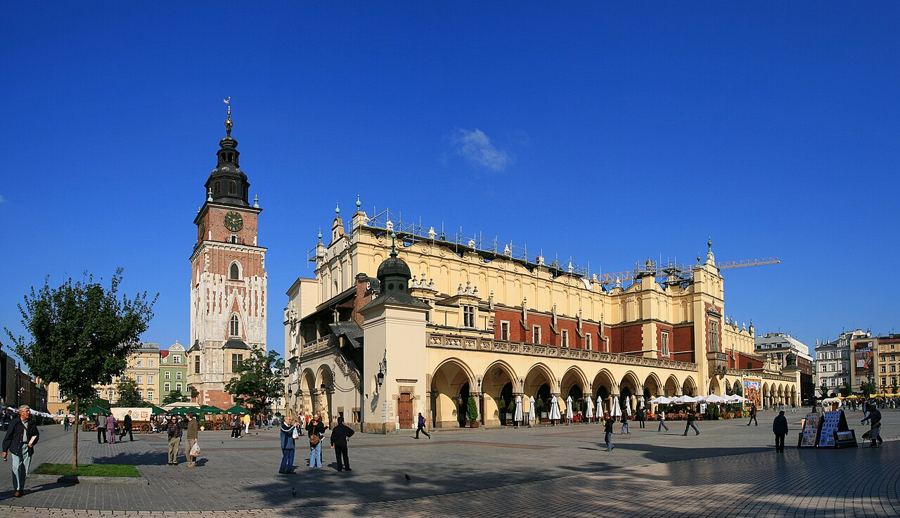 The Main SquareThe tower that lost its town hall
 The Main SquareTinfoil cathedrals: how Kraków makes a szopka
 Churches and the bugleWhat happened to Veit Stoss’s altar at St Mary’s Basilica?
 Churches and the bugleThe trumpet call that stops mid-note
Photographs used: Jakub Hałun — Creative Commons BY-SA 4.0; Lestat (Jan Mehlich) — Creative Commons BY-SA 3.0; unknown — public domain the file; Mielon — Creative Commons BY-SA 3.0; Mark Healey from Brough, UK — Creative Commons BY-SA 2.0
