- Period
- 14th-15th century
- Distance
- on the Rynek itself
What happened to Veit Stoss’s altar at St Mary’s Basilica?
The unequal towers and painted interior frame a story of an altar taken from Kraków, found in Nuremberg and returned in 1946.
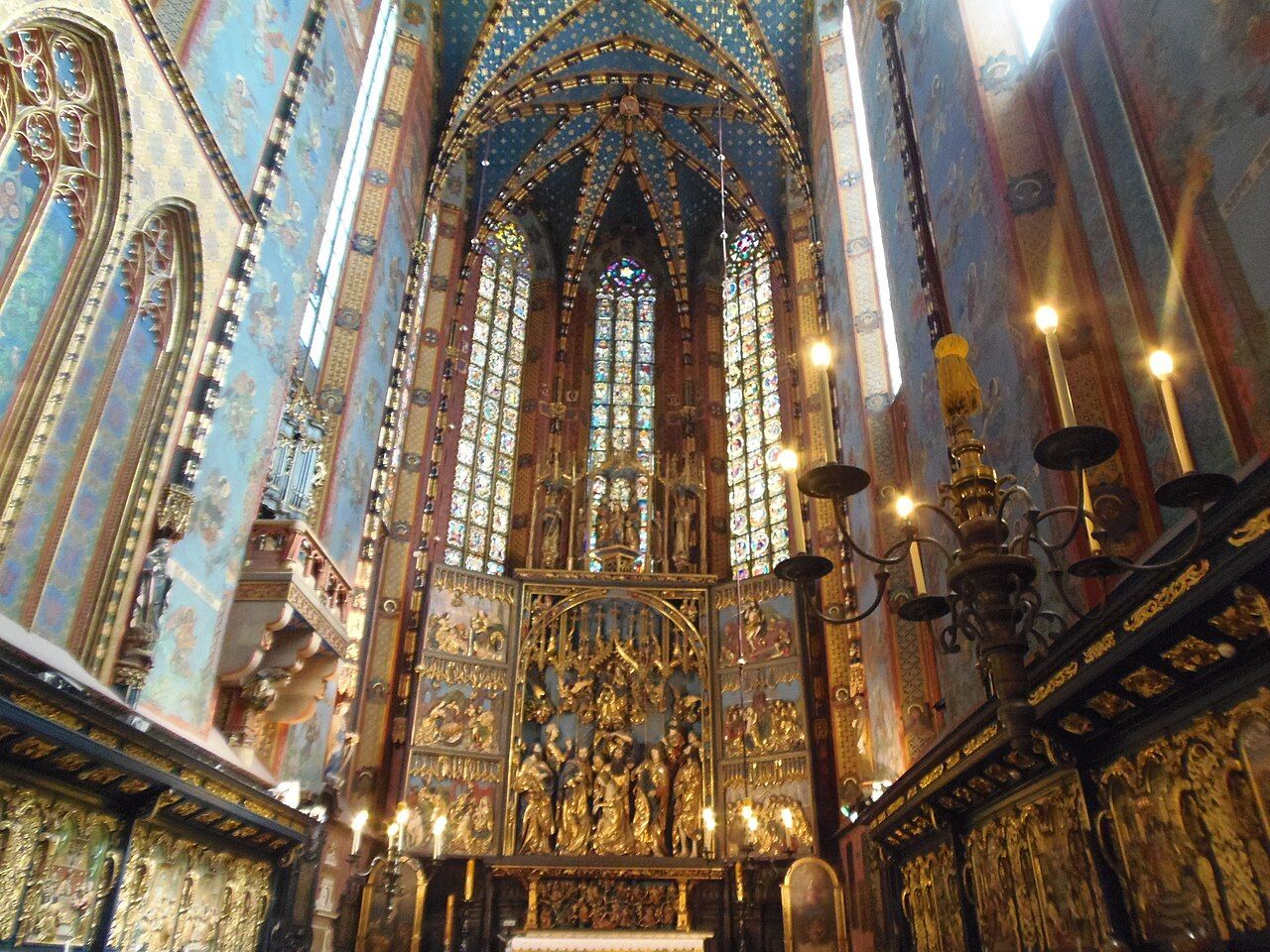
St Mary’s Basilica stands on the north-eastern corner of the Rynek Główny. The present Gothic brick basilica was built mainly in the 14th century on the site of an earlier church. Its history has the shape of layers: the church before this one, the building that rose in its place, and the great carved altar that was taken away and brought back.
I find that last part changes the way I think about the altarpiece. It is not only a work at the centre of the church, but a work that was taken away and brought back. The scale of it is difficult to hold in the mind at first; the years of its absence give that scale another measure.
Are the two towers alike?
Myth: The basilica’s towers are a matching pair.
Fact: They differ in height. The taller is about 81 metres, while the bell tower is about 69 metres. The taller tower received its Gothic spire with a gilded crown in 1478. Even in a brief account, the difference matters: the basilica is not a perfectly balanced outline, but one with its own distinct rise and pause.
The towers make a clear beginning to the story, but the altar asks for a slower look. The phrase the broken trumpet call belongs to another part of the basilica’s story; the carved work belongs to its interior, and to a different kind of attention.
Was the altarpiece always in Kraków?
Myth: An altar at the heart of a church simply stayed in place through the years.
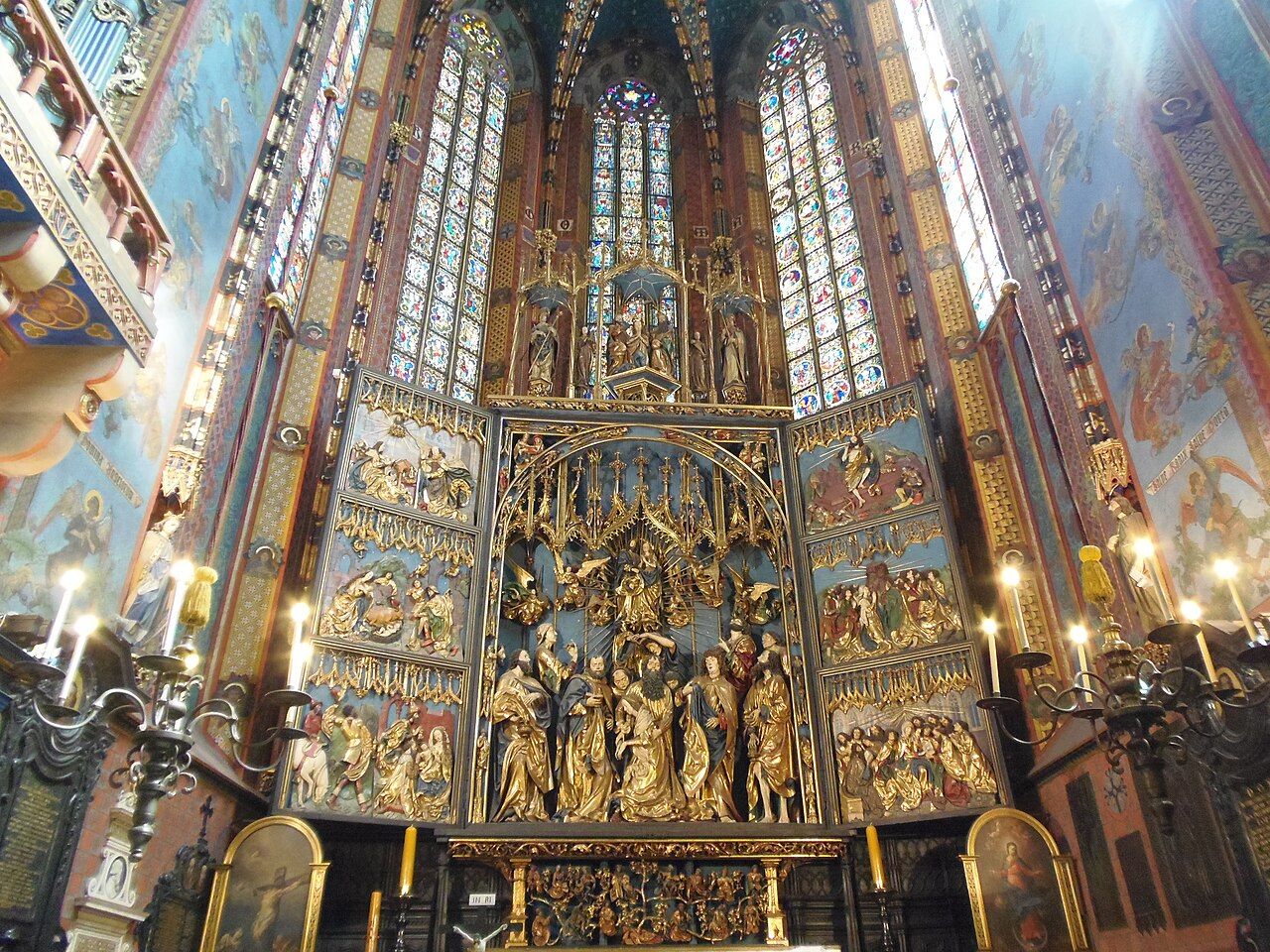
Fact: German forces removed Veit Stoss’s altarpiece in 1941 and took it to Nuremberg. It was found there after the war and returned to Kraków in 1946. Those few dates mark a rupture and a return. I keep coming back to the plainness of that sequence: removed, found, returned. It says enough without turning the altar’s absence into a story the facts do not tell.
The altar’s story is a journey away from Kraków and back.
The altar’s story is a journey away from Kraków and back.
Veit Stoss carved the high altarpiece between 1477 and 1489. With its wings open, it is about 13 metres high and 11 metres wide. In the central scene, the Dormition of the Virgin, the figures are carved in limewood and reach up to about 2.7 metres tall. Those measurements describe not a small devotional object but a work that fills the space around it. I imagine the eye moving from the whole structure to the figures, then returning to the larger scene.
Does the interior belong to the same moment as the altar?
Myth: The painted decoration and the altarpiece are parts of one period.
Fact: Jan Matejko designed the painted decoration of the interior in the 1890s, assisted by Stanisław Wyspiański and Józef Mehoffer. The stained-glass windows in the chancel date from the late 14th century. The interior gathers work from different times; that difference gives the basilica a history that feels present rather than neatly finished. I like the thought of the building holding these distinct layers together without making them the same.
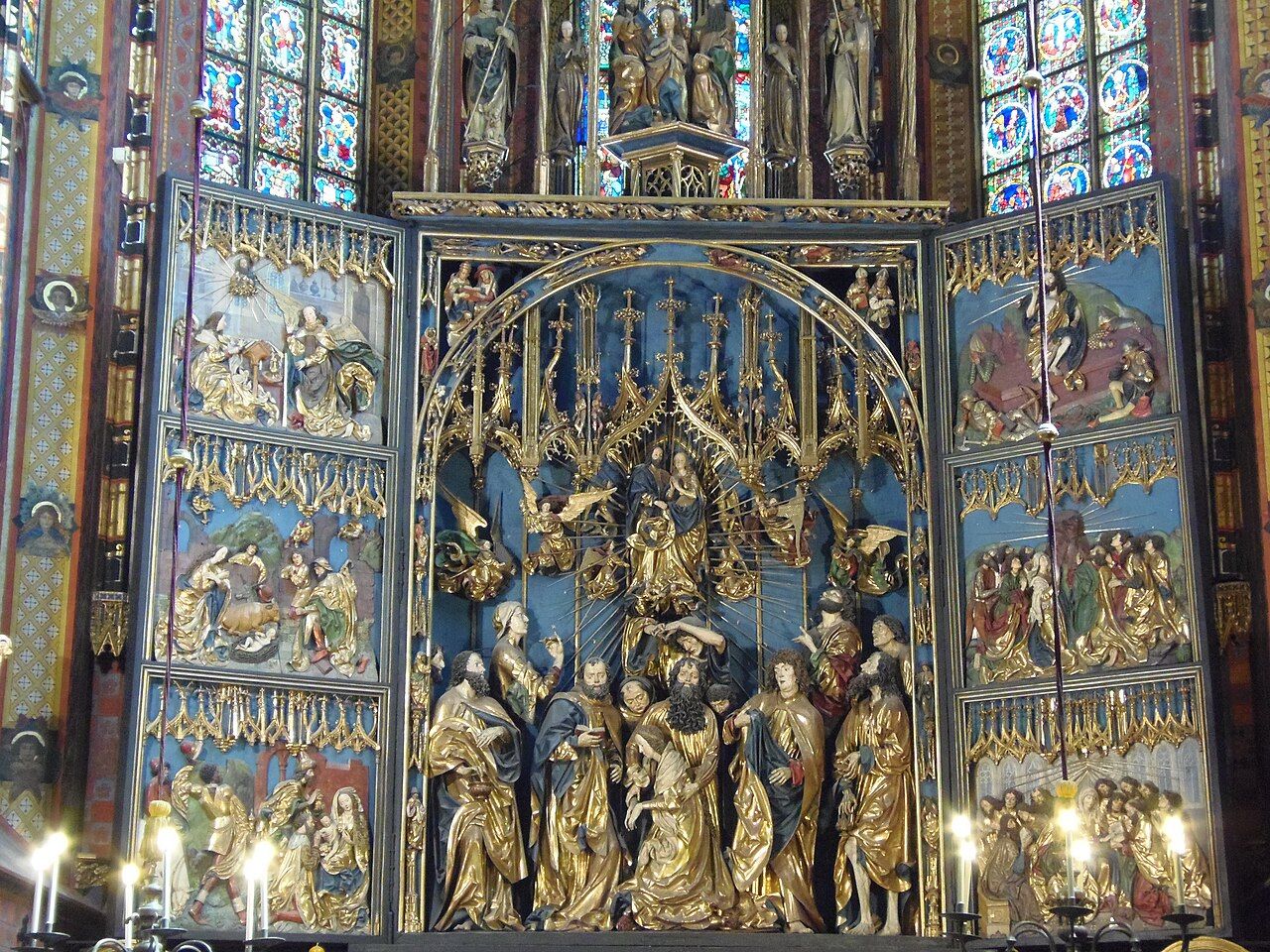
I am drawn to the way the dates refuse to settle into a single chapter. The chancel windows reach back to the late 14th century; the altarpiece belongs to the years between 1477 and 1489; Matejko’s painted decoration came much later. Then the story of the altar takes another turn, away from Kraków and back again. None of these details replaces the others. They sit together in my mind, each changing the scale of the next: the carved figures, the broad painted interior, the tall towers beyond it. I do not need to imagine a particular moment inside the basilica to feel the weight of those layers. The facts themselves make a quiet kind of movement, from making to removal to return. When I think of the place, I think less of a finished monument than of a work whose history remains visible in its different parts. That sense stays with me.
Which details help hold the story in place?
- The basilica stands on the north-eastern corner of the Rynek Główny.
- The present Gothic brick building was built mainly in the 14th century.
- The altarpiece was taken to Nuremberg in 1941 and returned to Kraków in 1946.
The basilica’s parish publishes its history and visiting hours at mariacki.com.
What remains after the return?
The facts do not make the altar’s absence disappear. They place it beside the work itself: carved between 1477 and 1489, removed in 1941, found after the war, and returned in 1946. The interior, too, holds its own separate dates, from the late 14th-century chancel windows to Matejko’s painted decoration of the 1890s.
I am left with a basilica that resists being reduced to a single view or a single period. The towers differ; the interior carries several generations of work; and the altarpiece has a history of departure and return. The dates are spare, but together they let the place remain layered, and a little unfinished in the mind.
More from Old Town and beyond
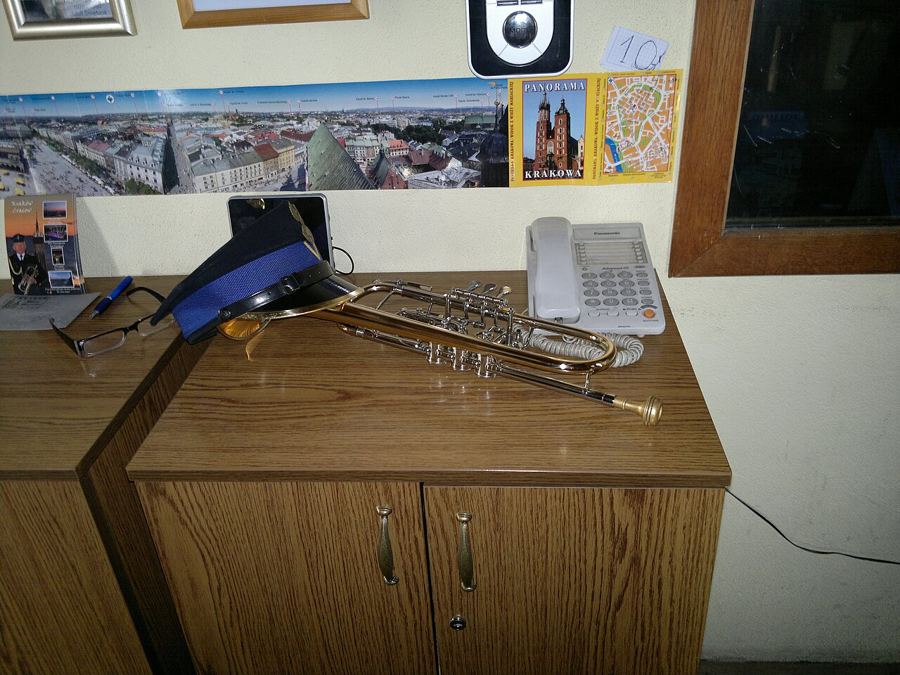 Churches and the bugleThe trumpet call that stops mid-note
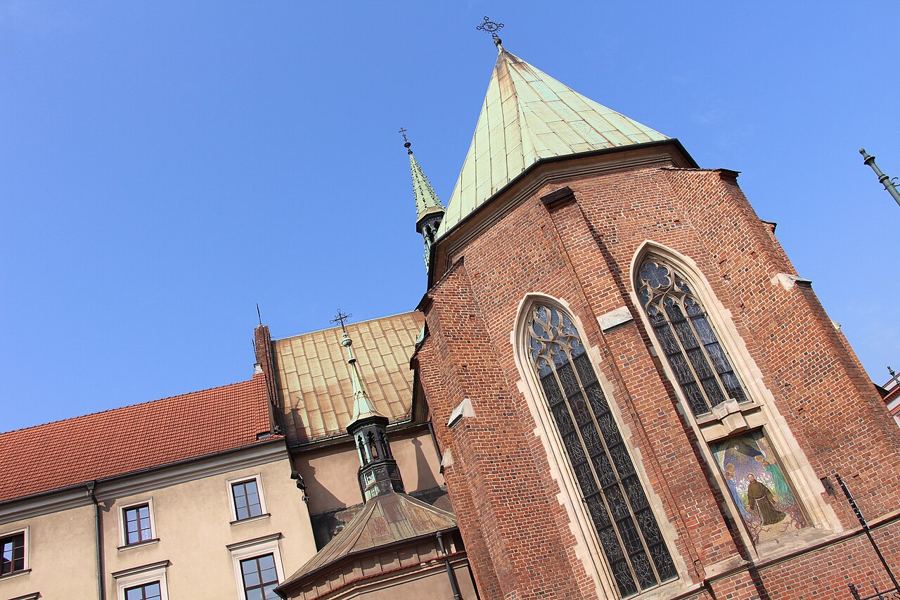 Churches and the bugleWyspiański’s glass at the Franciscan Basilica
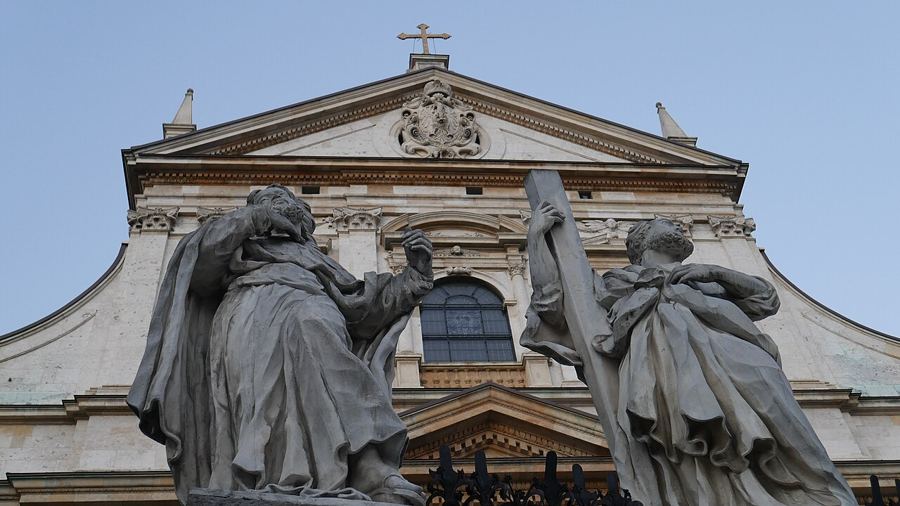 Churches and the bugleTwelve apostles on Grodzka Street
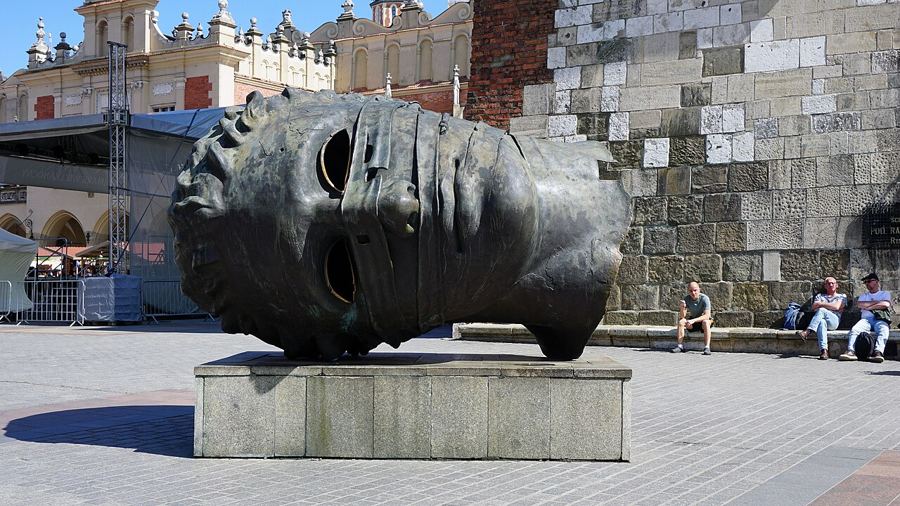 The Main SquareHow was Rynek Główny measured out in 1257?
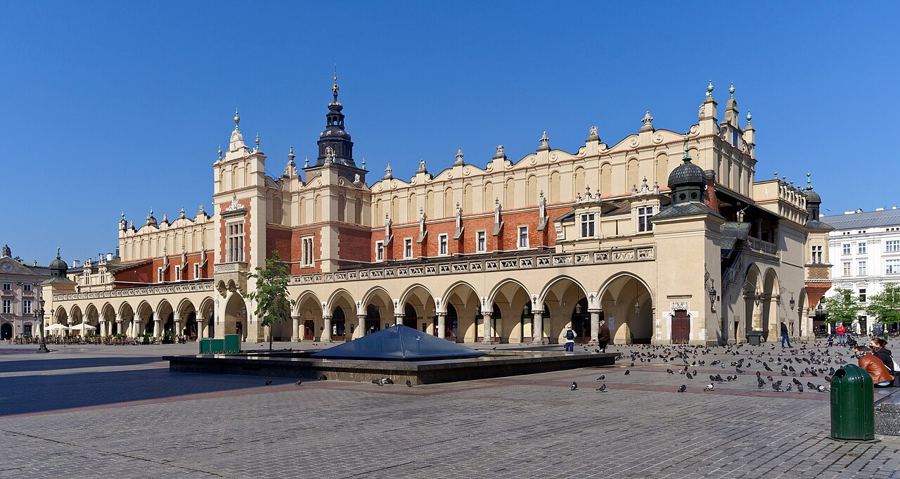 The Main SquareThe Sukiennice: two lives under one roofThe Main SquareBeneath the square: the Rynek Underground
Photographs used: Mark Healey from Brough, UK — Creative Commons BY-SA 2.0; Fred Romero from Paris, France — Creative Commons BY 2.0; Piotrek Przyborowski — Creative Commons BY-SA 4.0; Igor123121 — Creative Commons BY-SA 4.0; Jakub Hałun — Creative Commons BY-SA 4.0