- Period
- legend; 20th century
- Distance
- 15 min from the Rynek
How did the Wawel Dragon enter the written record?
The cave is real; its dragon changes from one telling to another, from Krak’s sons in a chronicle around 1200 to Skuba and the sulphur-filled sheep.
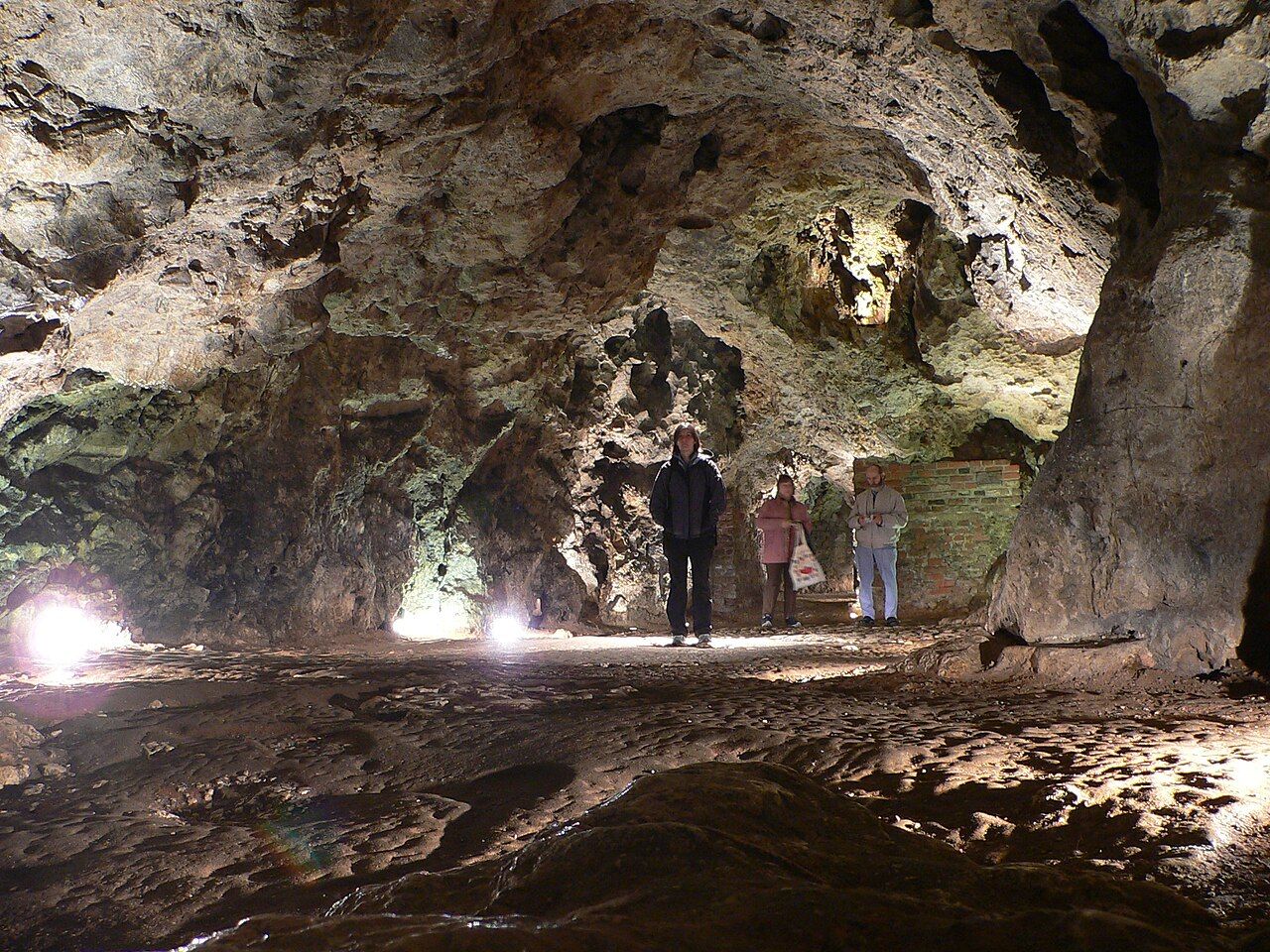
The Dragon’s Den is a limestone cave in the western side of Wawel Hill. Its dragon belongs to a story whose details changed as it was told. I keep the difference in mind: the cave is limestone, while the dragon arrives through a written story.
Was the dragon first defeated by a cobbler?
Not in the earliest written version. The legend of the Wawel Dragon first appears in the chronicle of Wincenty Kadłubek around 1200. There, the dragon is defeated by the sons of the legendary ruler Krak. The cobbler is not yet part of the account.
Later tellings give the deed to Skuba, a cobbler. He feeds the dragon a sheep stuffed with sulphur. The dragon drinks from the Vistula until it bursts. I find the change in the story more striking than any single retelling: the dragon remains, but the person who outwits it shifts. Following the legend backwards leads from Skuba to Krak’s sons, then to the chronicle in which the story first appears. The cave gives this movement a place beneath the hill, while the written versions give it different heroes. It is a small difference in the telling, but it changes the shape of the tale. One account makes the ruler’s sons the victors; another brings in a cobbler and a carefully prepared sheep. The Vistula belongs to that later story, too, as the water the dragon drinks before it bursts.
Does the cave belong only to the legend?
The cave is limestone, and its passage through the hill is a matter of length and route as well as story. The cave system is about 270 metres long, though about 80 metres are open to visitors. Visitors enter from the top of Wawel Hill down a spiral stair and leave by the Vistula bank. My bad knee makes me register the descent before anything else; the route has a beginning above and an exit beside the river.
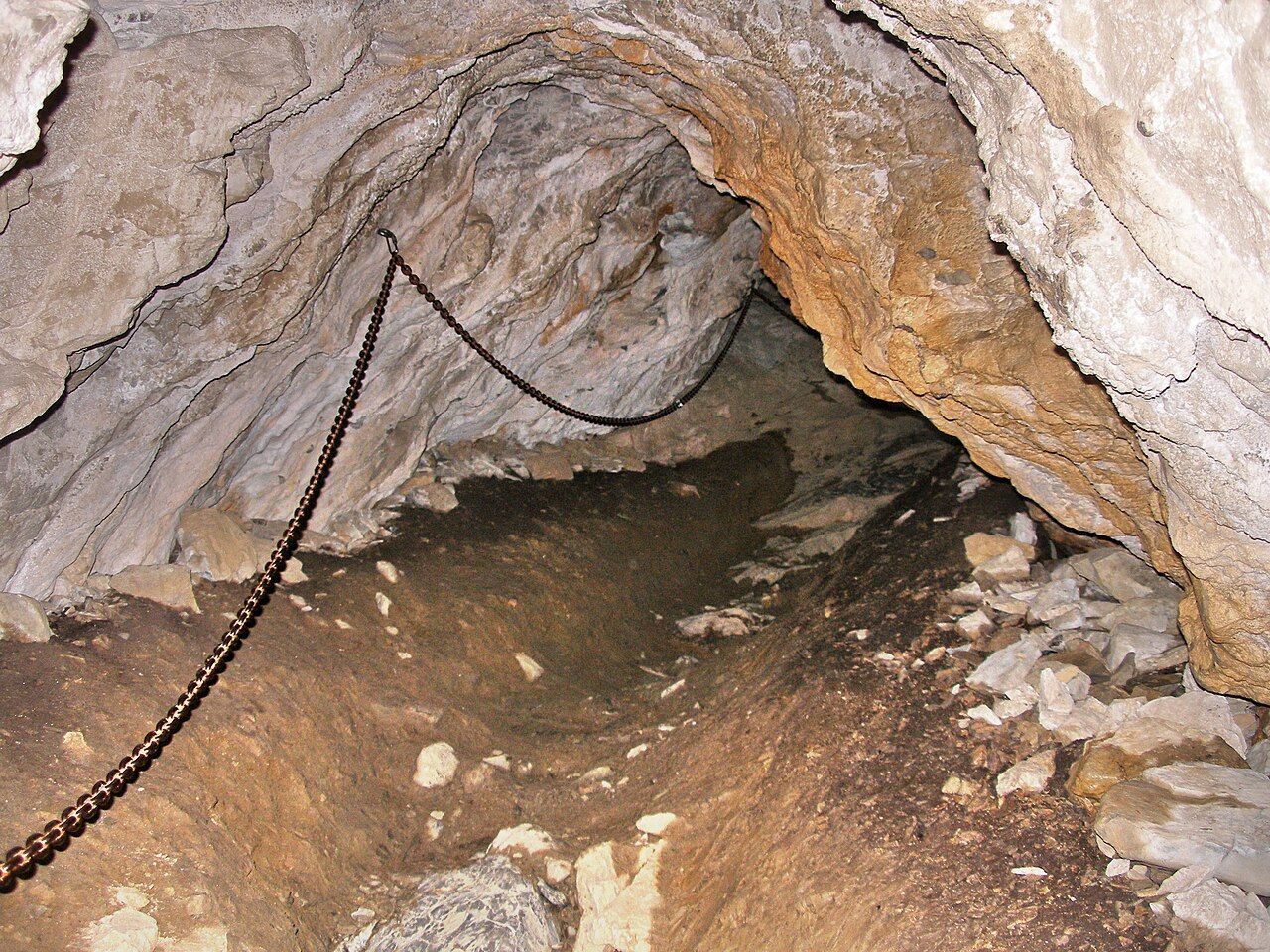
- From Rynek: 15 min.
- Open to visitors: about 80 metres of the cave system.
- Route: down from the top of Wawel Hill; out by the Vistula bank.
- Era: legend; 20th century.
Is the dragon still only in the story?
At the cave mouth, Bronisław Chromy’s bronze dragon statue was placed in 1972. It breathes a burst of real fire every few minutes. The statue gives the legend a visible presence at the entrance, without making the written versions any less varied. When I think of the Den, the chronicle and the bronze figure sit beside each other: one preserves the first account, the other stands at the cave mouth.
The cave was opened to visitors in the 20th century. Its entrance and exit make a route through the hill; its name carries the older story into the present. The legend also travels beyond the cave, in the June parade of dragons. I return to the earliest version in Kadłubek’s chronicle: the dragon defeated by Krak’s sons, before Skuba and the sulphur-stuffed sheep entered the telling.
More from Wawel Hill and beyond
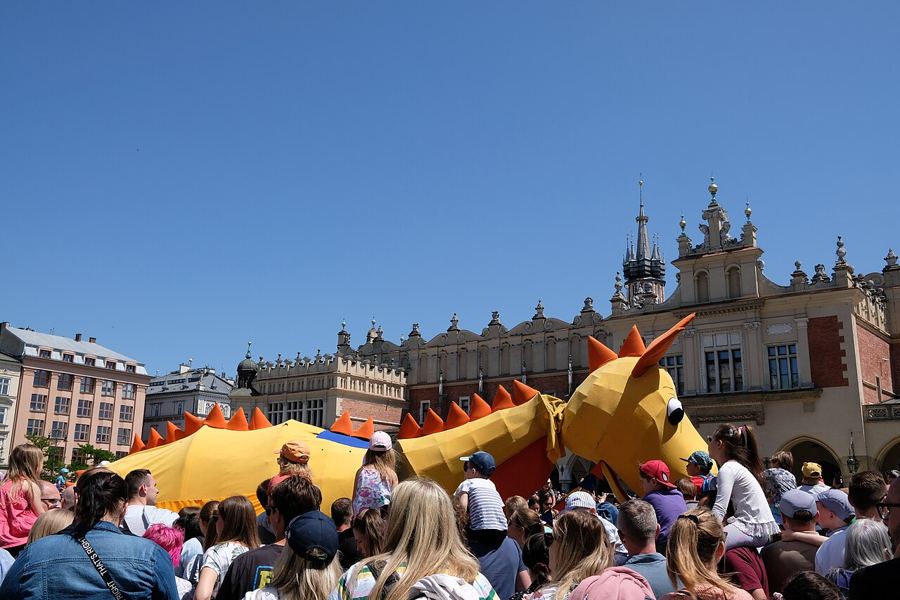 Dragon loreA parade of dragons on the Vistula
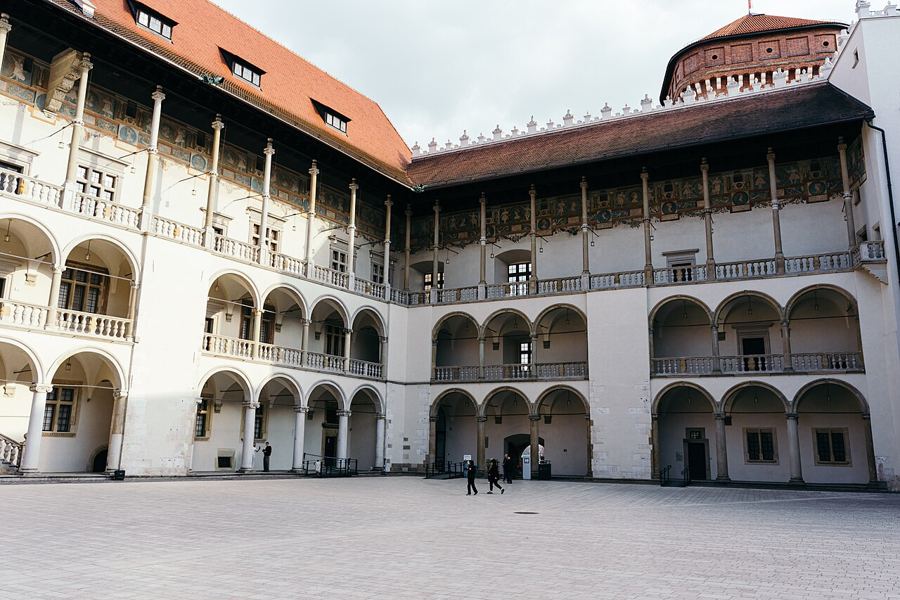 The castleThe arcaded courtyard of Wawel Castle
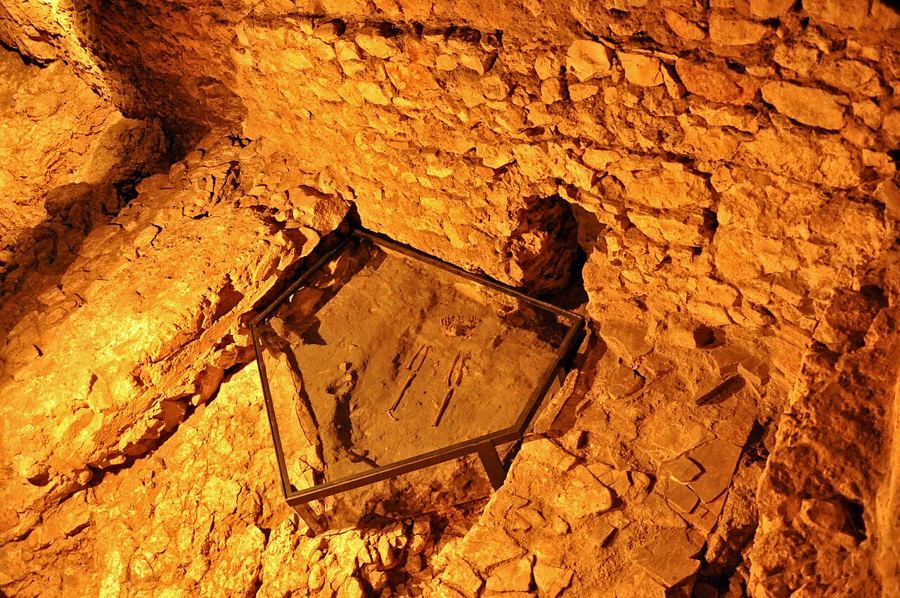 The castleWhat came before the castle on Wawel Hill?
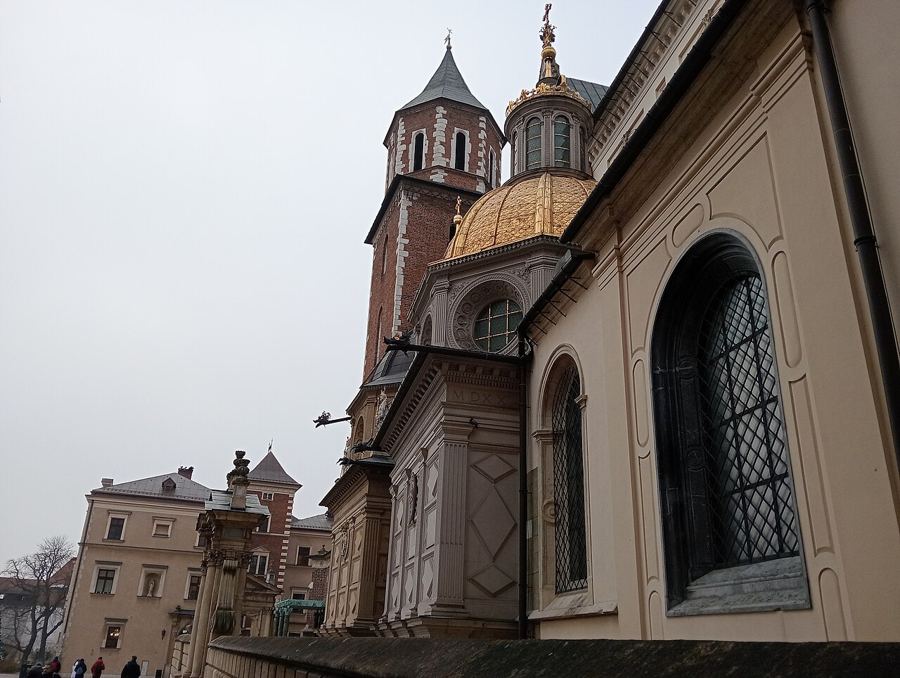 Cathedral and bellWhere were Polish kings crowned and buried?
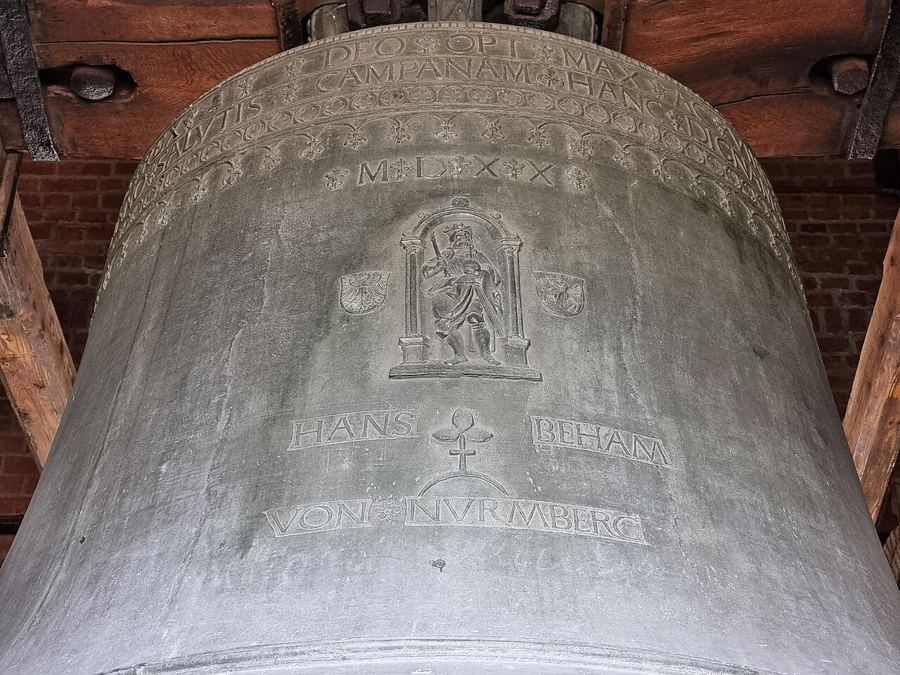 Cathedral and bellThe Sigismund Bell: a voice rung by hand
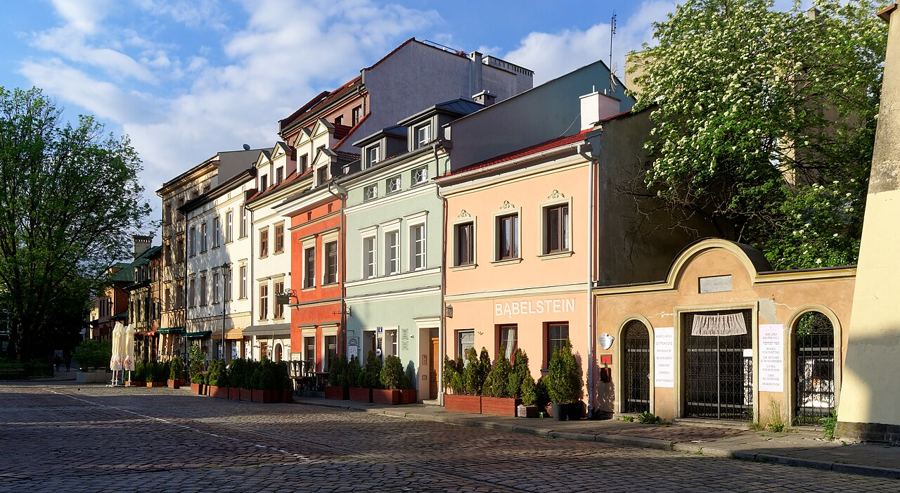 Squares and the island townHow can Kazimierz still feel like a town on an island?
Photographs used: Dwxn — Creative Commons BY-SA 4.0; Lloyd Tudor — Creative Commons BY-SA 4.0; Jennifer Boyer — Creative Commons BY 2.0; Franek Vetulani — Creative Commons BY-SA 3.0; Zala — Creative Commons BY-SA 4.0; Jakub Hałun — Creative Commons BY-SA 4.0