- Period
- 14th century to today
- Distance
- 20 min from the Rynek
How can Kazimierz still feel like a town on an island?
Follow Kazimierz from its royal beginnings, through the walled Jewish town, to the traces of a history that still gives the place its shape.
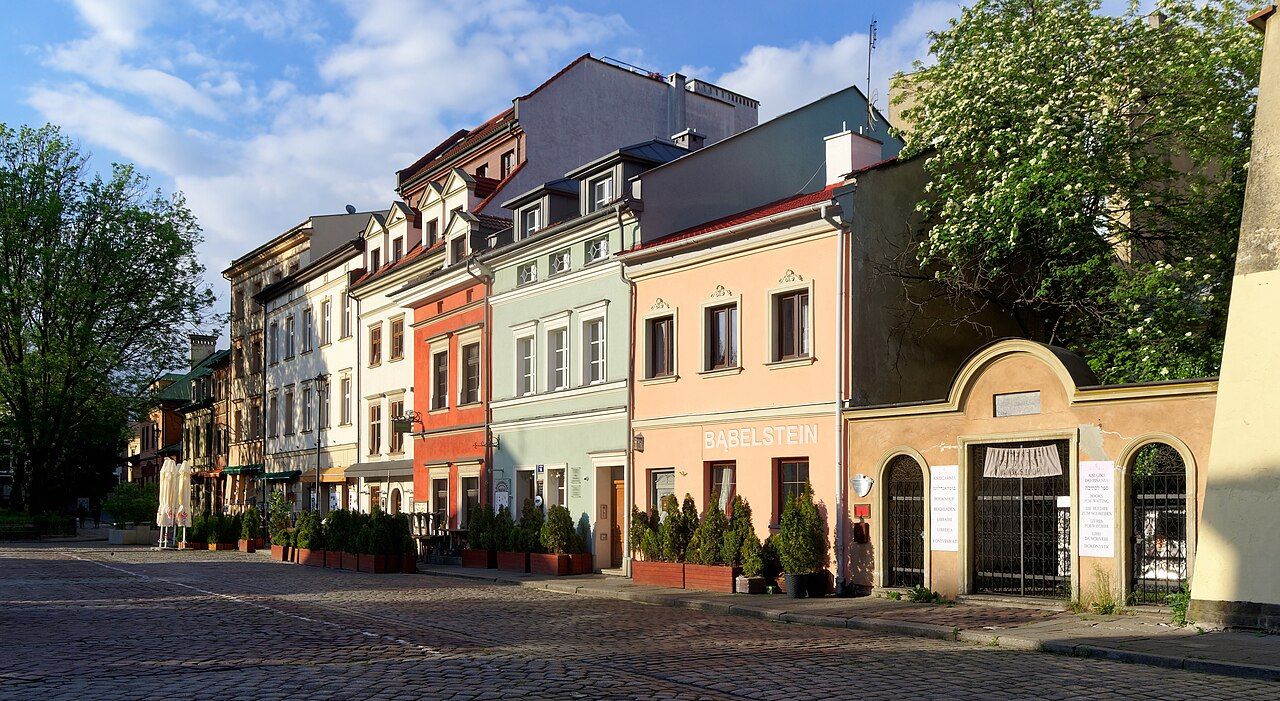
King Casimir III the Great founded Kazimierz as a separate town in 1335 and gave it his name. It stood on an island, bounded by the Vistula and an old arm of the river. To follow its history is to follow the changing edges of a place: water, a wall, a town boundary, then a district joined to Kraków.
How should I begin with the island?
Start with the water. Kazimierz was not simply a part of Kraków waiting to be noticed; it was a separate royal town, set apart by the Vistula and its old arm. I hold on to that geography as I think through the streets. The island makes the town’s later changes feel legible: a boundary can be made by a river, and a boundary can also be changed by people.
The old arm was filled in during the late 19th century. Dietla Street follows its line. That fact gives the vanished water a place in the present-day map, even if the river itself no longer describes the same edge. Kazimierz was a town with water for a boundary, and history has not made that boundary easy to forget.
Kazimierz was a town with water for a boundary, and history has not made that boundary easy to forget.
How did the Jewish town take shape?
Next, follow the history north-east. In 1495 King John I Albert moved Kraków’s Jews to the north-eastern part of Kazimierz. The Jewish town was walled off and had its own self-government. It was a distinct community within a distinct town, with its own boundary and civic life.
I find myself returning to that sequence: first the island town, then the walled Jewish town within it. The layers are close together in the story, but they are not interchangeable. Kazimierz’s history asks for attention to where a boundary lay, and to whom it separated or gathered. I do not need to imagine the old walls in order to understand that their presence shaped the town.
What helps place the old centre?
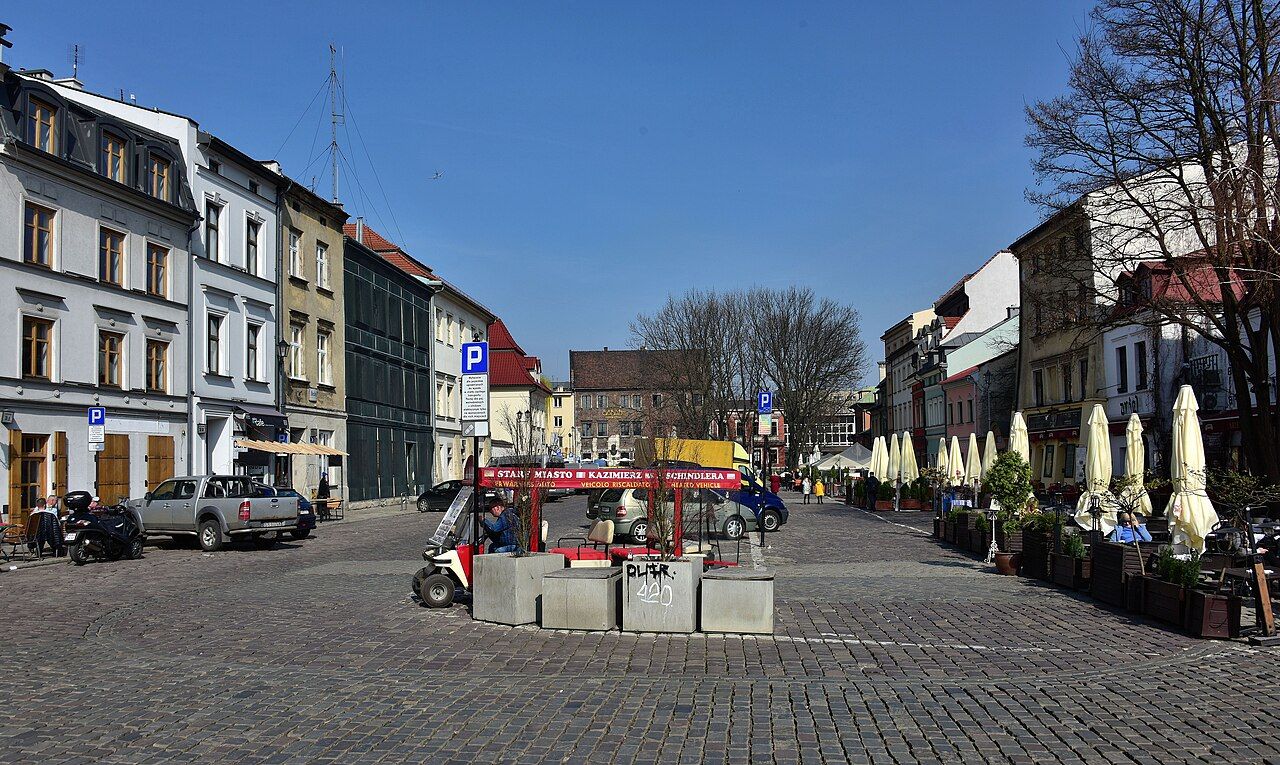
Use Szeroka Street as a point of orientation. It was the centre of the Jewish town, and more a long square than a street. That small distinction changes how I picture the place: not only as a route through the quarter, but as a centre with room to gather around it.
Seven historic synagogues survive in Kazimierz. The oldest synagogue building in Poland is the oldest synagogue building in Poland, and the town’s Gothic parish church is the town's Gothic parish church. I keep both in view when thinking about Kazimierz’s different histories, without folding them into one.
What are the useful bearings?
- From Rynek: 20 min
- Era: 14th century to today
These are simple bearings, but they suit a place whose identity has been shaped by changes of boundary and name. Kazimierz was joined to Kraków in 1800, under Austrian rule. The separate town became part of the larger city; the histories that had gathered there did not thereby become a single story.
How should I understand the scale of what was lost?
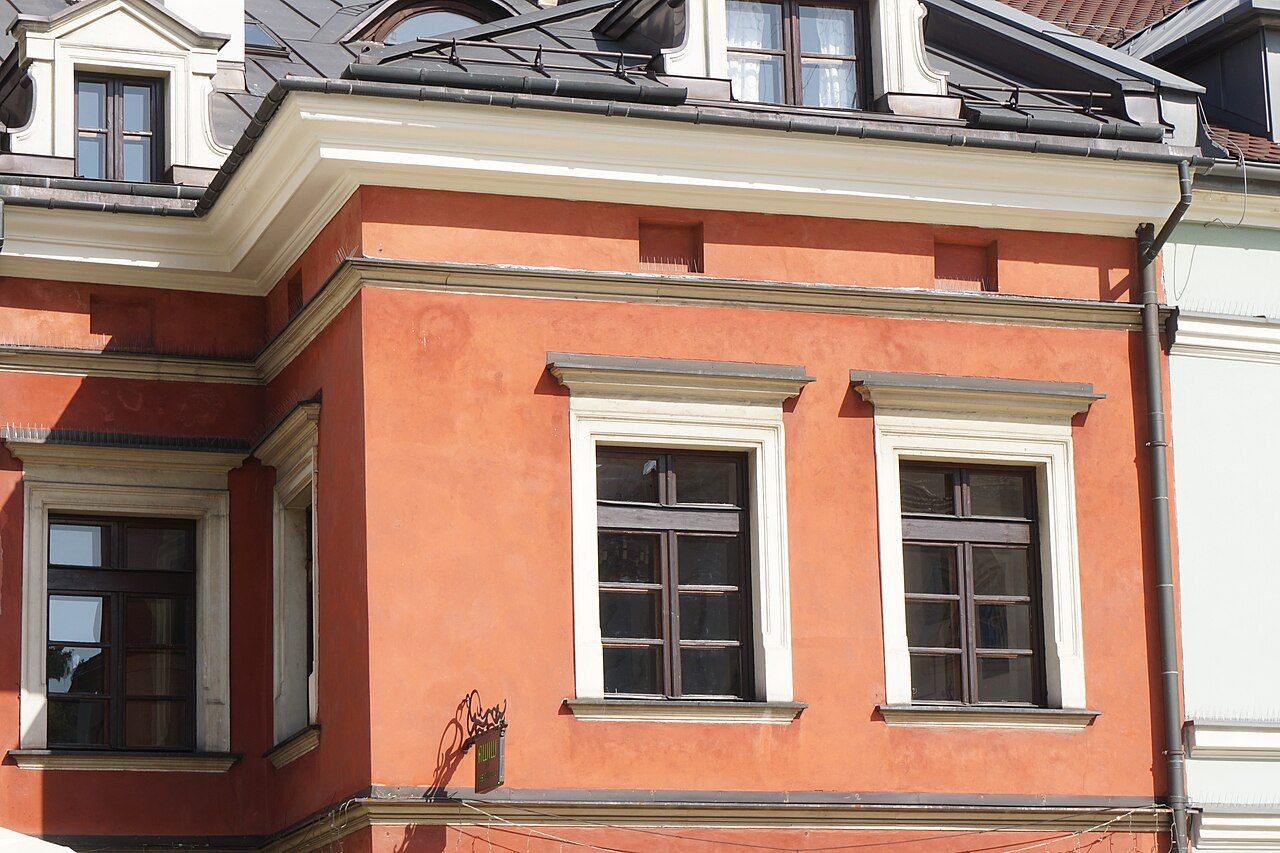
Before the Second World War, about 60,000 Jews lived in Kraków, roughly a quarter of the city’s population. I pause over the scale of that figure. It belongs to the history of Kraków as a whole, while Kazimierz holds a particular place in the story of Jewish life in the city. The walled town, Szeroka Street and the surviving synagogues give that history a geography, rather than leaving it as a number alone.
This is where Kazimierz gets under my skin. I return to the island because it gives the story a shape I can follow, and then I have to let that shape change: the old river arm is filled in, the separate town joins Kraków, and the Jewish town remains a central part of how Kazimierz is understood. The place seems to carry its earlier outlines without being reducible to them. I like the care required by that thought. It asks me to notice the difference between a town and a district, between a street and a square, between the water that once enclosed a place and the line it leaves behind. Nothing in that sequence erases what came before; nothing makes every layer the same.
What gives Kazimierz a later chapter?
The Jewish Culture Festival has been held in Kazimierz every summer since 1988. In 1993, Steven Spielberg filmed scenes of Schindler’s List in Kazimierz. These are later chapters in the area’s public life, distinct from the history of the Jewish town itself. They help explain why Kazimierz is encountered through more than one period, without replacing the people and boundaries that came before.
Kazimierz is part of the Historic Centre of Kraków inscribed by UNESCO. I end where I began, with the edge of the town: the old arm of the Vistula is now a line followed by a street, and the separate royal town is joined to Kraków. The boundaries have changed, but they remain part of how I read the place.
To me, Kazimierz is most itself when its different boundaries are allowed to remain visible.
More from Kazimierz and beyond
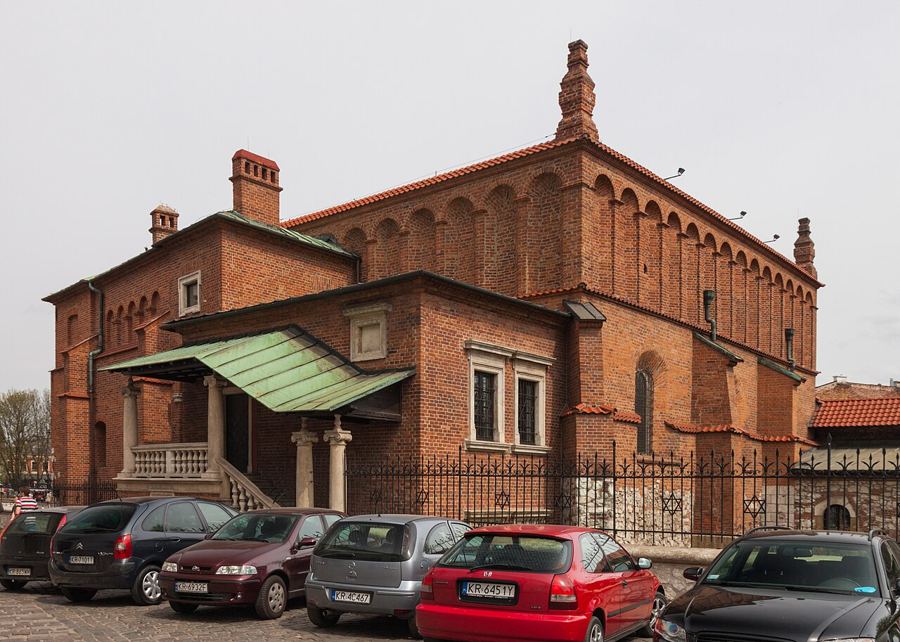 SynagoguesWhat does the Old Synagogue hold in one prayer hall?
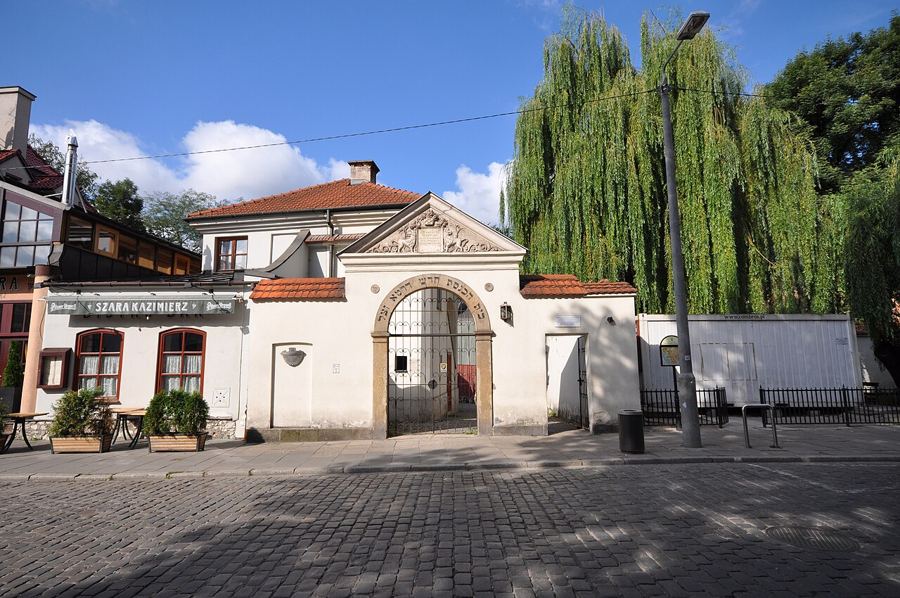 SynagoguesIs the Remuh Synagogue only a memory?
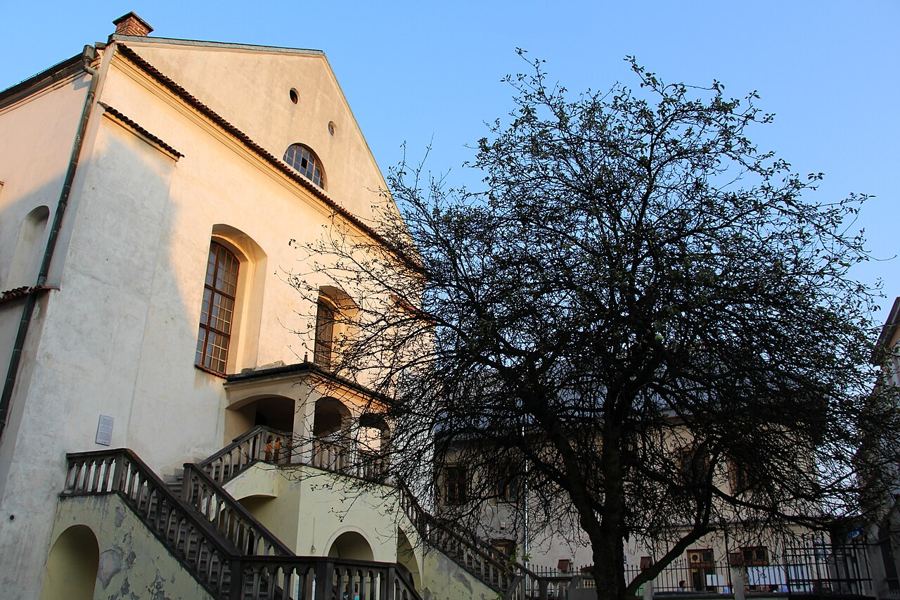 SynagoguesIzaak's Synagogue and the scale of seventeenth-century Kazimierz
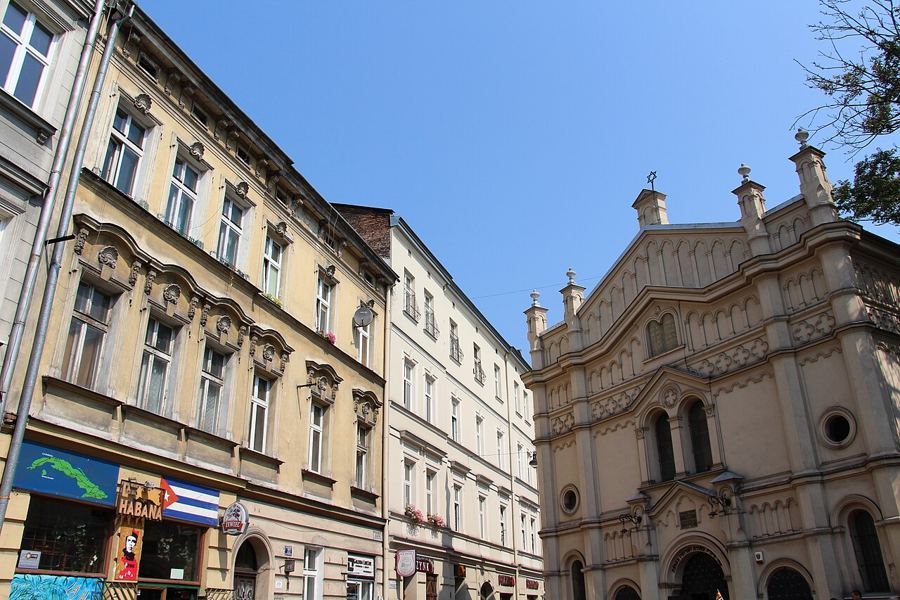 SynagoguesWhat does the stained glass tell me at Tempel Synagogue?
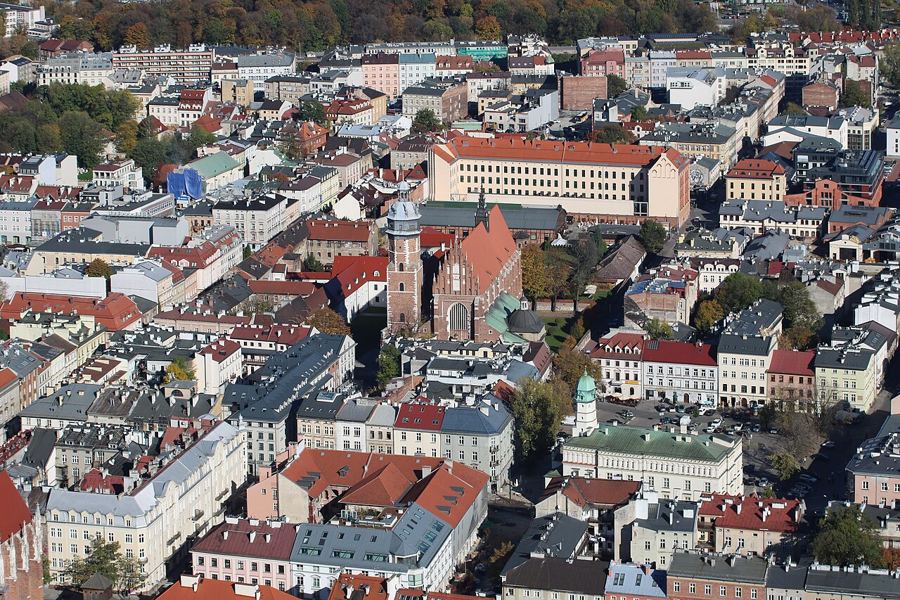 Churches by the riverHow does Corpus Christi tell the story of Christian Kazimierz?
Photographs used: Marcin Konsek — Creative Commons BY-SA 4.0; Jorge Láscar from Australia — Creative Commons BY 2.0; Fred Romero from Paris, France — Creative Commons BY 2.0; Fred Romero from Paris, France — Creative Commons BY 2.0; Ingo Mehling — Creative Commons BY-SA 4.0