- Period
- 16th century
- Distance
- 15 min from the Rynek
The Sigismund Bell: a voice rung by hand
Cast in 1520 and still swung by a team of bell-ringers, the Sigismund Bell gives its voice to major church feasts and moments of national importance.
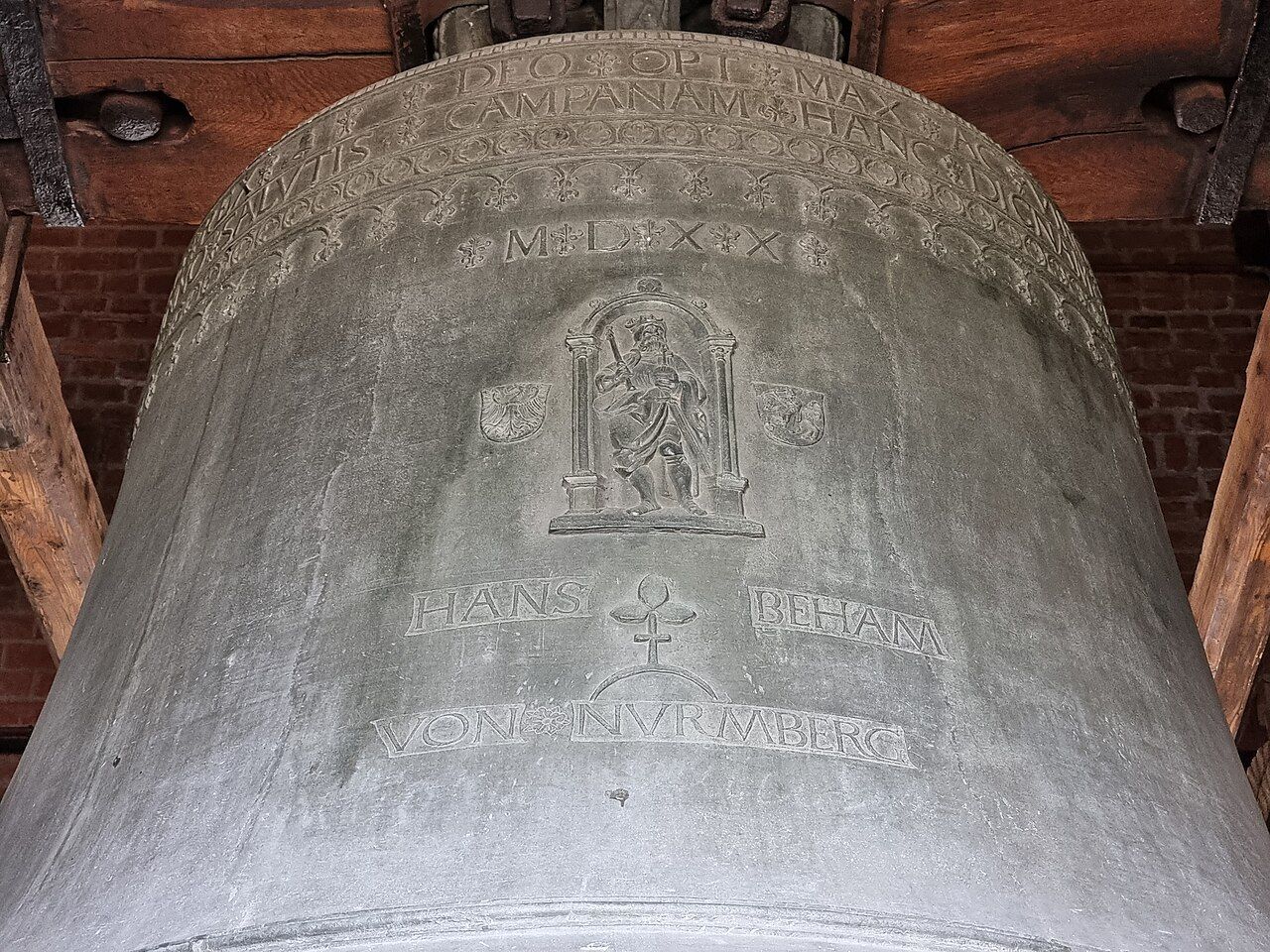
The Sigismund Bell was cast in 1520 by Hans Behem of Nuremberg. It still rings by hand on major church feasts and at moments of national importance. Its voice belongs to ceremonies larger than any one person, though the work of setting it in motion is done by a team.
How does the climb begin?
Reach the Sigismund Tower by the steep wooden stair inside the cathedral. The climb is part of the approach to the bell: a physical passage towards an object whose scale is difficult to take in from a few figures alone.
Keep the bell’s proportions in mind. It is about 2.4 metres across at the mouth and weighs nearly 10 tonnes. With its clapper and yoke, the weight is about 12.6 tonnes. The numbers are precise; the impression they leave is less easily measured.
Think of the work behind a ringing. A team of about a dozen bell-ringers is needed to set the bell swinging. I find something moving in that contrast: this great, solid object does not sound by itself, but depends on many people acting together.
- From Rynek: 15 min.
- Era: 16th century.
- Access to the tower: a steep wooden stair inside the cathedral.
What does the bell’s name carry?
King Sigismund I the Old commissioned the bell, and it was named after him. It was hung in the cathedral’s Sigismund Tower in 1521. I like the plainness of this sequence: a king commissions a bell, a maker casts it, and then it is raised into the place where it will sound. The names and dates give the story its frame; the bell itself holds the larger span.
There is a popular custom that touching the bell’s heart brings luck in love. It is a tender thought beside all that weight and ceremony. The bell can stand for a public voice, and still there is room for a private wish to gather around it.
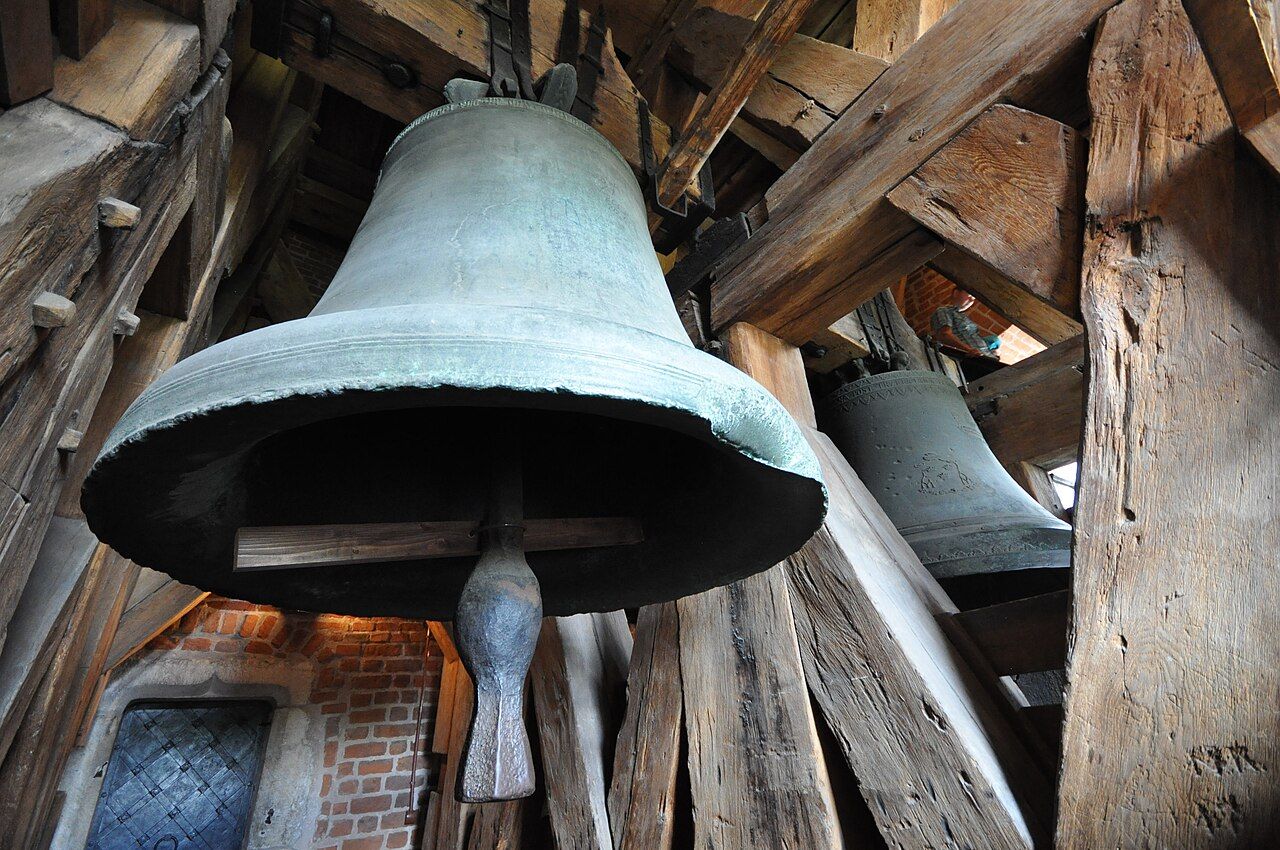
The bell’s clapper cracked at the end of 2000, and a new one was fitted the following year. I return to that small piece of its history because it reminds me that a voice, even one attached to a bell of this scale, depends on its parts. The bell was cast centuries ago, but its ringing has not been separated from the ordinary work of keeping it able to sound.
When does it speak for more than itself?
The Sigismund Bell rings on major church feasts and at moments of national importance. That is where the idea of a national voice settles for me: not in a claim that the bell speaks constantly, but in the occasions gathered around its sound. Its weight, its long history and the hands needed to set it swinging all meet in that one act of ringing.
In Kraków, another sound marks the passing hours: the hourly signal from St Mary's. The Sigismund Bell belongs to a different measure, reserved for the great occasions named in its story. I find the distinction affecting. A bell can mark ordinary time, or gather a community around a moment that asks to be remembered.
The Sigismund Bell makes a national voice feel less like an abstraction and more like a sound made possible by many hands.
More from Wawel Hill and beyond
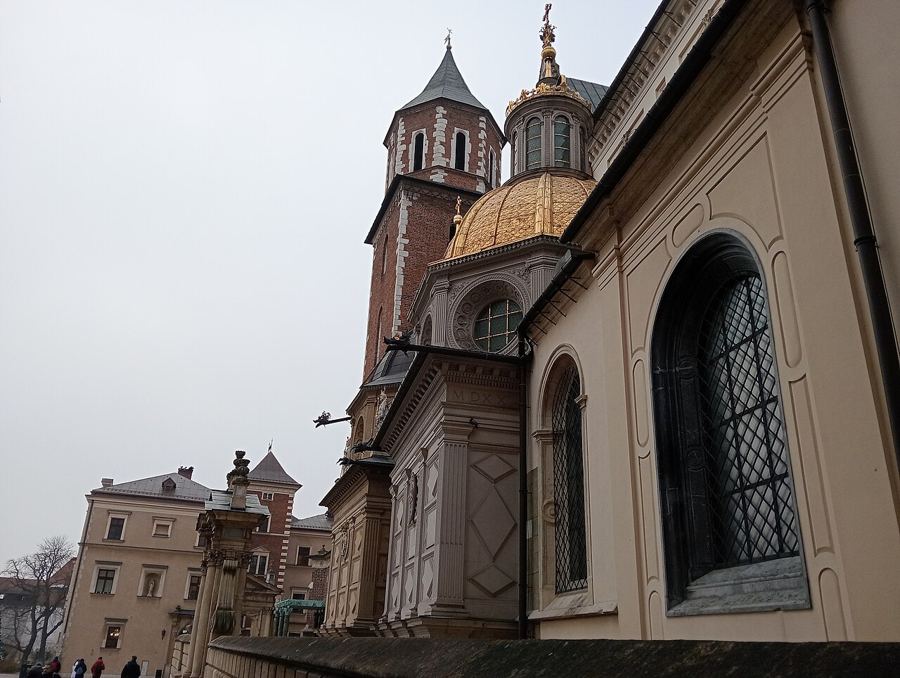 Cathedral and bellWhere were Polish kings crowned and buried?
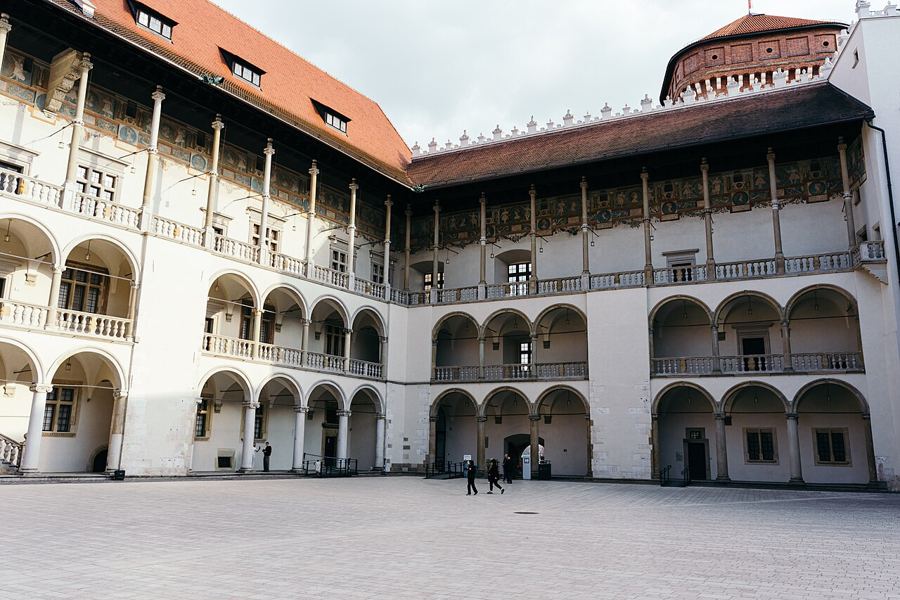 The castleThe arcaded courtyard of Wawel Castle
 The castleWhat came before the castle on Wawel Hill?
 Dragon loreHow did the Wawel Dragon enter the written record?
 Dragon loreA parade of dragons on the Vistula
 Squares and the island townHow can Kazimierz still feel like a town on an island?
Photographs used: Franek Vetulani — Creative Commons BY-SA 3.0; Lloyd Tudor — Creative Commons BY-SA 4.0; Jennifer Boyer — Creative Commons BY 2.0; Craig Nagy from Vancouver, Canada — Creative Commons BY-SA 2.0; Dwxn — Creative Commons BY-SA 4.0; Jakub Hałun — Creative Commons BY-SA 4.0