- Period
- 15th-16th century
- Distance
- 20 min from the Rynek
What does the Old Synagogue hold in one prayer hall?
At the southern end of Szeroka Street, a Renaissance prayer hall carries a layered history: an old building, a call to uprising, wartime devastation and a museum.
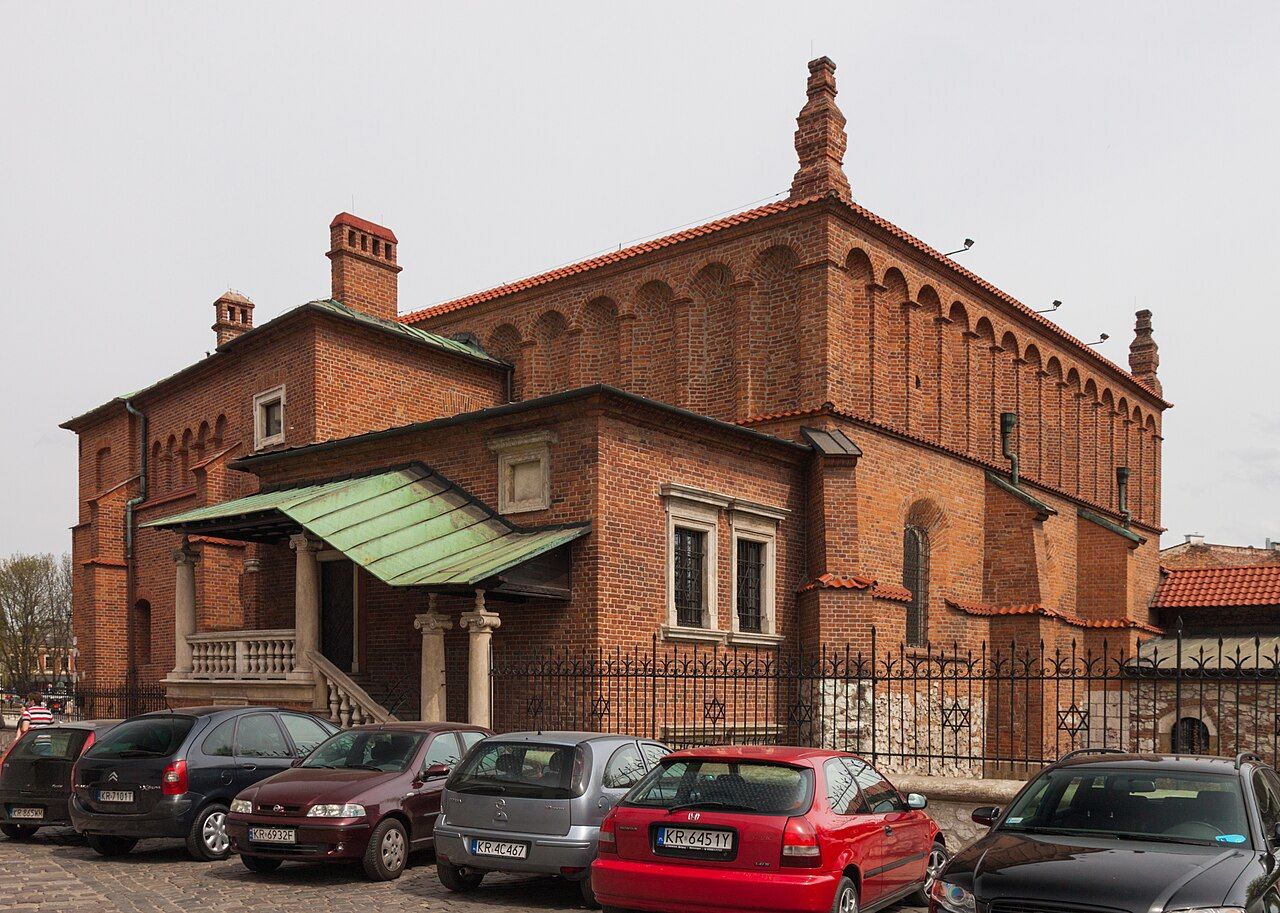
The Old Synagogue is the oldest surviving synagogue building in Poland, dating from the 15th century. At the southern end of Szeroka Street, it holds more than one version of its past: the shape of a Renaissance rebuilding, the memory of a public call to uprising, and the history of a building devastated and restored. Five centuries sit uneasily, but distinctly, in this prayer hall.
Was it built in a single moment?
Myth: The Old Synagogue belongs to one time, preserved intact from its beginnings.
Fact: It dates from the 15th century, but its present character also carries the mark of rebuilding. After a fire in 1557, the Italian architect Matteo Gucci rebuilt it in Renaissance style. The battlemented parapet was added during that rebuilding. Even the name of the building does not hold it to a single moment; the walls bear a change made in response to loss.
Inside, the prayer hall has a double nave divided by slender columns, with rib vaults above. The eye has to take in both the division and the sense of one room. I find that combination a fitting way to encounter a building whose history does not move in a straight line: an older structure, altered after fire, and a hall still legible as a place of prayer.
The original stone bimah enclosure in the middle of the hall was reconstructed after the war. It is one more layer to keep in mind. What is seen now includes both what endured and what had to be put back.
Was the hall only a place of prayer?
Myth: Its story stays within the synagogue walls.
Fact: In 1794, Tadeusz Kościuszko spoke in the Old Synagogue, calling Kraków's Jews to join the uprising. The hall is part of a religious history, but this moment also places it in the public life of the city. I pause over the fact that a room shaped by its columns and vaults also held such an address.
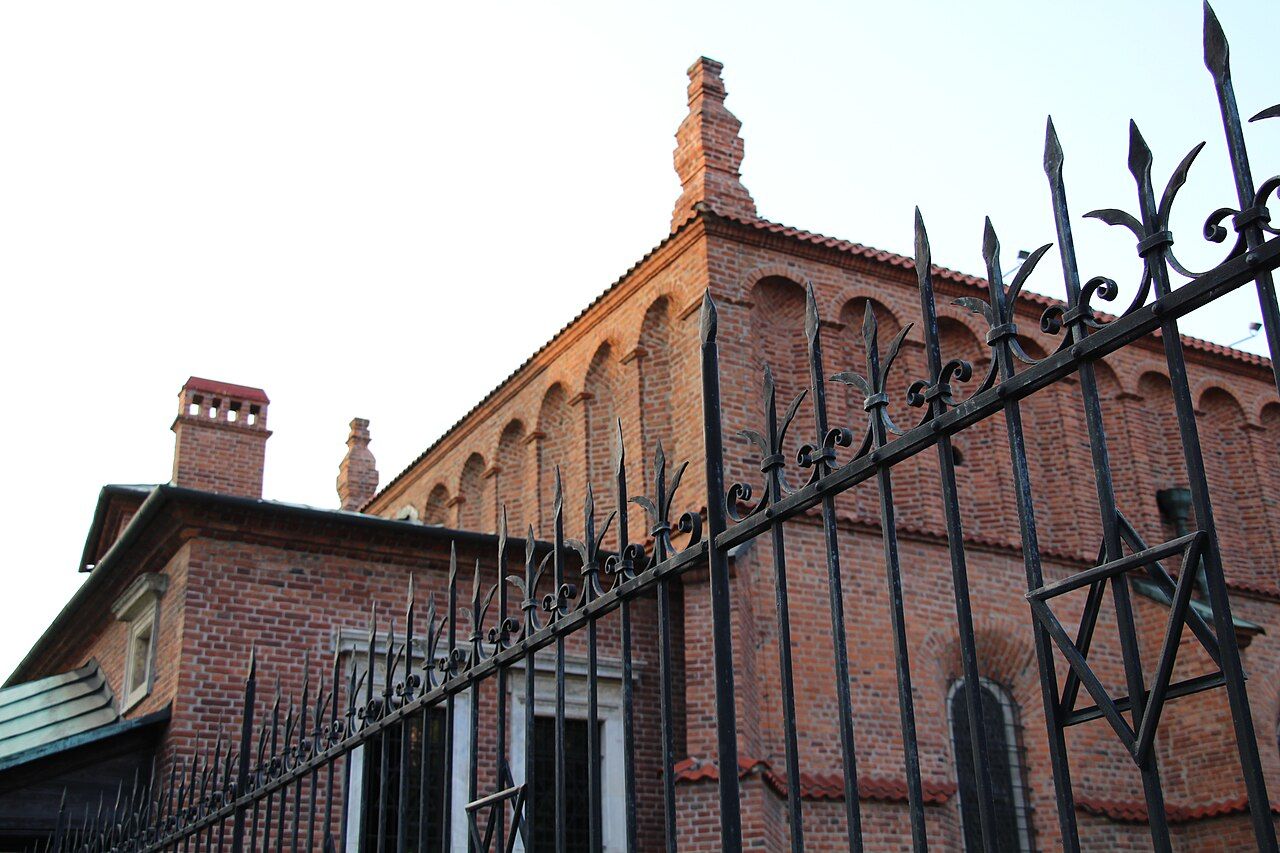
- Setting: the southern end of Szeroka Street.
- Architecture: a double-naved prayer hall, rib vaults and a Renaissance battlemented parapet.
- Today: a branch of the city history museum, with an exhibition on the history and culture of Kraków's Jews.
Did the war leave the building as it was?
Myth: The Old Synagogue passed through the war unchanged.
Fact: German occupiers looted and devastated it during the Second World War. It was restored after the war and opened as a museum in 1959. The reconstructed bimah enclosure belongs to this story of restoration; it is not a detail untouched by history.
That distinction matters to the way I read the room. The synagogue is not presented as though devastation never happened, nor is it only a record of what was lost. Its museum life makes room for the history and culture of Kraków's Jews, while the prayer hall retains the architecture of its Renaissance rebuilding. I am drawn to the way these histories occupy the same space without becoming one simple story.
Does a museum make it only a museum?
Myth: Once it opened as a museum, the building's earlier life became past tense.
Fact: The Old Synagogue is a branch of the city history museum, but the exhibition is on the history and culture of Kraków's Jews, and the building itself remains part of what is encountered. Nearby, a working 16th-century synagogue offers another point of reference. Here, the double nave, the reconstructed enclosure and the Renaissance details make the Old Synagogue's own layers present together.
I leave the thought there: this prayer hall holds its history most clearly in its layers.
More from Kazimierz and beyond
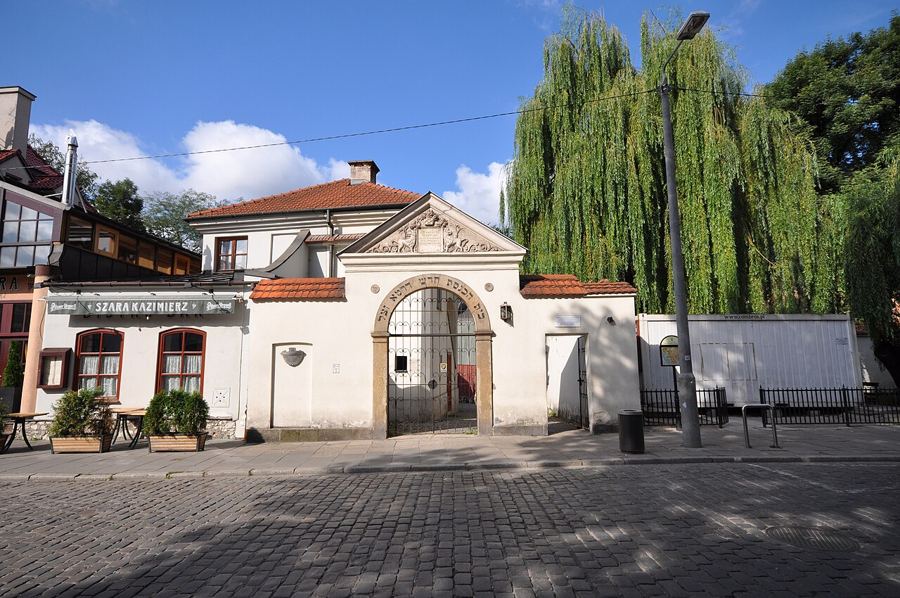 SynagoguesIs the Remuh Synagogue only a memory?
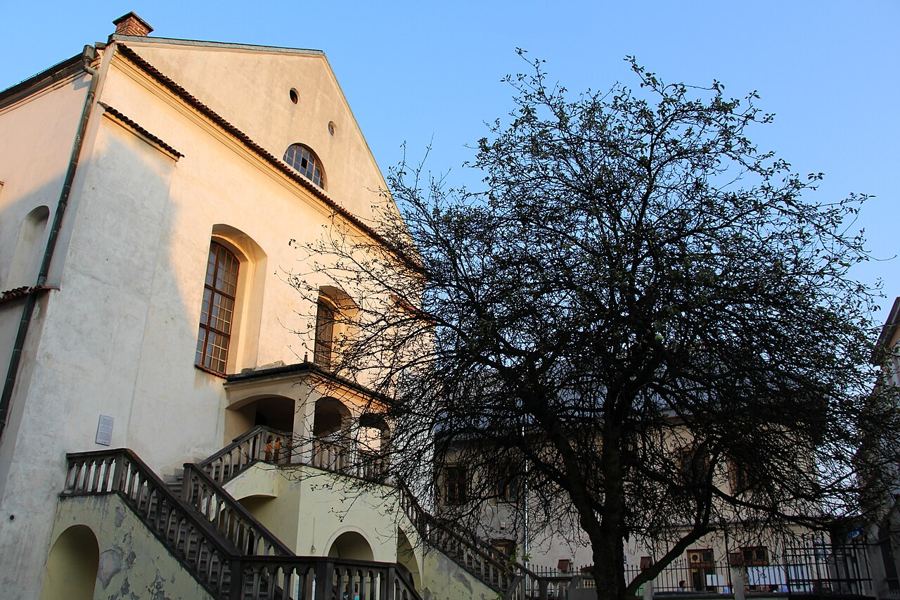 SynagoguesIzaak's Synagogue and the scale of seventeenth-century Kazimierz
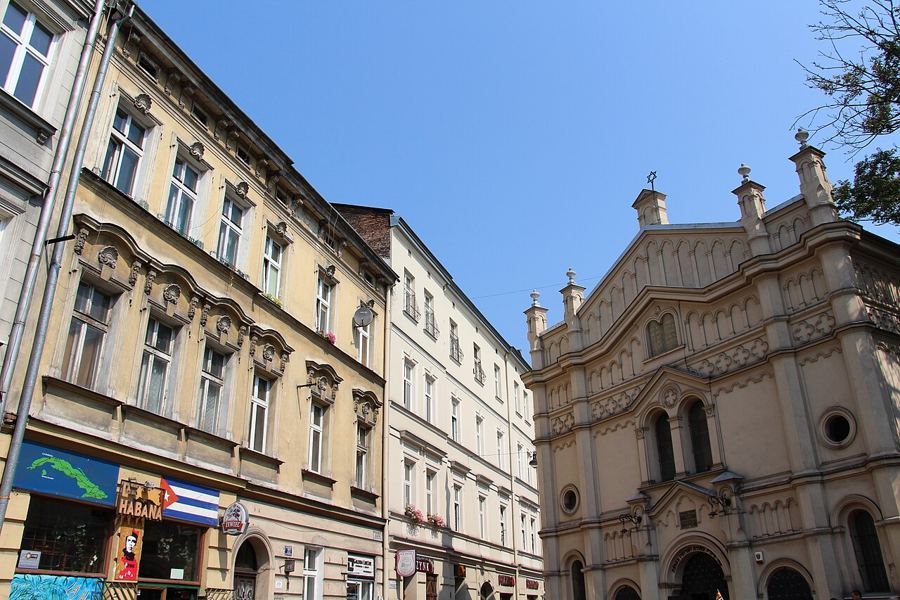 SynagoguesWhat does the stained glass tell me at Tempel Synagogue?
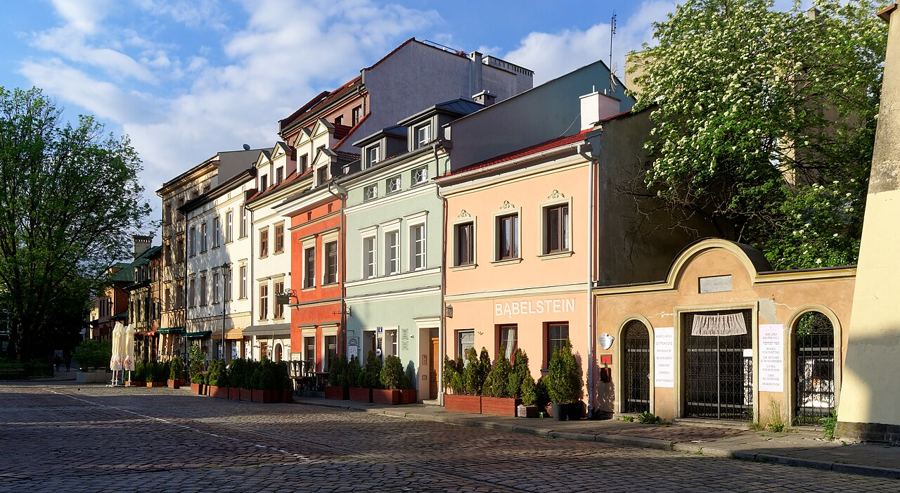 Squares and the island townHow can Kazimierz still feel like a town on an island?Squares and the island townPlac Nowy: the round hall in three lives
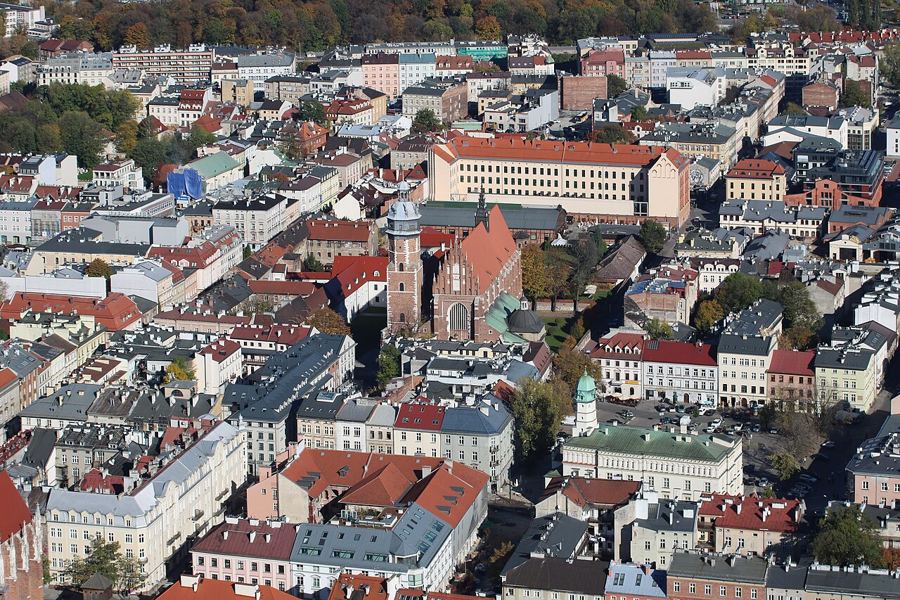 Churches by the riverHow does Corpus Christi tell the story of Christian Kazimierz?
Photographs used: Jorge Láscar from Australia — Creative Commons BY 2.0; Fred Romero from Paris, France — Creative Commons BY 2.0; Fred Romero from Paris, France — Creative Commons BY 2.0; Jakub Hałun — Creative Commons BY-SA 4.0; Ingo Mehling — Creative Commons BY-SA 4.0