- Period
- 16th century
- Distance
- 20 min from the Rynek
Is the Remuh Synagogue only a memory?
Founded in the 16th century and still used for regular services, the Remuh Synagogue stands beside a cemetery marked by remembrance and loss.
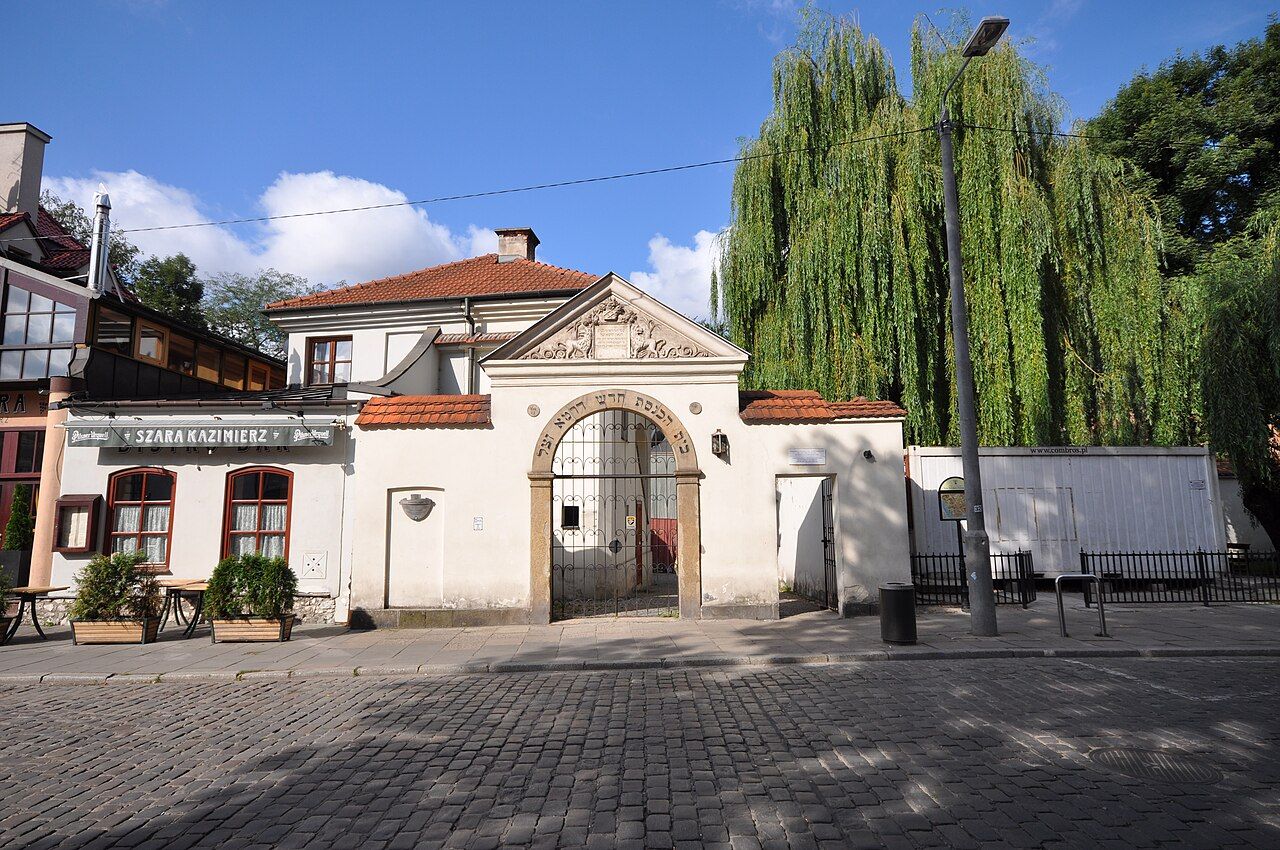
The Remuh Synagogue on Szeroka Street was founded in 1553 by Israel Isserles. It is the smallest of the historic synagogues of Kazimierz, and it is still used for regular services. I find myself returning to that distinction: the building belongs to history, but prayer has not become history here.
Does the synagogue carry its founder’s name?
Myth: The name marks the man who founded the synagogue.
Fact: It is named after Israel Isserles’s son, Rabbi Moses Isserles, known as the Rema. Moses Isserles was a leading 16th-century authority on Jewish law. The name holds a family story, but it also points to a figure whose importance reached well beyond the synagogue’s walls.
The Remuh is the smallest of Kazimierz’s historic synagogues; the largest of the Kazimierz prayer houses gives a different measure of scale. Here, the facts are close together: a small synagogue, a name passed from father to son, and regular services continuing in the same place.
Is it now only a museum?
Myth: A synagogue with a long history can be understood only as a monument to the past.
Fact: The Remuh Synagogue is still used for regular services. That is the detail I keep beside its founding date. It does not ask history to disappear; it simply means the building has a present as well.
- Founded: 1553
- Era: 16th century
- From Rynek: 20 min
The figures are spare, but they make a small frame for the place: its age, its position in Kazimierz, and its distance from Rynek. I read them alongside the fact of regular prayer, rather than letting the date stand alone.
Is the cemetery simply a record of the past?
Myth: A cemetery beside an old synagogue has nothing left to tell beyond who was buried there.
Fact: The Remuh Cemetery was used for burials until about 1800. The Rema’s grave is here, and on the anniversary of his death it draws visitors from around the world. Visitors also leave small stones on graves, following Jewish custom. The details make the cemetery more than a line in the synagogue’s history: the grave remains a place people come to remember.
Have the cemetery’s gravestones remained untouched?
Myth: What stands in an old cemetery has survived as it was.
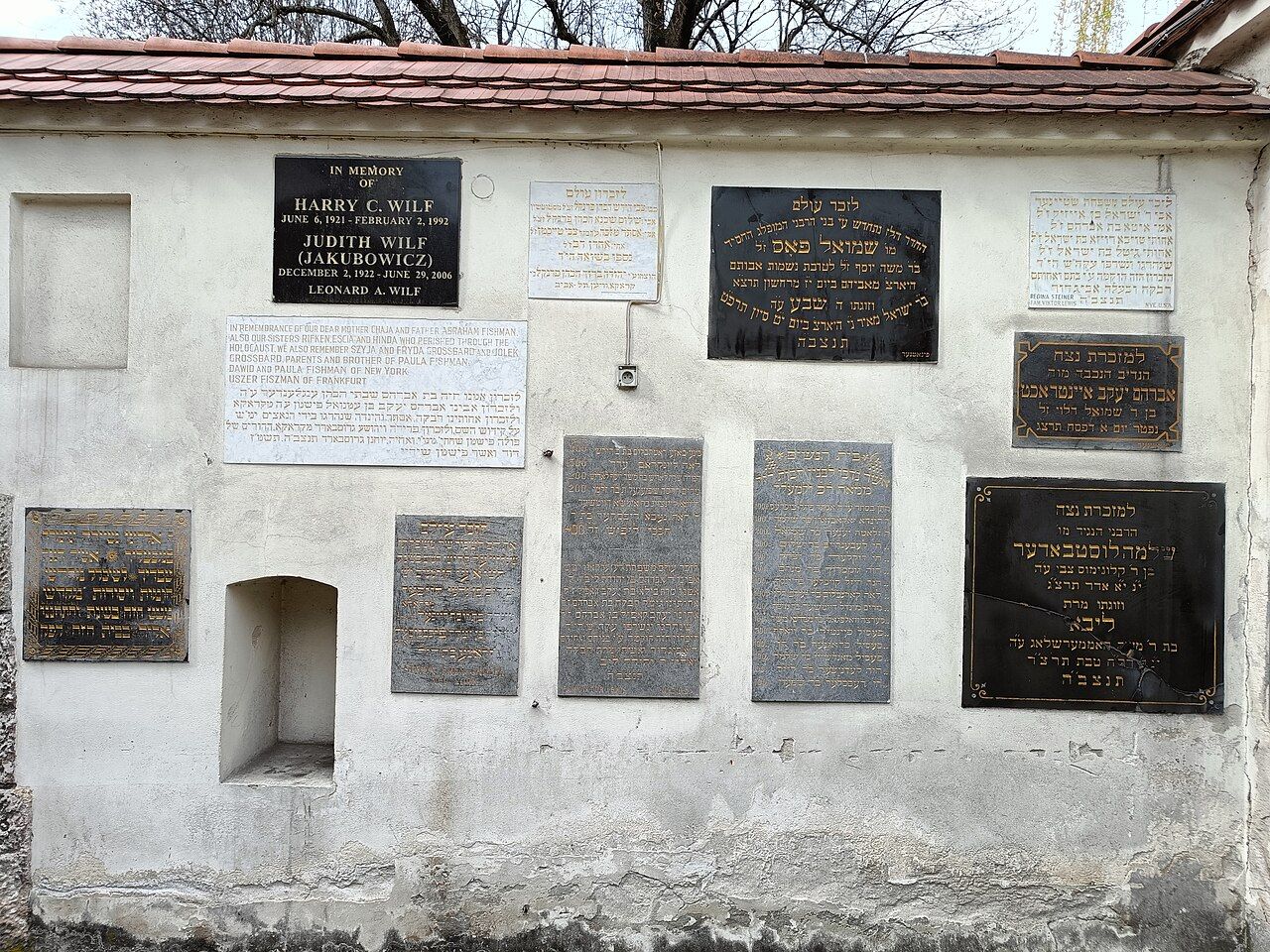
Fact: During the German occupation many gravestones in the Remuh Cemetery were destroyed or broken. After the war, fragments of broken gravestones were set into a memorial wall along the cemetery’s edge.
I think of that wall as a record of loss made from what remained. Its stones are fragments, not a return to what was there before. Beside them, visitors still leave small stones on graves; the custom and the memorial hold different kinds of remembrance in the same cemetery.
The synagogue and cemetery belong together in the story, but they do not make the same claim on time. One is still used for prayer. The other holds graves, a memorial wall, and the Rema’s resting place.
More from Kazimierz and beyond
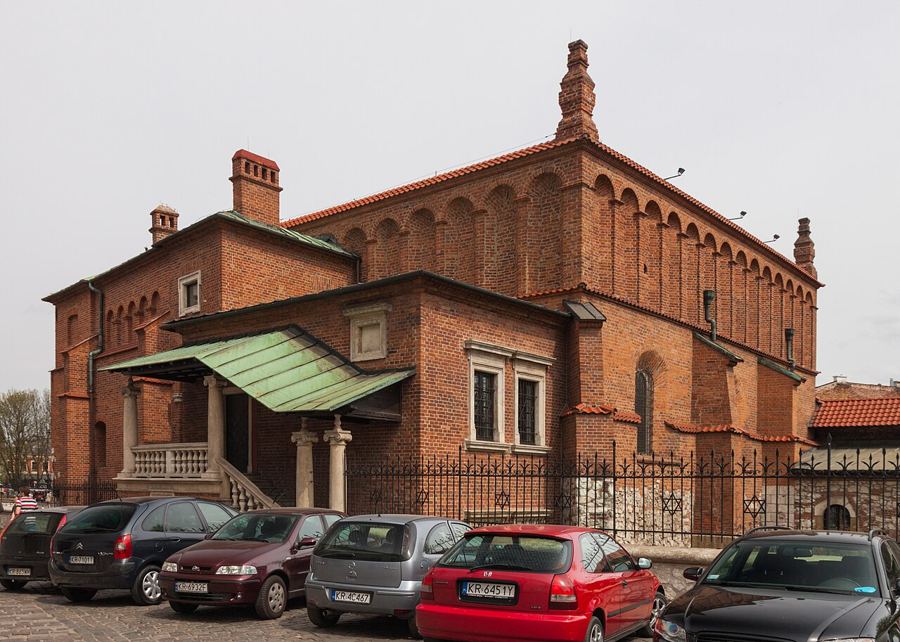 SynagoguesWhat does the Old Synagogue hold in one prayer hall?
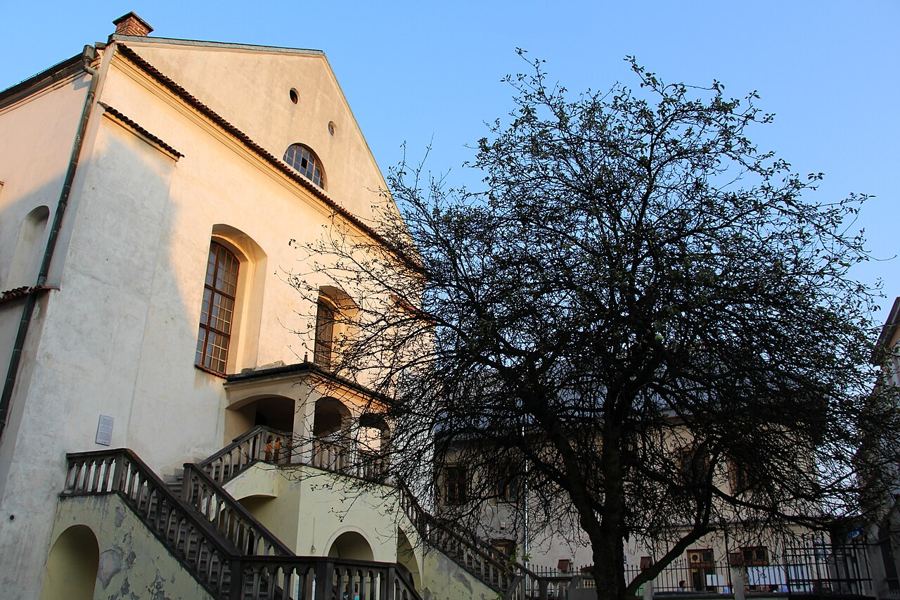 SynagoguesIzaak's Synagogue and the scale of seventeenth-century Kazimierz
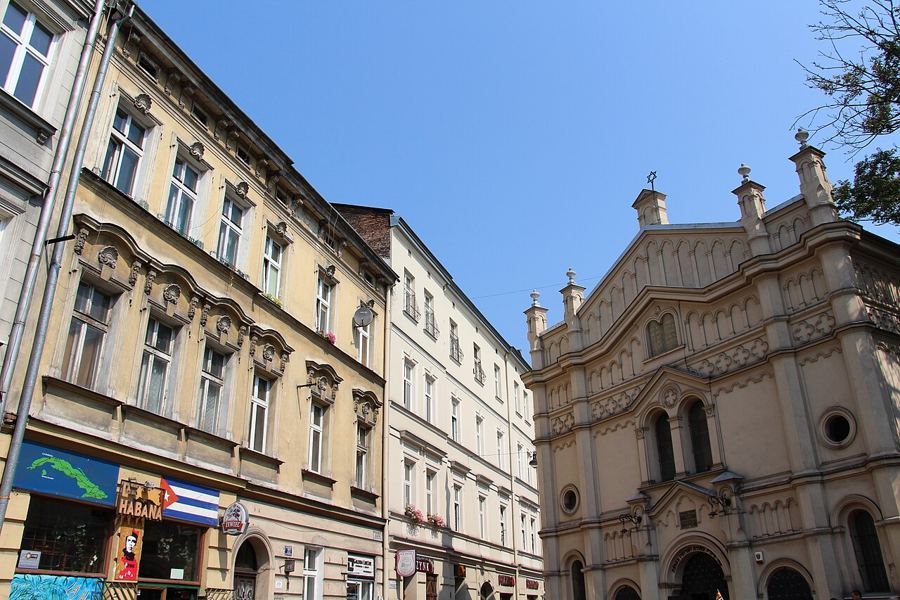 SynagoguesWhat does the stained glass tell me at Tempel Synagogue?
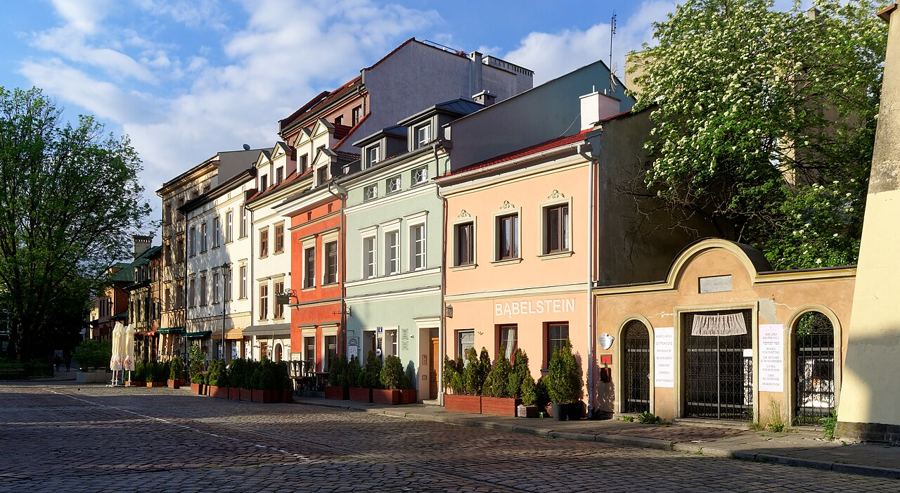 Squares and the island townHow can Kazimierz still feel like a town on an island?Squares and the island townPlac Nowy: the round hall in three lives
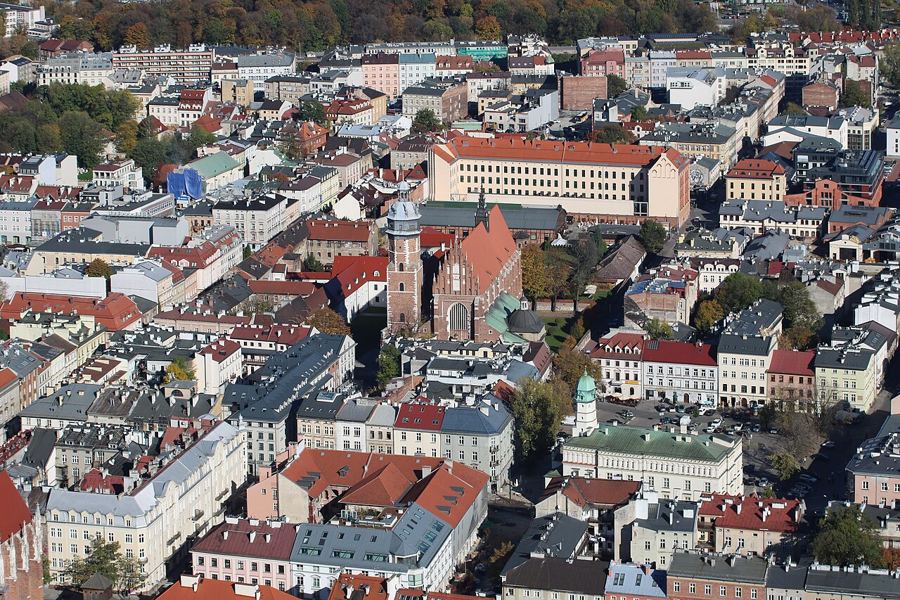 Churches by the riverHow does Corpus Christi tell the story of Christian Kazimierz?
Photographs used: Marcin Konsek — Creative Commons BY-SA 4.0; Fred Romero from Paris, France — Creative Commons BY 2.0; Fred Romero from Paris, France — Creative Commons BY 2.0; Jakub Hałun — Creative Commons BY-SA 4.0; Ingo Mehling — Creative Commons BY-SA 4.0