- Period
- 14th-15th century
- Distance
- 20 min from the Rynek
How does Corpus Christi tell the story of Christian Kazimierz?
I follow the church from its founding in Kazimierz to the boat-shaped pulpit, reading its Gothic chancel and later history as the parish of Christian Kazimierz.
The boat-shaped pulpit catches the thought first: a carved vessel held aloft by mermaids. Around it is the interior of Corpus Christi, mostly furnished in Baroque style. I begin there, with a detail that makes the church’s long history feel close enough to hold in the mind.
How can I read the church in steps?
Begin with its foundation. Casimir III the Great founded the Corpus Christi church in Kazimierz in 1340. I keep that beginning in view, then let the building’s longer making come into focus: work continued from the latter part of the 14th century into the early part of the 15th century. The church belongs to a story that took generations to shape.
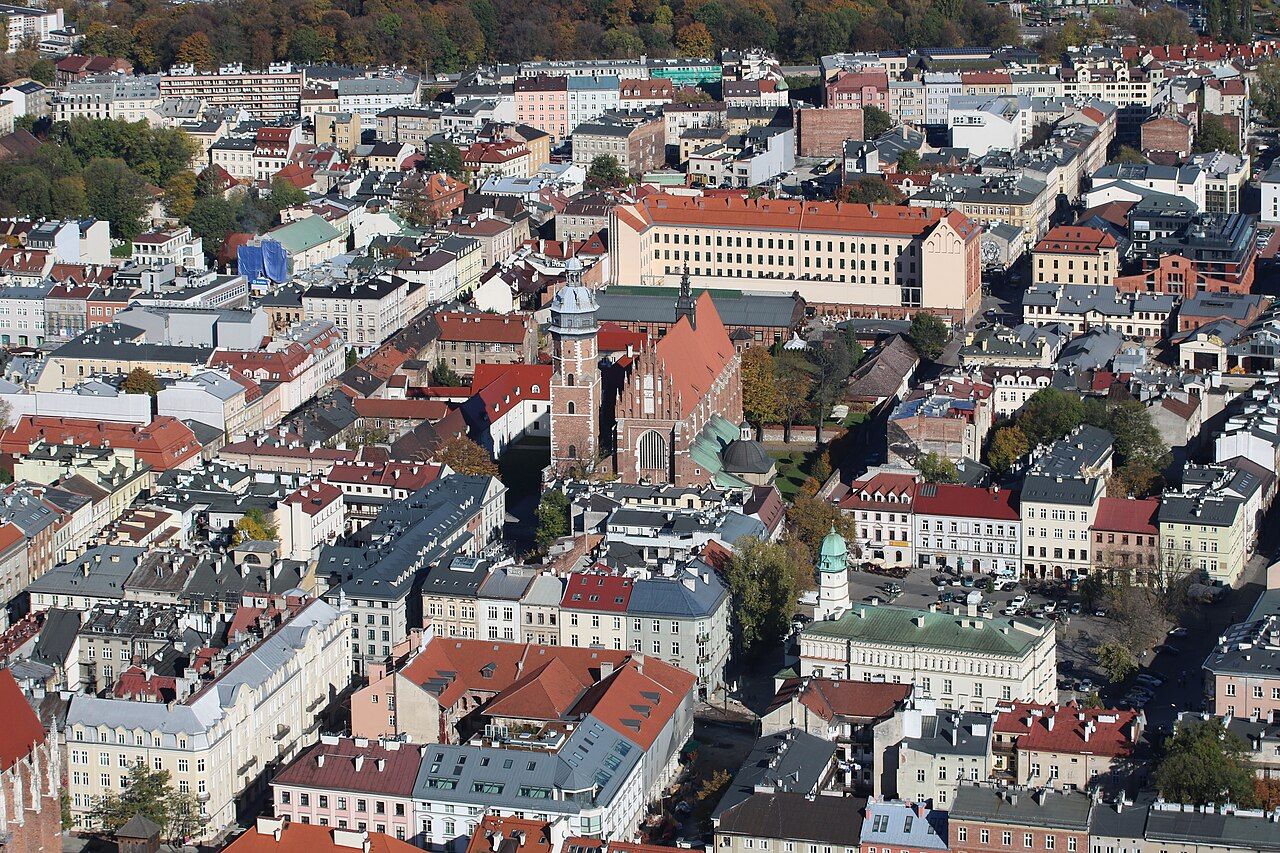
Read its place in Christian Kazimierz. The Basilica was the parish church of Christian Kazimierz. That is the key to this side of the district: not a separate story from Kazimierz, but a church whose parish role gives its own part of the place a centre. I return to that fact as I look at the details.
Look up to the chancel. The basilica’s tall Gothic chancel is lit by windows with late medieval tracery. I follow the line of that description upward, from the church’s broad history to the fine pattern of its windows. Gothic and Baroque sit together here, held within one interior.
Come back to the pulpit. Its shape is a boat, with mermaids holding it up. The carving changes the way I think about a pulpit: not simply a place within the church, but a vessel made part of the church’s visual language. It is an image that stays with the place in my mind.
Carry the history forward. The Canons Regular of the Lateran have served the Basilica since 1405. Stanisław Kazimierczyk, a canon of the church who died in 1489, is buried there; he was canonised in 2010. The church’s story is built from such continuities, and from events that altered its use.
Which dates keep the story in view?
- 1340: Casimir III the Great founded the church.
- Building continued from the latter part of the 14th century into the early part of the 15th century.
- Since 1405: the Canons Regular of the Lateran have served the Basilica.
- 1655: King Charles X Gustav used the church as his headquarters during the Swedish invasion.
The Christian half of Kazimierz comes into focus for me through this church, and I find myself holding its different eras together rather than separating them. The Gothic chancel and its late medieval tracery belong to the building’s earlier making; the Baroque furnishings give much of the interior its character. The boat-shaped pulpit sits among them, both an object to look at and a small story in itself. Its mermaids hold up the vessel, and that unusual carved form lends the interior a detail I return to in thought.
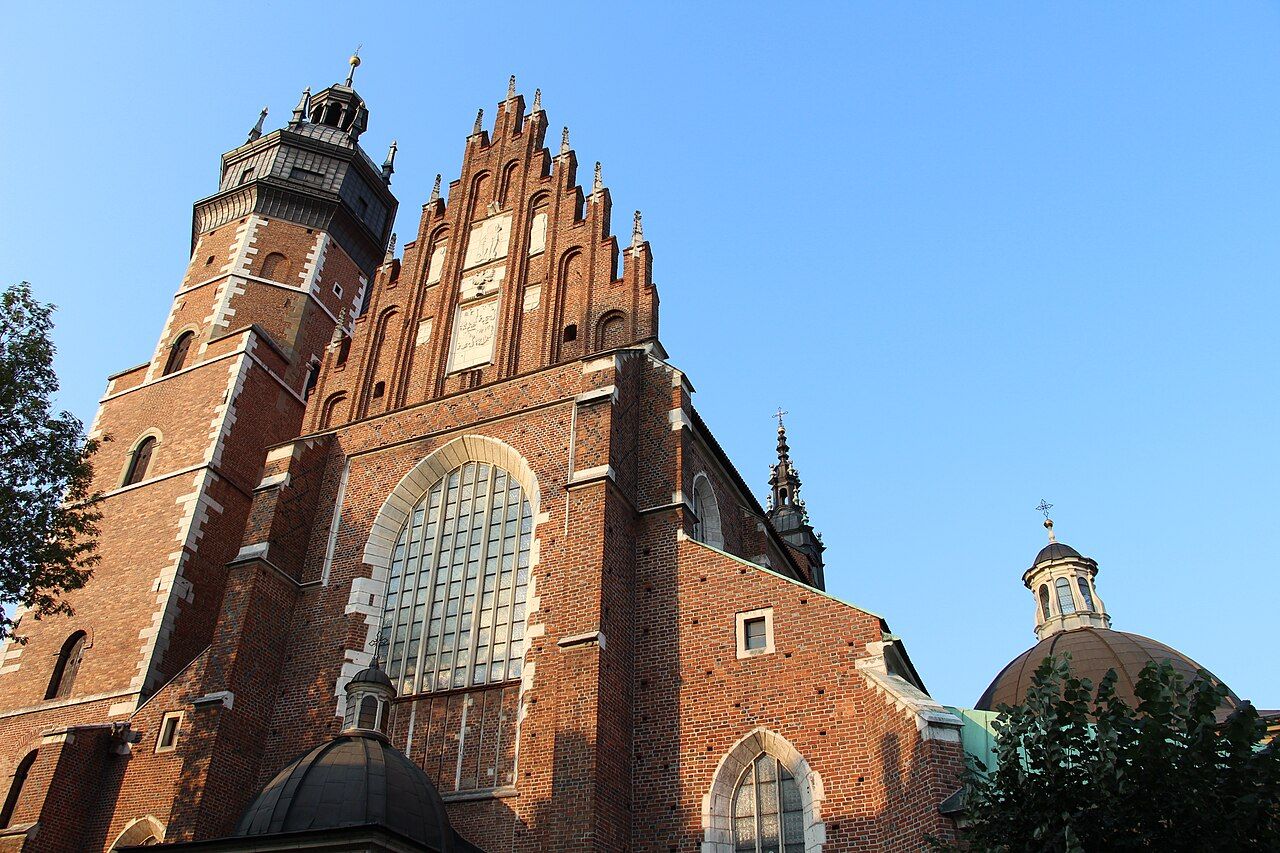
There is something affecting in the span between a church founded in 1340 and the Canons Regular who have served it since 1405. The building’s history is not only a matter of dates. It is also the parish role it held in Christian Kazimierz, the canon buried within it, and the later use made of the church during the Swedish invasion. Each fact adds another layer without erasing the others. I let the story move between them: foundation, worship, architecture, burial and upheaval. The church has got under my skin in this way, through its accumulation of meanings rather than one grand image. I carry the tall chancel and the boat together, and the knowledge that this was the parish church of Christian Kazimierz.
I set the church above the pool beside this account, another thread in my reading of the city’s churches.
Corpus Christi remains, in this telling, both a Gothic church shaped over time and the parish centre of Christian Kazimierz. I stop there, with the boat held above the interior and the centuries gathered around it.
More from Kazimierz and beyond
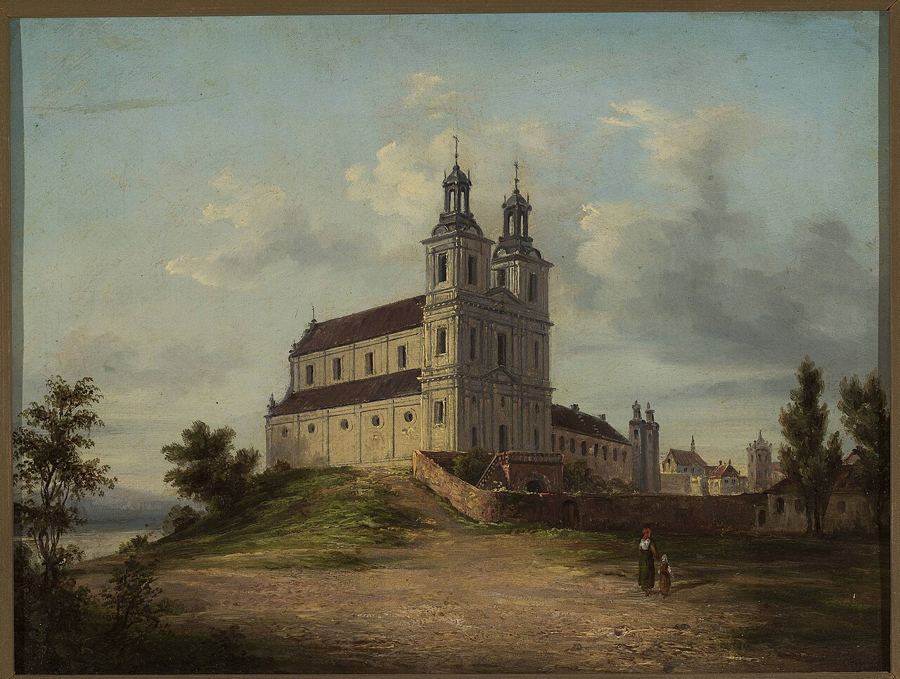 Churches by the riverSkałka: the church and its crypt of the distinguished
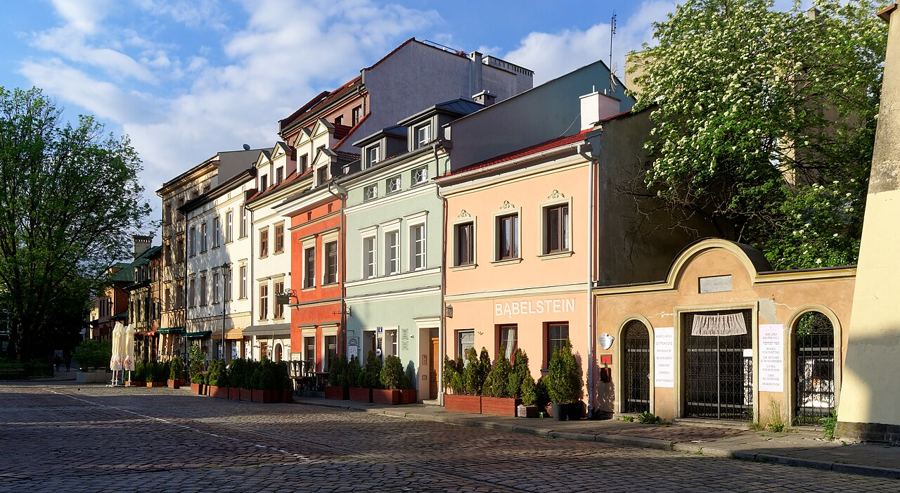 Squares and the island townHow can Kazimierz still feel like a town on an island?
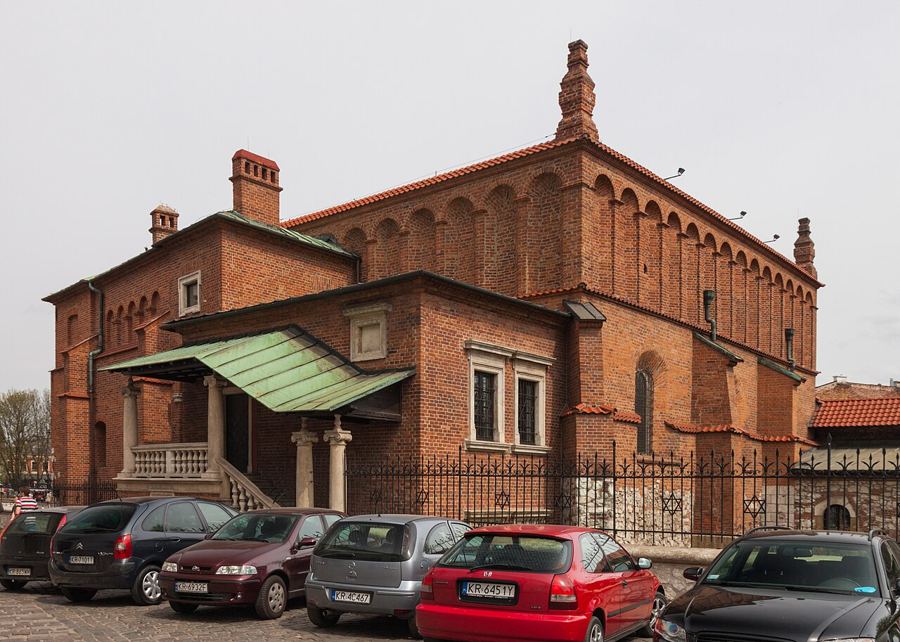 SynagoguesWhat does the Old Synagogue hold in one prayer hall?
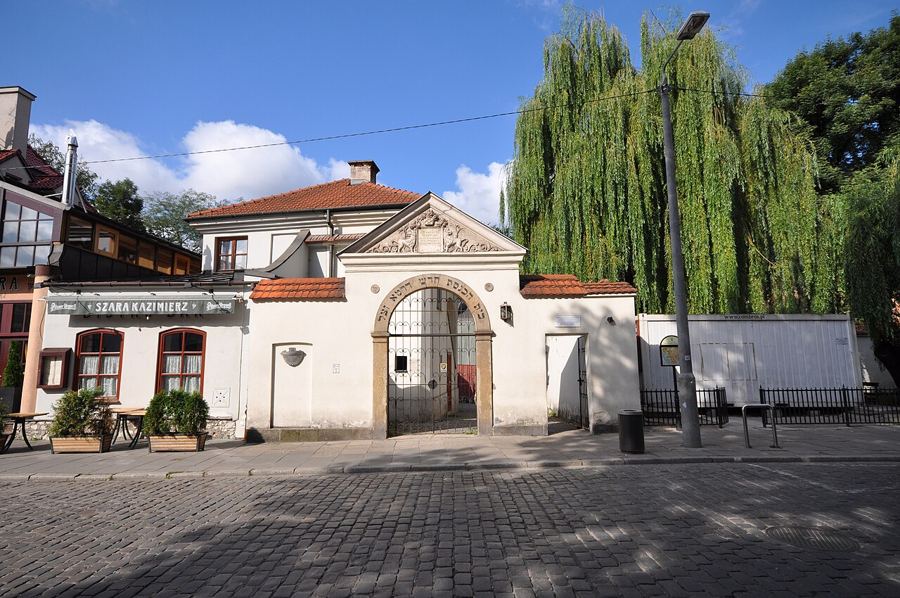 SynagoguesIs the Remuh Synagogue only a memory?
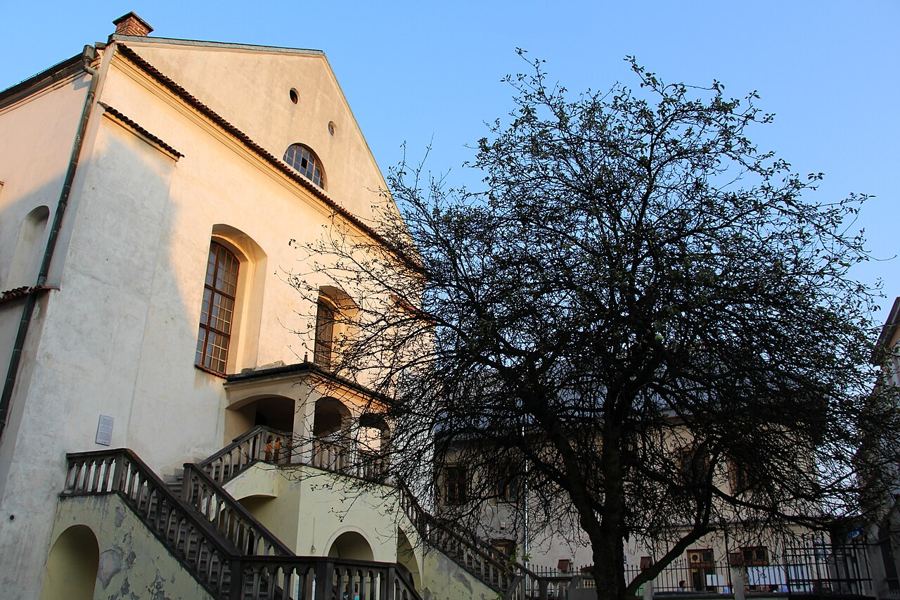 SynagoguesIzaak's Synagogue and the scale of seventeenth-century Kazimierz
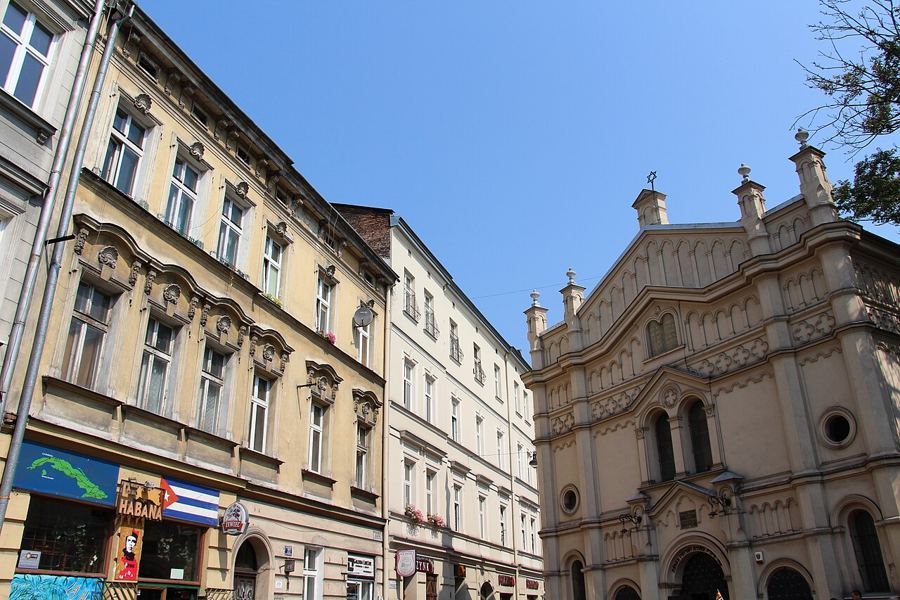 SynagoguesWhat does the stained glass tell me at Tempel Synagogue?
Photographs used: Adolf Kozarski — public domain the file; Jakub Hałun — Creative Commons BY-SA 4.0; Marcin Konsek — Creative Commons BY-SA 4.0; Jorge Láscar from Australia — Creative Commons BY 2.0; Fred Romero from Paris, France — Creative Commons BY 2.0; Fred Romero from Paris, France — Creative Commons BY 2.0
