- Period
- 19th century
- Distance
- 20 min from the Rynek
What does the stained glass tell me at Tempel Synagogue?
Built for Kraków’s progressive Jewish congregation, the Tempel Synagogue brings Moorish revival decoration and patterned glass into the story of Miodowa Street.
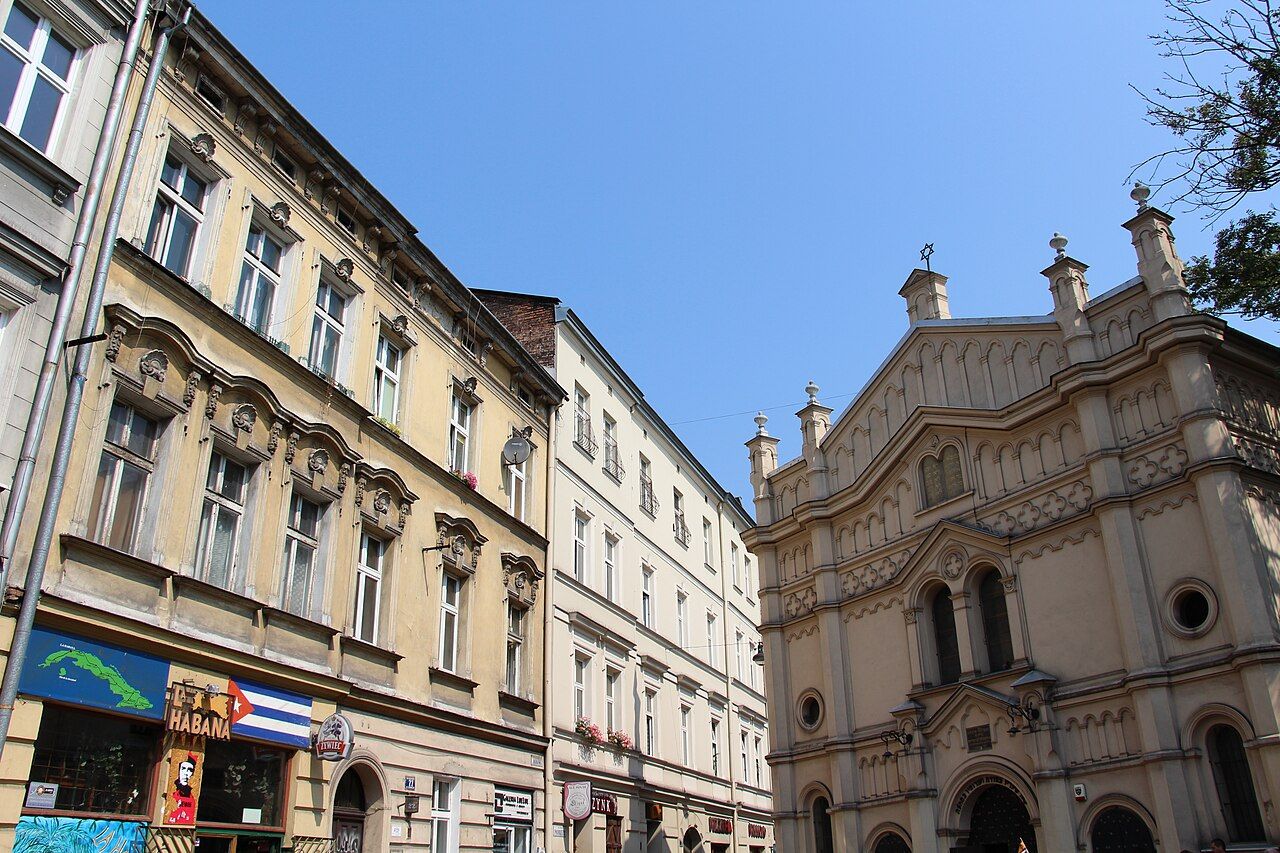
On Miodowa Street, the stained glass draws my eye first: dozens of windows, their patterns floral and geometric. Then the room widens around them, with gilded stucco and Moorish revival decoration. The synagogue stands near the corner of Miodowa and Podbrzezie streets.
Does progressive mean plain?
Myth: A progressive congregation must have chosen a restrained interior. Fact: The Tempel Synagogue was built for Kraków’s progressive Jewish congregation, and its interior is decorated in Moorish revival style with gilded stucco. The idea of reform and the richness of the room sit together; neither erases the other.
I return to that combination. The synagogue was built between 1860 and 1862, in the 19th century, and its windows make the interior feel full of small, ordered details. I can look from the floral patterns to the geometric ones, then to the gilded stucco, and the room keeps giving me another surface to notice. I think of the Jewish town of 1495 as a point of reference, then come back to this building’s own dates and its progressive congregation. The contrast is part of what stays with me: a reformist community, a richly decorated interior, and a building whose story did not stop at its construction. It was used as a storehouse by German forces during the occupation, and restored in the 1990s. Those facts sit beside the present life of the room, rather than replacing its earlier layers.
What are the practical details?
- Built: 1860–1862
- From Rynek: 20 min
- Era: 19th century
Is the synagogue only a building from the past?
Myth: Its story belongs only to its original congregation and construction. Fact: The Tempel Synagogue was restored in the 1990s, and concerts of the Jewish Culture Festival are held there.
I find the stained glass a steady way into the story: it is part of the interior, but also a reminder to look closely at the building around it. The synagogue holds its dates, its changing uses and its festival concerts in the same place. I leave the thought there, among the patterns and the gilded stucco.
More from Kazimierz and beyond
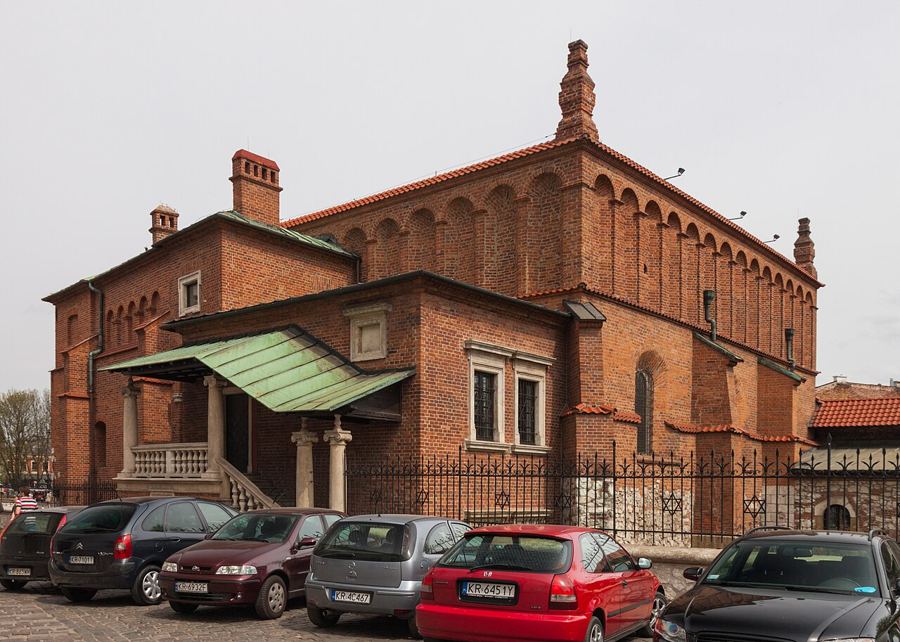 SynagoguesWhat does the Old Synagogue hold in one prayer hall?
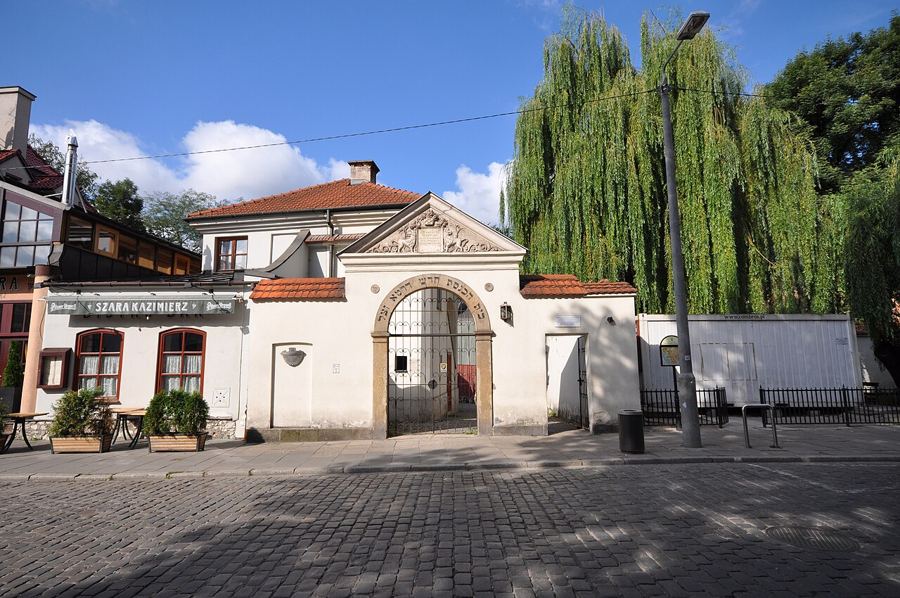 SynagoguesIs the Remuh Synagogue only a memory?
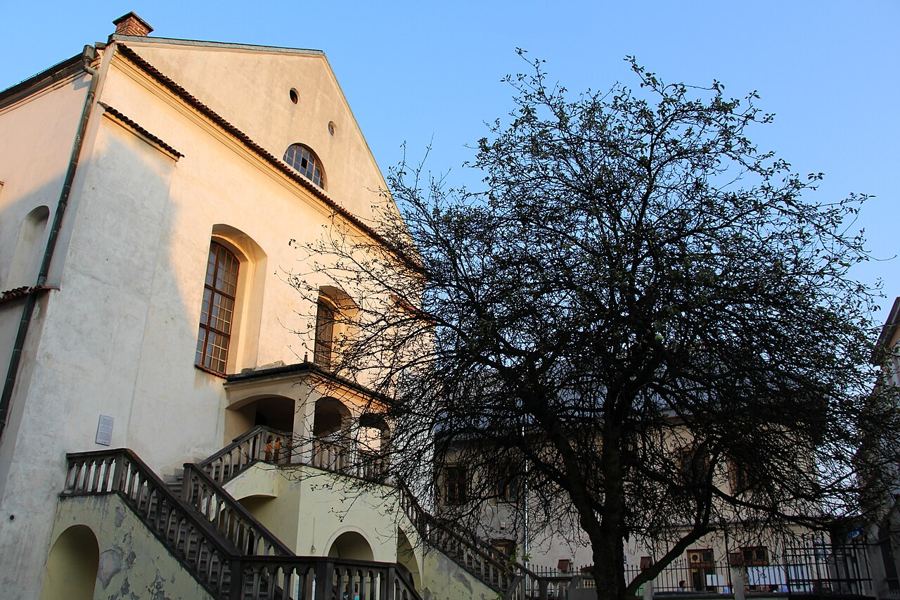 SynagoguesIzaak's Synagogue and the scale of seventeenth-century Kazimierz
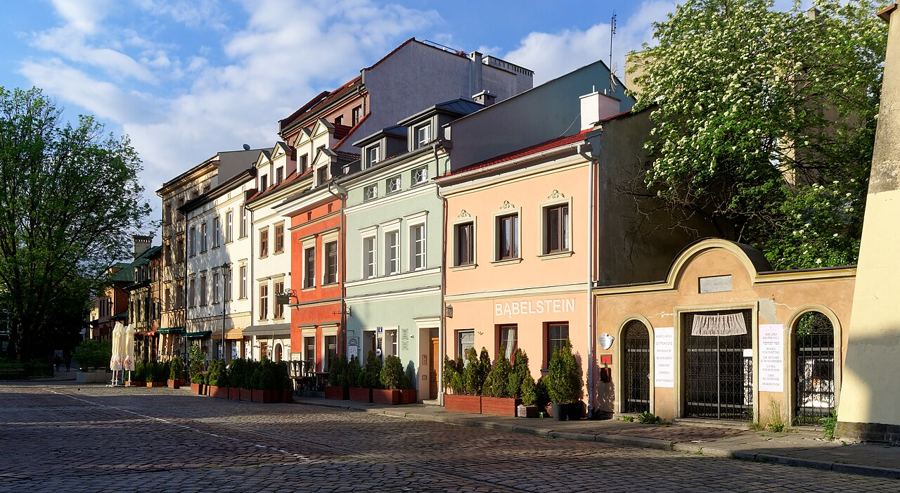 Squares and the island townHow can Kazimierz still feel like a town on an island?Squares and the island townPlac Nowy: the round hall in three lives
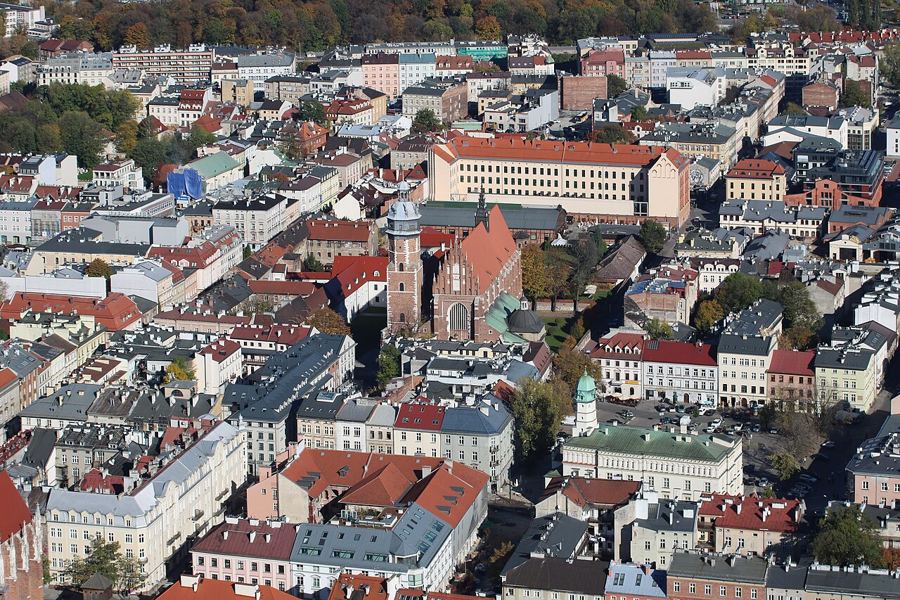 Churches by the riverHow does Corpus Christi tell the story of Christian Kazimierz?
Photographs used: Marcin Konsek — Creative Commons BY-SA 4.0; Jorge Láscar from Australia — Creative Commons BY 2.0; Fred Romero from Paris, France — Creative Commons BY 2.0; Jakub Hałun — Creative Commons BY-SA 4.0; Ingo Mehling — Creative Commons BY-SA 4.0