- Period
- 14th century to today
- Distance
- on the Rynek itself
Obwarzanek krakowski: a ring with a legal definition
A Kraków street bread is twisted from strands of dough, briefly boiled, then baked. Its name carries a history—and a protected geographical definition.
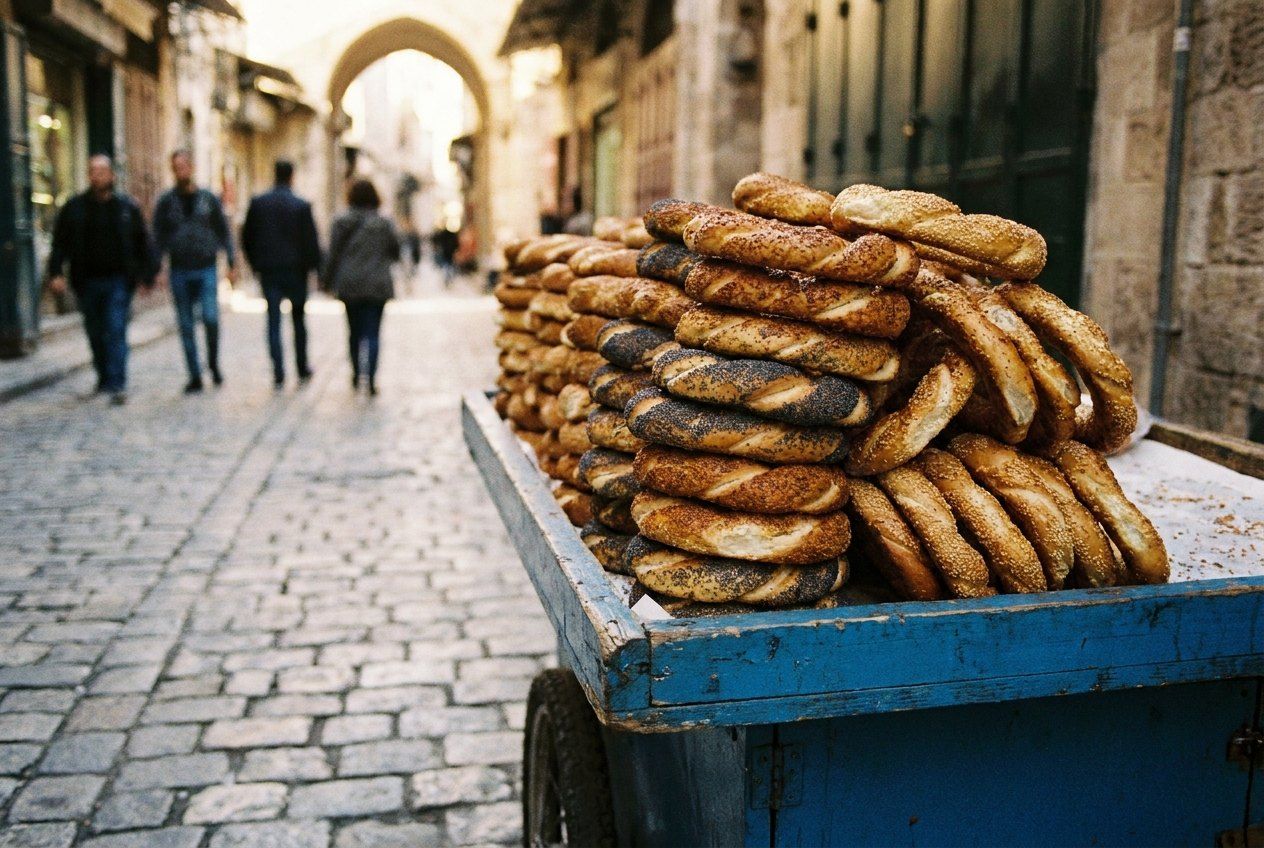
The obwarzanek krakowski is a ring of bread made from strands of dough twisted together. Before it goes into the oven, each one is briefly boiled; the crust turns glossy and golden-brown. A simple shape, then, with a particular method behind it.
Is it only a ring of bread?
Myth: The shape is the whole story. Fact: The strands are twisted together, and boiling comes before baking. Poppy seed, sesame or coarse salt is sprinkled over the obwarzanek before it goes into the oven. The ring is recognisable, but the steps matter too.
I like the small change of pace in that sequence: dough, boiling, oven. The obwarzanek is not merely shaped and baked. Its glossy, golden-brown crust comes from the boiling before baking, and that detail gives the ring a story that can be stated plainly, without dressing it up. It is the sort of food whose identity sits in both the making and the name.
Is its history only a matter of memory?
Myth: A long-standing Kraków food has no precise record behind it. Fact: Royal court accounts from 1394, in the reign of Queen Jadwiga, record a purchase of obwarzanki. In the 15th century, and also in the 16th, only certain bakers in Kraków held the right to bake them. There is a record, and there were rules around who could make them.
The obwarzanek has got under my skin through these plain details. I find myself returning to the contrast between its familiar ring and the exactness of its making: strands twisted together, a brief boil, then the oven. Even its surface carries part of the method, glossy and golden-brown because of that boiling. Its history is not a loose claim of age; the purchase is recorded in royal court accounts, and the right to bake it belonged to certain bakers in Kraków during the 15th century and the 16th. I like that the story can hold both a street cart and a rule about a name. The bread is sold in the city, yet what it is has a boundary written into its definition. There is something quietly affecting in that balance, though I do not need to make the ring stand for more than itself. It is bread, made in a particular way, carried through a history that can be named.
Does the protected name mean any ring of bread?
Myth: “Obwarzanek krakowski” is simply a general name for a ring-shaped bread. Fact: Since 2010, obwarzanek krakowski has been registered by the European Union as a Protected Geographical Indication. The protected name covers obwarzanki baked in Kraków and in the Kraków and Wieliczka counties. The definition has a place as well as a method.
- Made from strands of dough twisted together.
- Briefly boiled before baking.
- Sprinkled with poppy seed, sesame or coarse salt before baking.
- Denser and drier than a bagel, and eaten on the day it is baked.
Is it a bakery counter food?
Myth: It belongs only behind a counter. Fact: Obwarzanki are sold from small street carts on squares and corners across the city. Its street presence sits neatly beside the care taken over the name and method. It belongs to a Kraków food vocabulary that also includes dumplings stuffed for Christmas Eve.
The obwarzanek is denser and drier than a bagel, and is eaten on the day it is baked. I like that its ring holds both a recipe and a rule.
More from Old Town and beyond
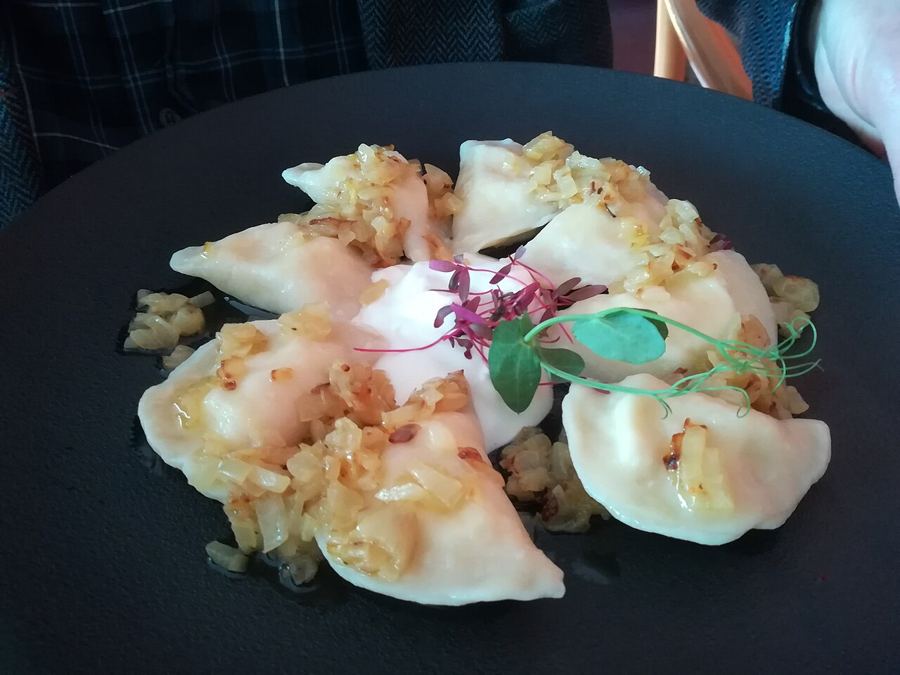 Bread and pierogiPierogi and the saint who brought them
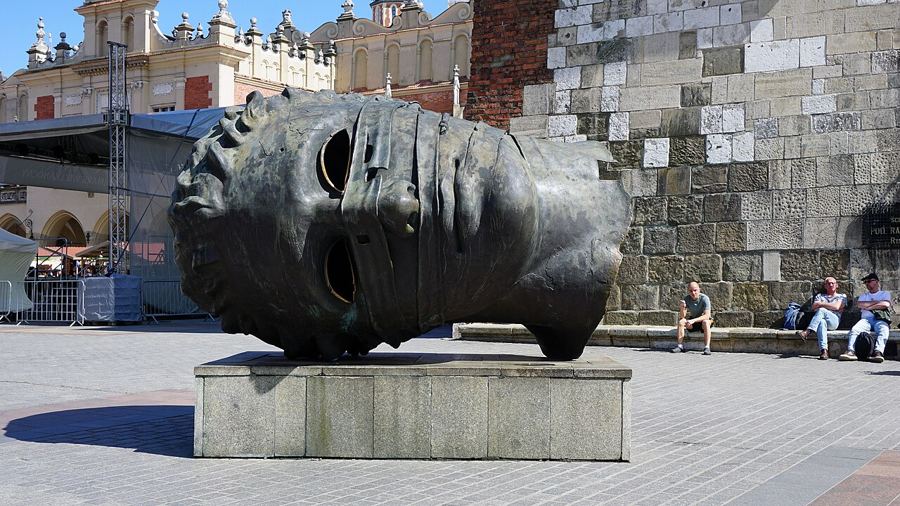 The Main SquareHow was Rynek Główny measured out in 1257?
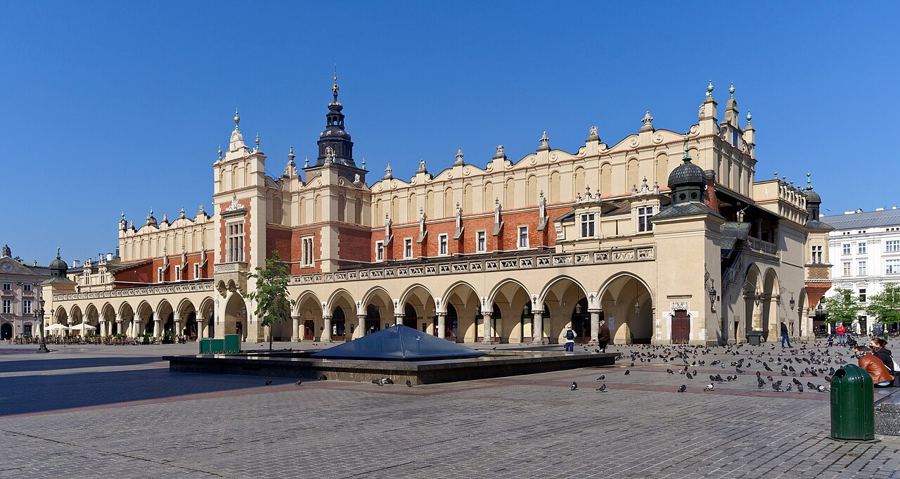 The Main SquareThe Sukiennice: two lives under one roofThe Main SquareBeneath the square: the Rynek Underground
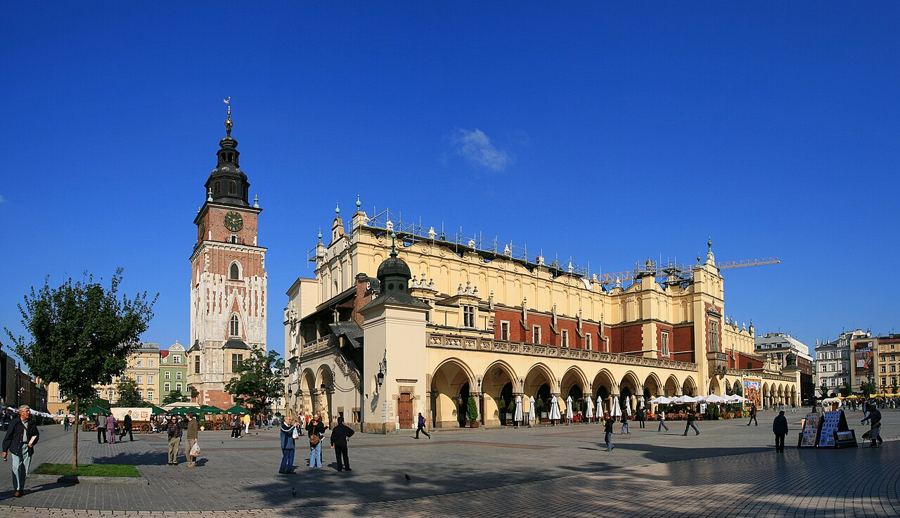 The Main SquareThe tower that lost its town hall
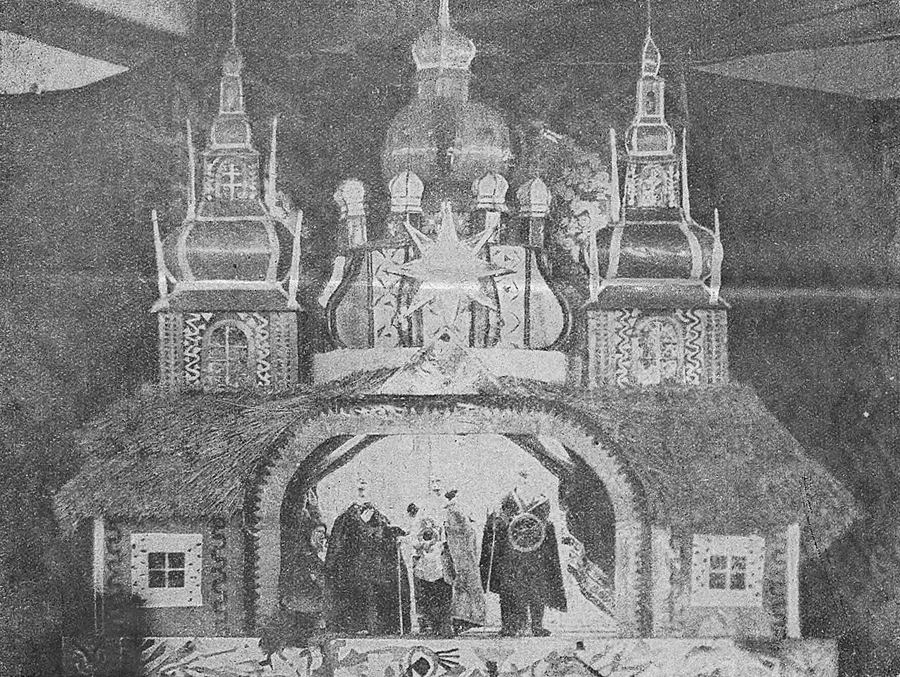 The Main SquareTinfoil cathedrals: how Kraków makes a szopka
Photographs used: MOs810 — Creative Commons BY-SA 4.0; Igor123121 — Creative Commons BY-SA 4.0; Jakub Hałun — Creative Commons BY-SA 4.0; Lestat (Jan Mehlich) — Creative Commons BY-SA 3.0; unknown — public domain the file
