- Period
- 13th-century legend to today
- Distance
- 2 min from the Rynek
Pierogi and the saint who brought them
Half-moon dumplings carry familiar fillings, a place at the Christmas Eve table, and a Kraków legend in the name of St Hyacinth.
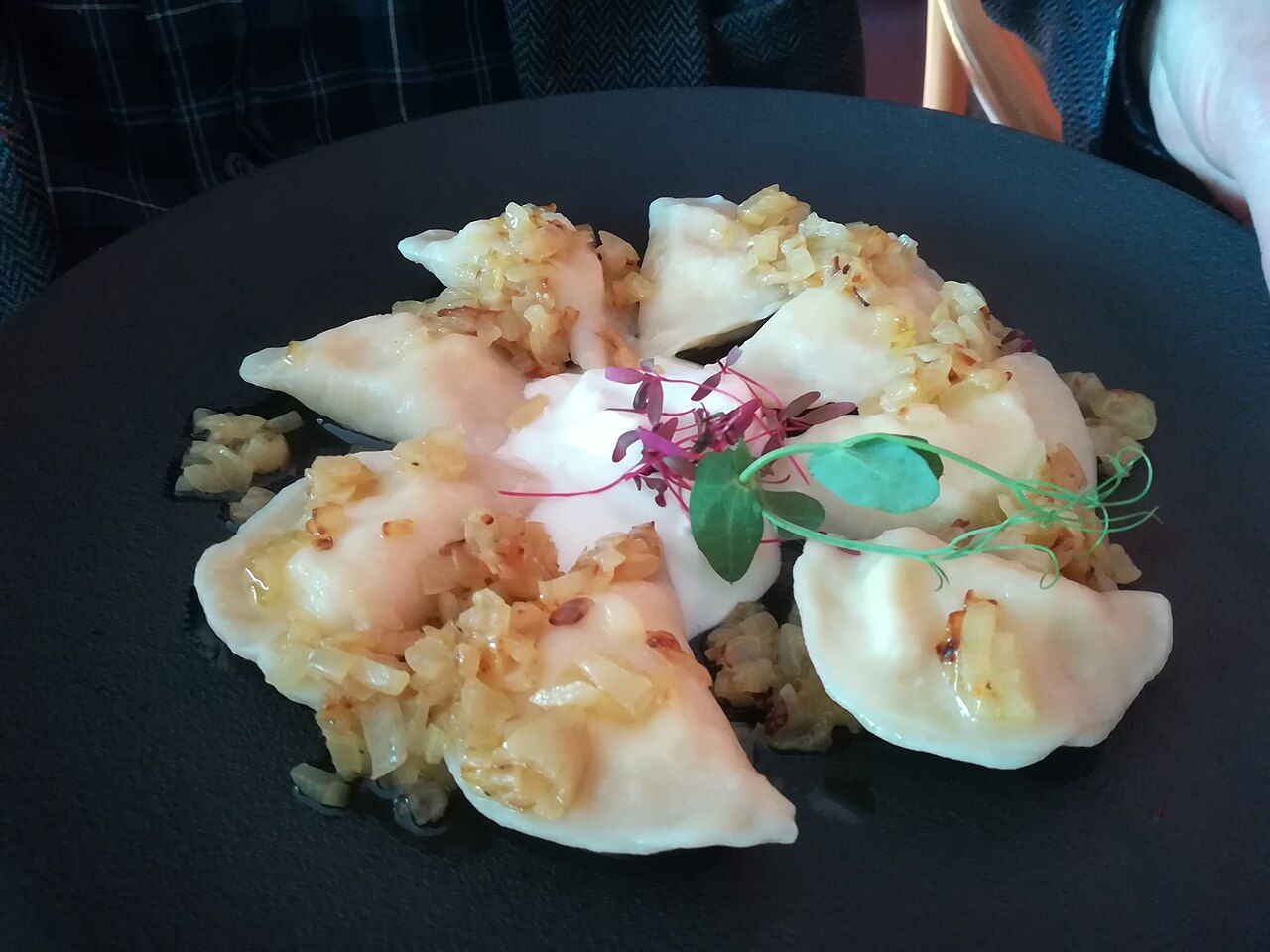
A half-moon of dough, softened by boiling, sits quietly on a plate. I think of pierogi as a dish that holds more than one kind of comfort: familiar savoury fillings, fruit in summer, and a story with a Kraków saint at its centre.
What are pierogi?
They are dumplings made from unleavened dough, shaped into half-moons and boiled. Sometimes they are fried afterwards. The name pierogi covers a generous range of fillings, but the dumpling itself is recognisable in each version.
What are the familiar fillings?
Pierogi ruskie are filled with potato, curd cheese and onion. The name refers to Red Ruthenia, not Russia; that small distinction sits beside a very straightforward filling. In summer, sweet pierogi may hold fruit such as blueberries or cherries.
What belongs on the Christmas Eve table?
Polish families serve pierogi filled with sauerkraut and wild mushrooms on Christmas Eve. The filling gives this version its own place among the others: neither the potato and cheese combination nor the summer fruit, but something tied to that particular meal.
What might accompany pierogi?
- Fried onion
- Crackling
- Fruit, including blueberries or cherries in summer
They are traditionally served with fried onion or crackling. For a different Kraków point on the map, there is the round market hall in Kazimierz.
Why is St Hyacinth part of the story?
A legend credits St Hyacinth, a 13th-century Dominican of Kraków, with bringing pierogi to Poland. It remains a legend, but the old Polish exclamation “Święty Jacku z pierogami” calls on St Hyacinth with his pierogi. The saint is present not only in the tale, but in the words people have used for it.
Where does Kraków celebrate pierogi?
A pierogi festival is held in Kraków each August on the Mały Rynek, the small square behind St Mary's. Even the festival’s setting keeps the dish close to the city’s everyday geography. Pierogi feel at home here, between a meal’s familiar pleasures and a story carried along with it.
I like a dish whose old story still has room at the table.
More from Old Town and beyond
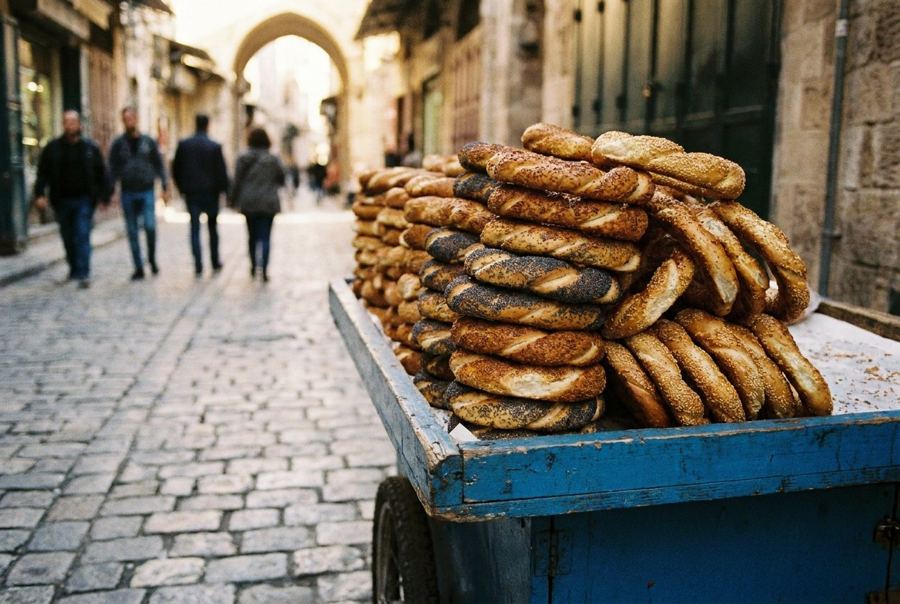 Bread and pierogiObwarzanek krakowski: a ring with a legal definition
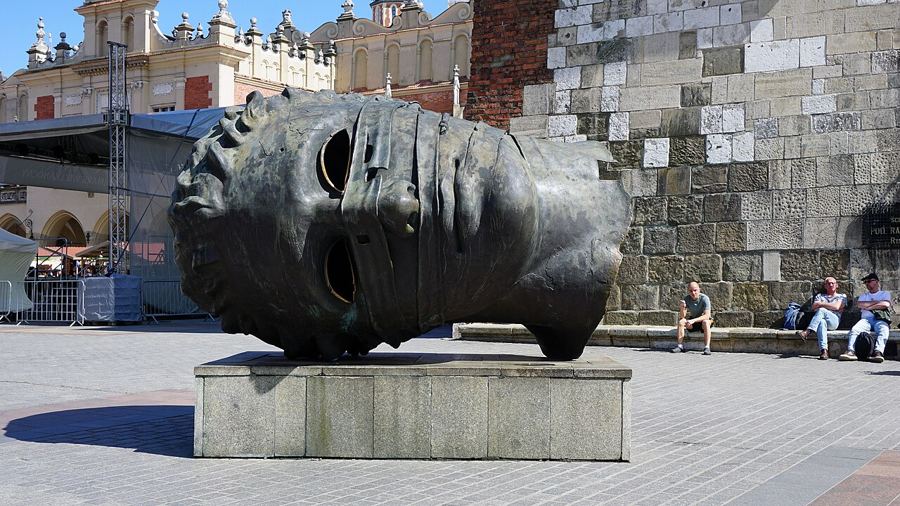 The Main SquareHow was Rynek Główny measured out in 1257?
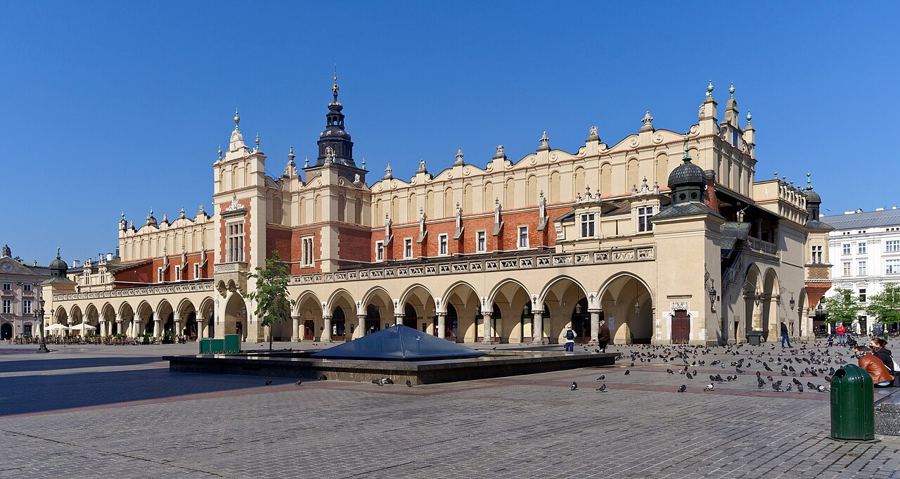 The Main SquareThe Sukiennice: two lives under one roofThe Main SquareBeneath the square: the Rynek Underground
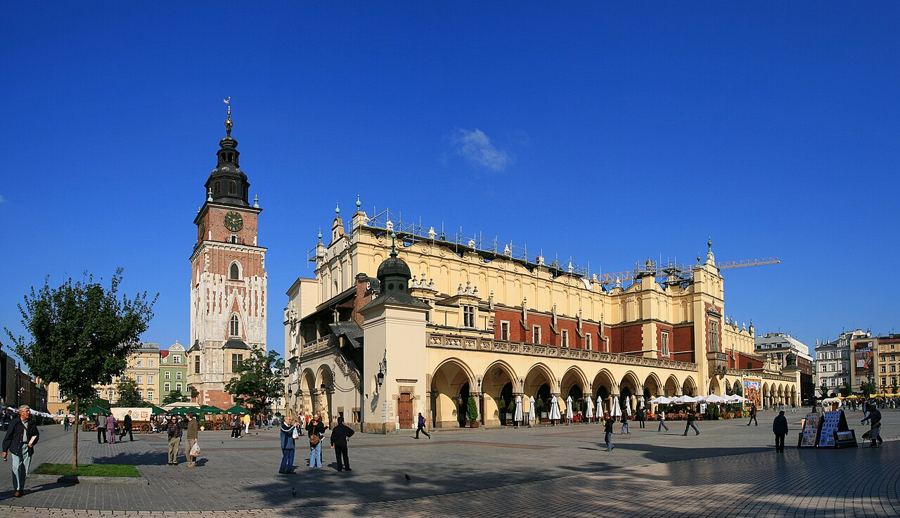 The Main SquareThe tower that lost its town hall
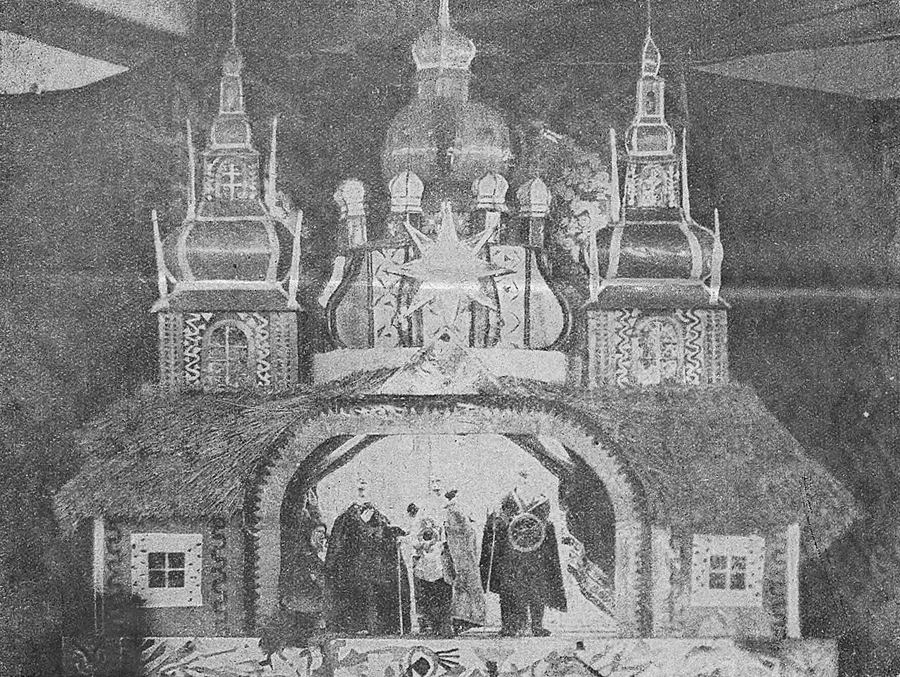 The Main SquareTinfoil cathedrals: how Kraków makes a szopka
Photographs used: Igor123121 — Creative Commons BY-SA 4.0; Jakub Hałun — Creative Commons BY-SA 4.0; Lestat (Jan Mehlich) — Creative Commons BY-SA 3.0; unknown — public domain the file
