- Period
- 14th-16th century
- Distance
- 5 min from the Rynek
Collegium Maius: a medieval college you can walk through
A college formed from town houses, with a Gothic courtyard, a clock that sets carved figures moving, and a museum holding a globe and astronomical instruments.
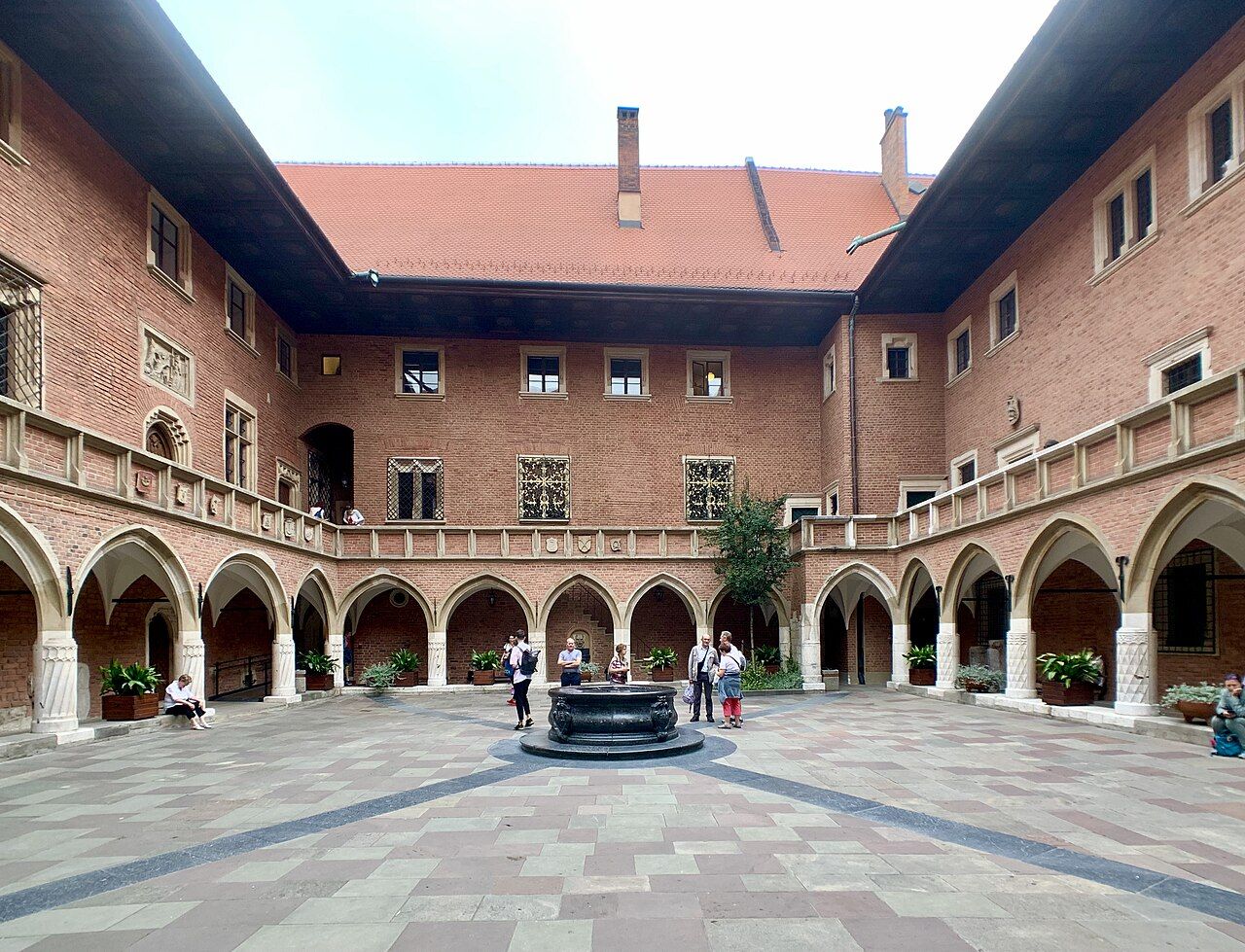
King Casimir III the Great founded the university in Kraków in 1364. Collegium Maius is the oldest surviving building of the Jagiellonian University, and it offers a way to walk through the institution’s long history in the shape of a courtyard, a museum and rooms still used for ceremonies.
The university was refounded in 1400 by Władysław Jagiełło, funded by a bequest of Queen Jadwiga. I find the dates easier to hold in mind when they are attached to a place one can pass through, rather than left as a line in a history.
Was Collegium Maius built as a single college?
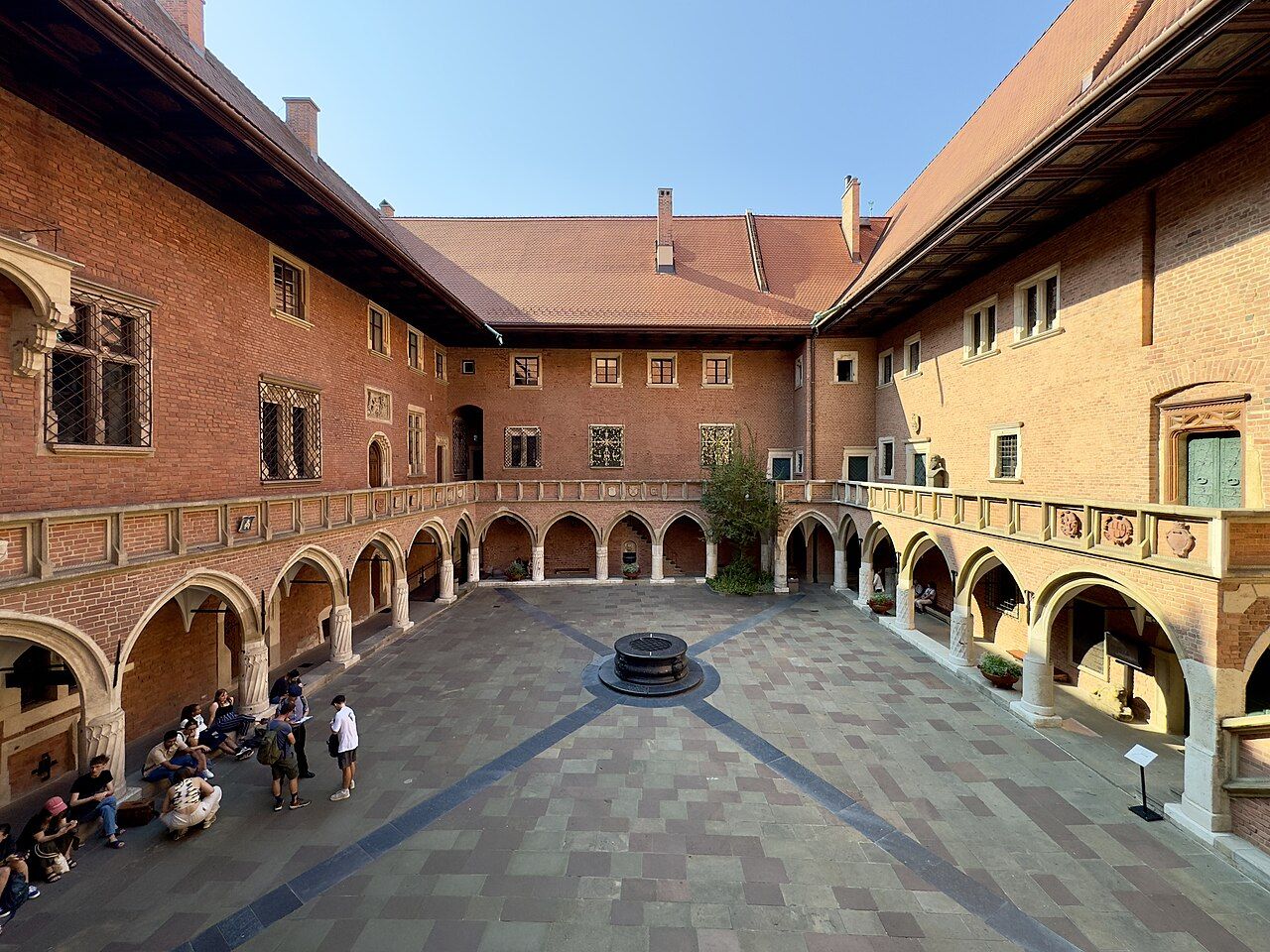
Assumption: The name might suggest a building planned and raised all at once. Fact: Collegium Maius was formed in the 15th century by joining several town houses around a courtyard. The shape that remains is not simply a façade; the courtyard gives the college its centre.
Its Gothic arcades rest on pointed pillars and surround the courtyard. I return to that arrangement in my mind: the open centre, the repeated arches, the sense of rooms gathered around a shared space. The building’s history is held in that composition as much as in its name.
Is the courtyard only something to look at?
Assumption: A medieval courtyard belongs entirely to the past. Fact: A clock in the courtyard sets a procession of carved figures moving several times a day. The figures are not still decoration; the clock makes the courtyard’s measured time visible.
Nicolaus Copernicus studied in Kraków from 1491 to about 1495. That fact belongs to the university’s history, but here it sits close to the present shape of the place: a courtyard, pointed pillars and a clock that sets figures in motion. I like the quiet scale of that connection.
- From Rynek: 5 min
- Era: 14th-16th century
Does the museum hold only books?
Assumption: The college’s past is preserved only in its architecture. Fact: The museum holds the Jagiellonian Globe, made around 1510 and among the earliest to show America. It also shows astronomical instruments from the 15th and 16th centuries.
A globe and instruments make the museum’s history feel close to the work of looking and measuring. I think of them alongside the courtyard, rather than apart from it: one part of Collegium Maius opens into another, and the walk through the college links its built form with the objects kept inside.
A separate thread in these pages follows stained glass by Wyspiański; here, my attention stays with the courtyard and the university’s collections.
Is the college still used for academic life?
Assumption: A medieval college survives only as a museum. Fact: The university’s Aula, with its coffered ceiling, is still used for academic ceremonies. The old building is not only a setting for the past; one of its rooms continues to serve the university.
That small distinction stays with me. A courtyard formed from town houses, a museum with a globe and astronomical instruments, and an Aula still used for ceremonies: Collegium Maius can be walked through as a medieval college, while its rooms carry on with their own work.
More from Old Town and beyond
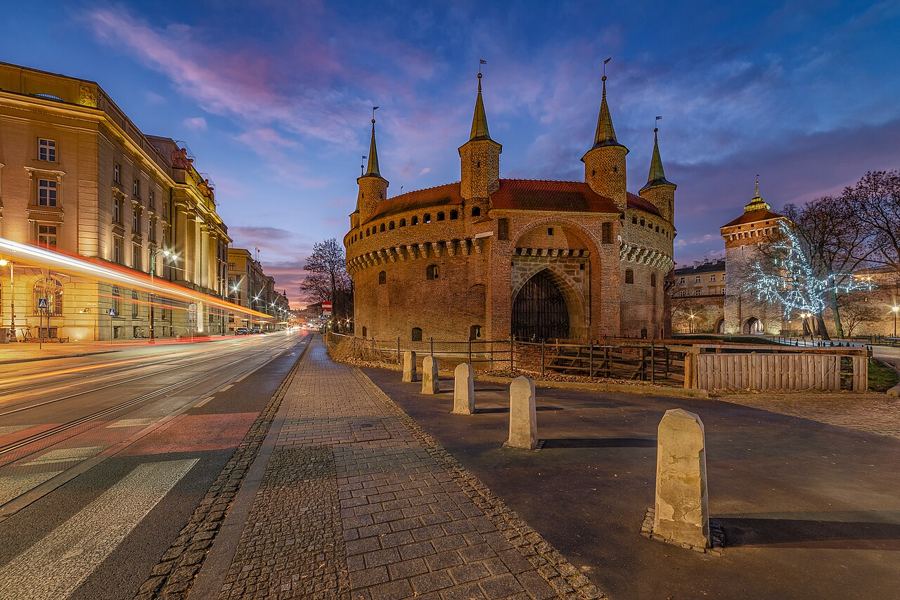 Gates, Planty and collegesFrom the Barbican down Floriańska Street
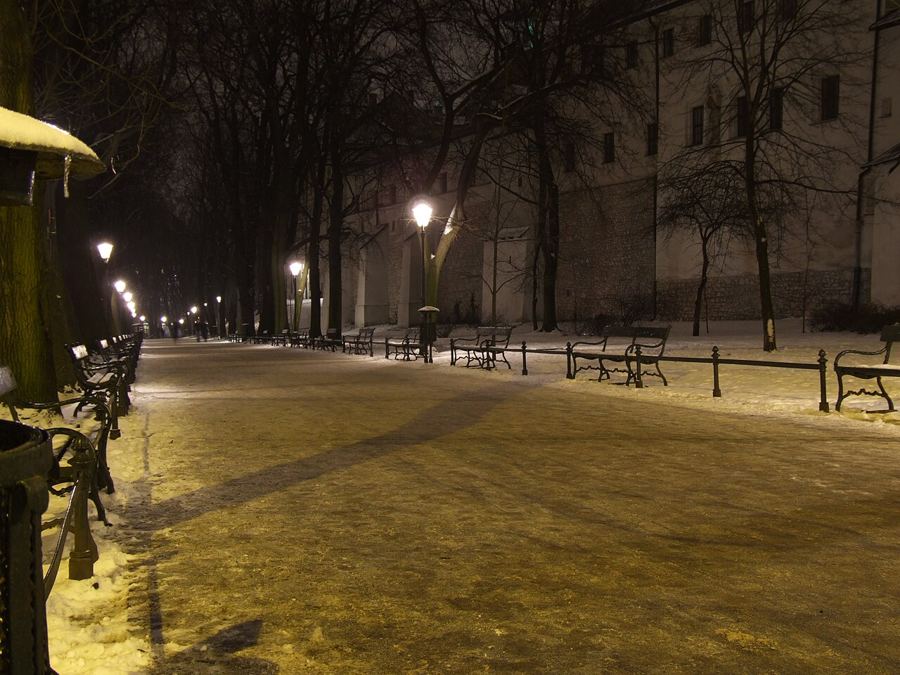 Gates, Planty and collegesThe Planty: where the old defence became a promenade
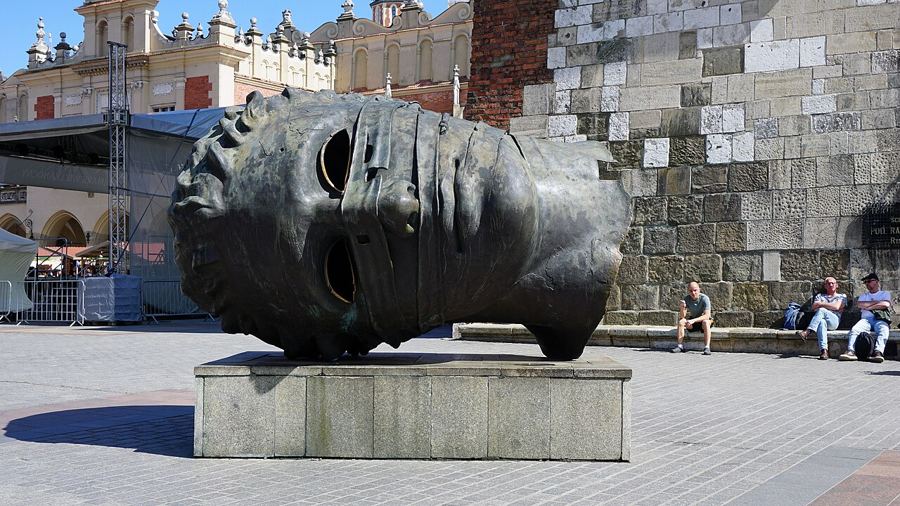 The Main SquareHow was Rynek Główny measured out in 1257?
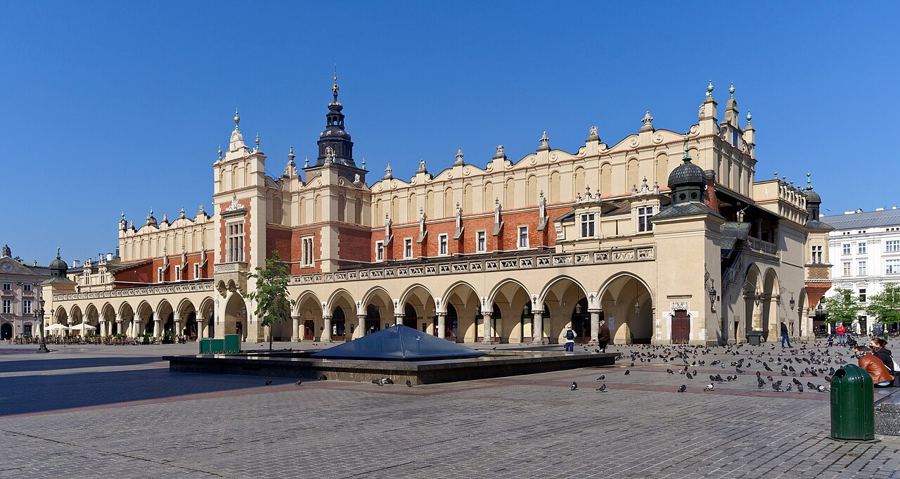 The Main SquareThe Sukiennice: two lives under one roofThe Main SquareBeneath the square: the Rynek Underground
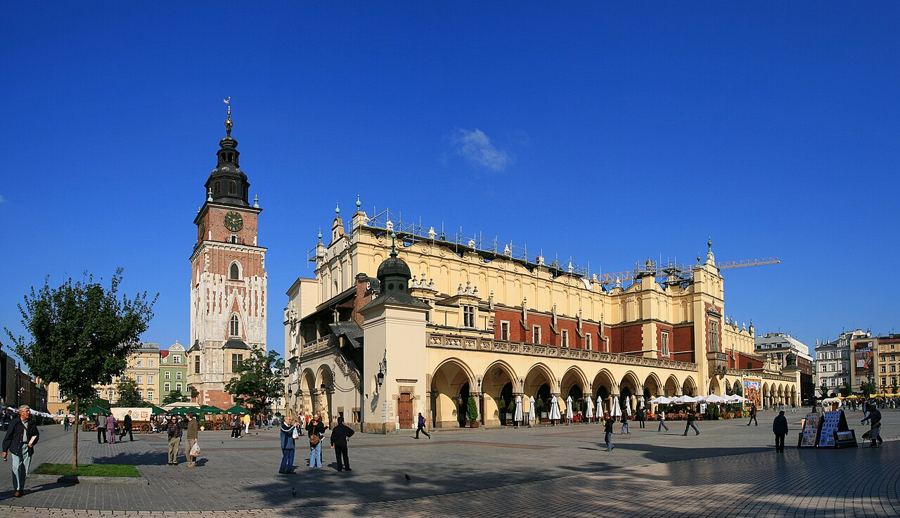 The Main SquareThe tower that lost its town hall
Photographs used: Gswito — Creative Commons BY-SA 4.0; Pudelek (Marcin Szala) — Creative Commons BY-SA 3.0; Igor123121 — Creative Commons BY-SA 4.0; Jakub Hałun — Creative Commons BY-SA 4.0; Lestat (Jan Mehlich) — Creative Commons BY-SA 3.0