- Period
- Jurassic limestone; 14th century
- Distance
- 40 min by bus from the Rynek
What does Ojców’s limestone gorge hold?
A short distance north of Kraków, the Prądnik valley brings limestone gates, caves, a chapel over a stream and castle ruins into one small national park.
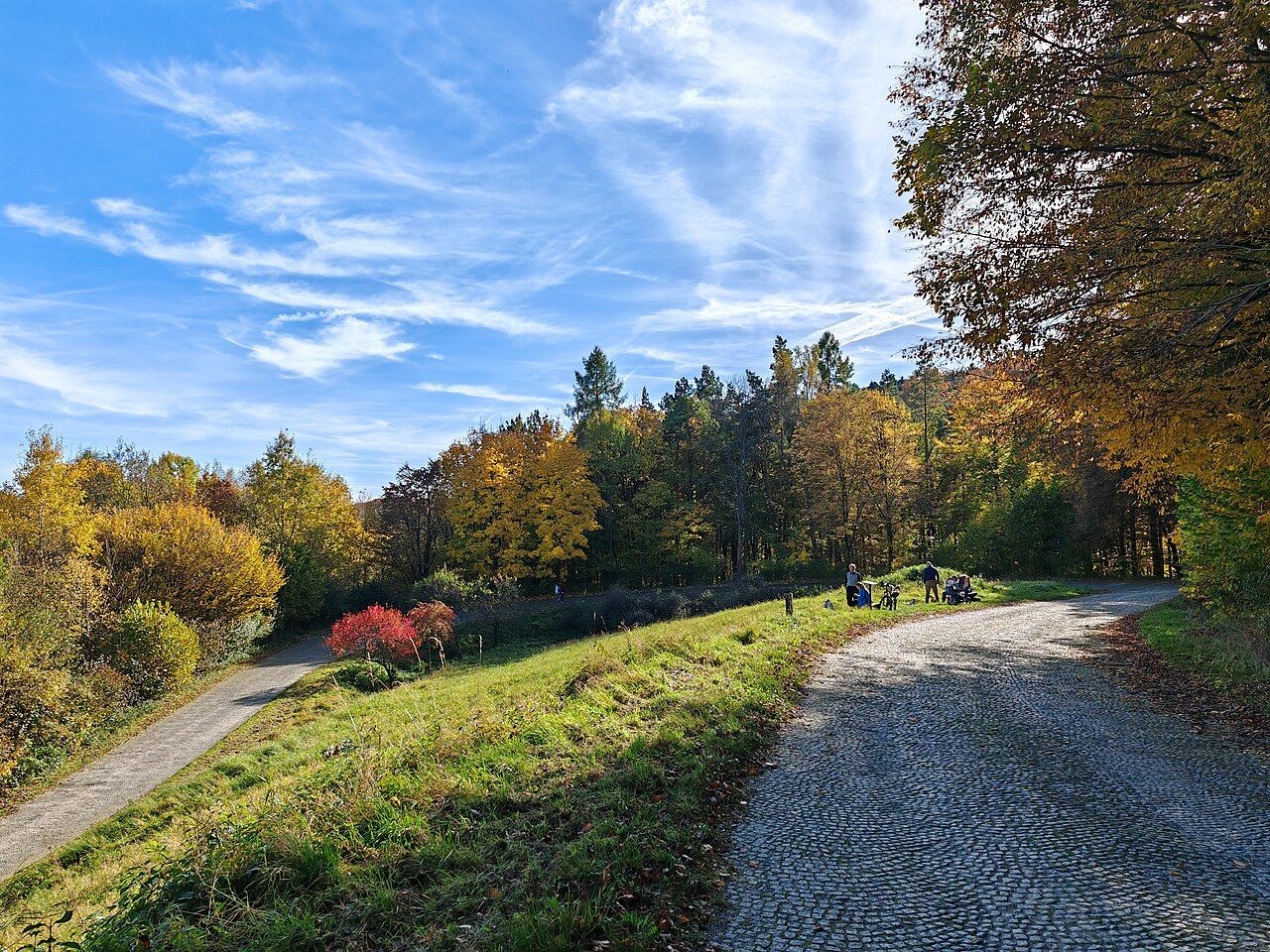
The Prądnik valley runs north of Kraków, between tall limestone rocks, crags and natural gates. The valley and its side valleys were cut into Jurassic limestone; the landscape seems to keep opening out into another story. I like the way its scale resists a quick summary. It is close to the city, yet the rocks make the valley feel like a place with its own measure. From the city side of the story, the distance is modest; inside the valley, the line of the Prądnik and the high stone give the landscape its own scale.
Can the smallest national park be more than a small landscape?
Myth: A small park must have little to hold the attention. Fact: Ojców National Park covers about 21.5 square kilometres, making it the smallest national park in Poland. It protects the Prądnik valley and its side valleys, where limestone forms the high walls, crags and gates. The park was created in 1956.
Smallness here is a matter of area, not a shortage of features. The rock formation called the Kraków Gate stands at the mouth of a side valley. A name like that can make a natural opening sound like an entrance made for people; the actual fact is simpler and more satisfying. It is limestone shaped into a gate, with the valley continuing beyond it.
The valley gathers a surprising number of different stories into a small area.
The valley gathers a surprising number of different stories into a small area.
Are the rocks only something to pass between?
Myth: The valley is just a passage framed by cliffs. Fact: Its tall limestone rocks, crags and gates are part of what defines it, while the caves reach into the same limestone. More than 400 caves are known within the park. There is a lot of ground, and stone, for the imagination to occupy without needing to turn it into something else.
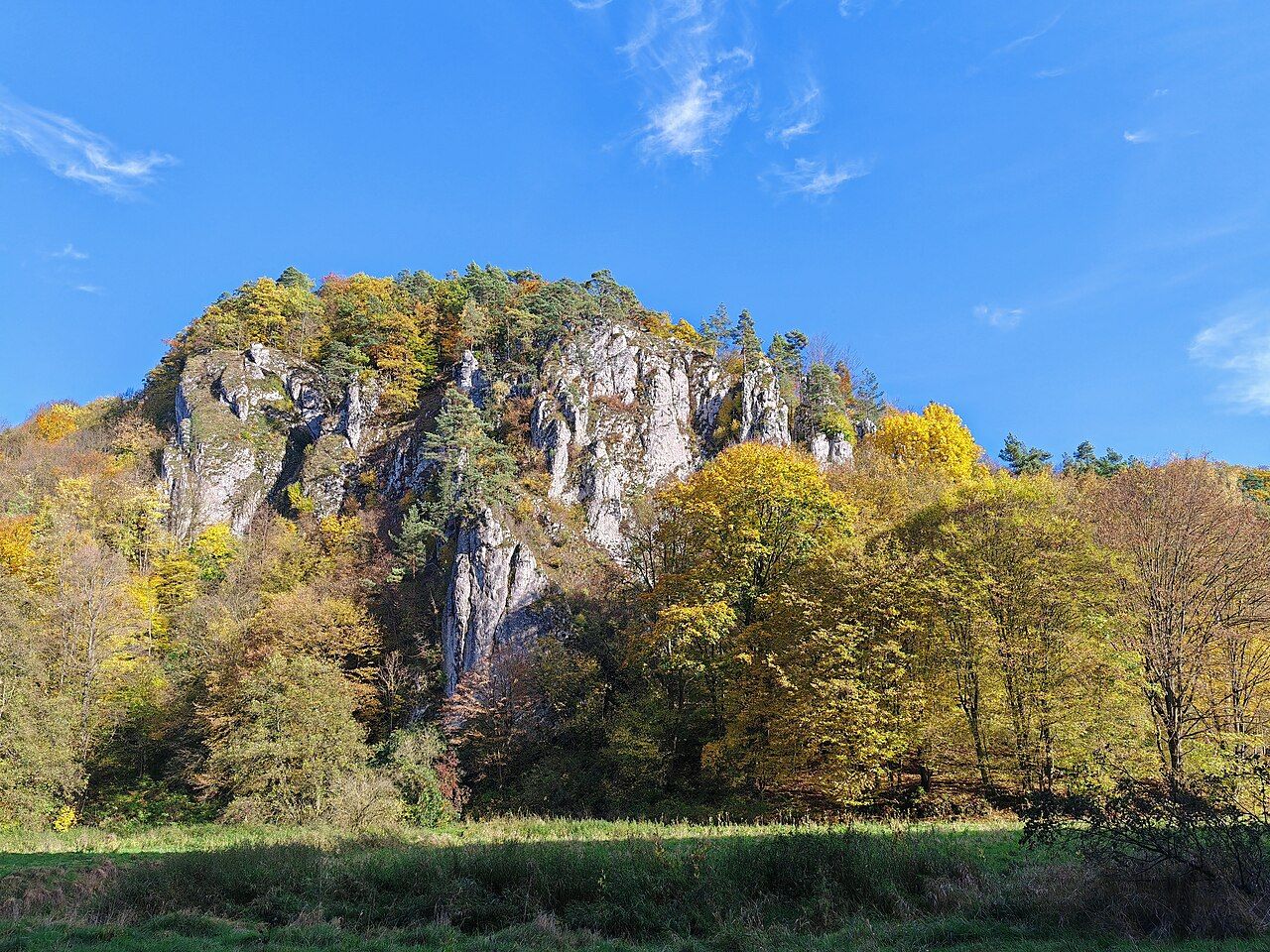
Łokietek's Cave is about 320 metres long. Its name recalls King Władysław the Elbow-high, who is said to have hidden there. I like the small distance between what the name carries and what can be stated plainly: the cave has a measurable length, and the story attached to it remains a story told with care.
What is useful to keep together?
- About 20 kilometres north of Kraków.
- About 40 minutes by bus from Rynek.
- Jurassic limestone; the park was created in 1956.
- About 21.5 square kilometres, with more than 400 known caves.
Those details are a compact frame for a place whose main impression is geological. The Prądnik valley and its side valleys are not separate from the rocks around them; they have been cut into the Jurassic limestone. Even the Kraków Gate belongs to that meeting of valley and stone. I find myself returning to the contrast: a small area, and a landscape that has no need to feel small.
Does the chapel stand beside the water?
Myth: The Chapel on the Water is simply near the stream. Fact: It was built over the Prądnik stream in 1901. The reason is part of its history: the Russian authorities had banned the building of churches on Ojców land, so the chapel stands over the water.
That is a particular kind of answer, at once architectural and historical. The chapel is not only a building set within the valley; its position tells why it was placed there. I find the detail hard to separate from the setting. The stream is part of the name people give it, and part of the explanation for where it stands.
Is a castle only a distant outline here?
Myth: The ruins above Ojców belong to a separate story from the valley. Fact: The ruins of a castle built by Casimir III the Great stand above the village of Ojców. Further along the valley, the castle at the head of the valley gives another point of reference. The valley holds these human traces alongside its caves, limestone gates and stream.
I find the place stays with me through these close juxtapositions: a cave carrying a story of hiding, a chapel built over water, a castle above a village, and limestone shaping the valley around them. Ojców is about 20 kilometres from Kraków, but its character is not a scaled-down version of the city. It has its own proportions, held together by the Prądnik and the rock.
For me, Ojców is a small park with a landscape that keeps unfolding in the mind.
More from Around Kraków and beyond
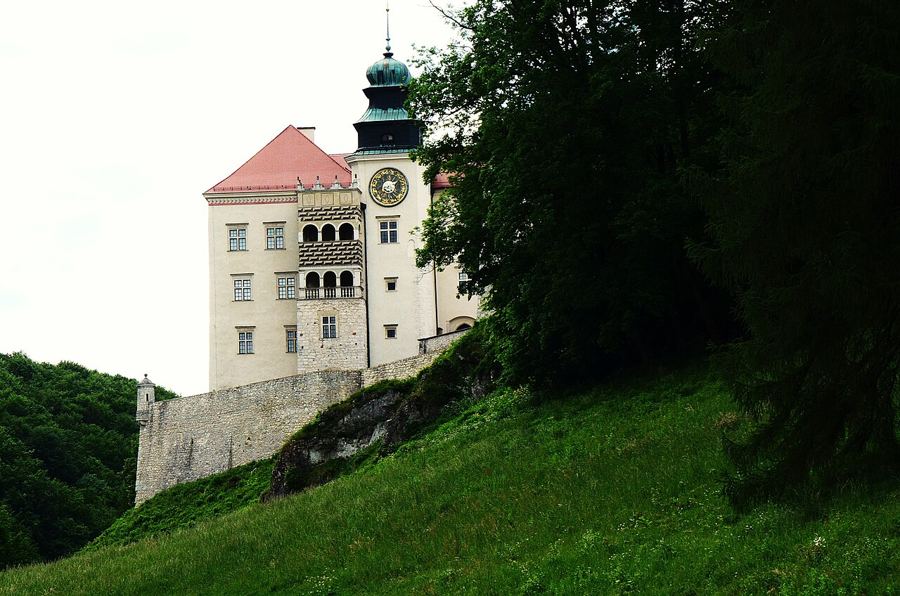 Limestone valleysHow do Pieskowa Skała and Hercules’ Club belong together?
 Salt undergroundDown into Wieliczka’s salt cathedral
 Salt undergroundBochnia: Kraków’s other salt mine
 Podhale and the TatrasZakopane and the style that grew from it
 Podhale and the TatrasThe Tatras: what the ridge, lake and summits tell us
 Podhale and the TatrasOscypek: a smoked cheese shaped by the grazing season
Photographs used: BogTar200917 — Creative Commons BY-SA 4.0; Kanonkrajoznawczy — Creative Commons BY-SA 3.0; Adrian Tync — Creative Commons BY-SA 4.0; Piotrekwas — Creative Commons BY-SA 3.0; Tadeusz Rząca — public domain the file; Аимаина хикари — CC0 1.0 Universal
