- Period
- 20th century
- Distance
- 25 min from the Rynek
A stage set made of old and new
At this Podgórze centre, an old power station and a raised block make architecture part of the story of Tadeusz Kantor’s theatre art.
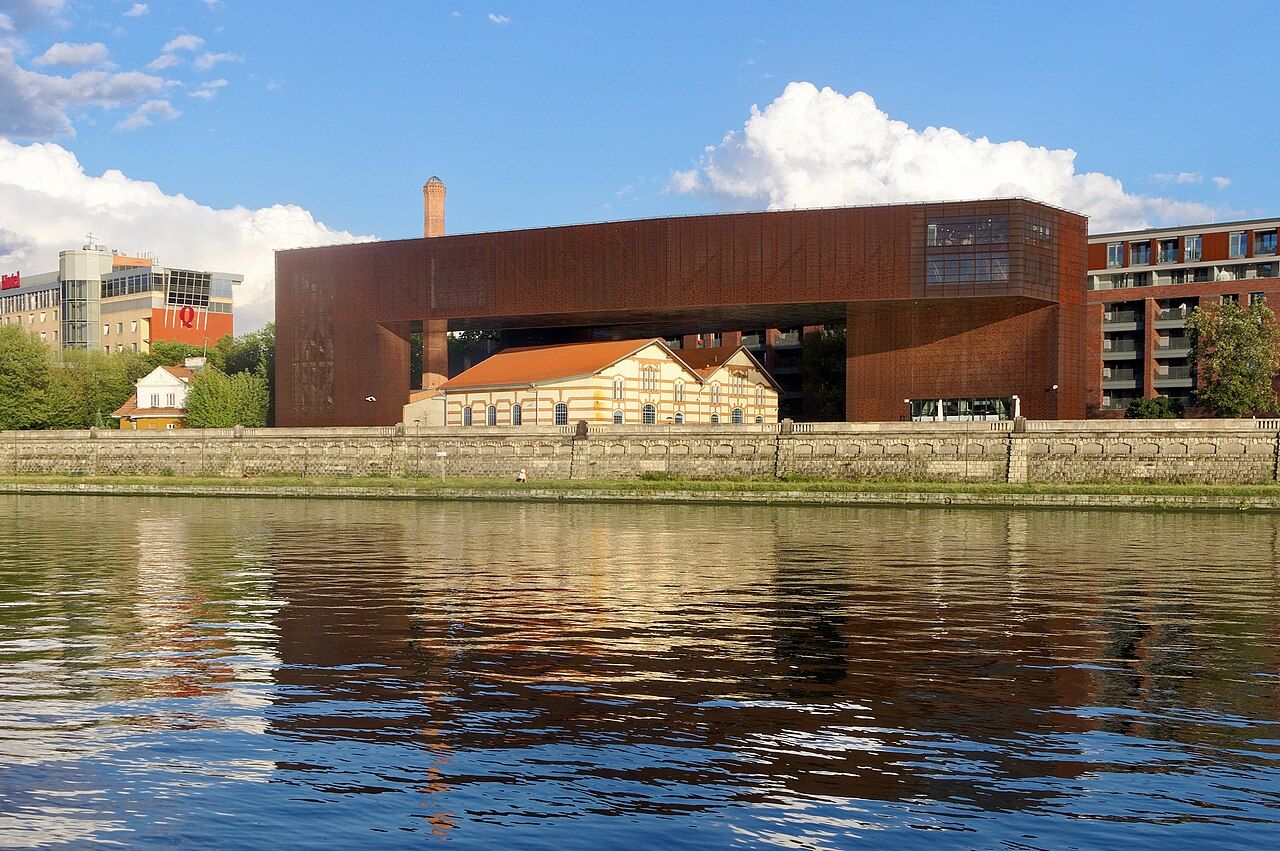
The old power station holds its place beneath a new block raised over it like a bridge. I look at the building and see two distinct gestures held together: the old structure below, the newer one lifted above. It has the deliberate arrangement of a stage set, though here the architecture itself is part of the story.
Cricoteka is the centre for documenting the art of Tadeusz Kantor, the painter, stage designer and theatre director who lived from 1915 to 1990. Its exhibitions show costumes, objects and drawings from his productions. The building’s sculptural outline feels like an apt frame for work rooted in the theatre, without being a stage in itself.
Is it simply an old power station?
Assumption: the building is an industrial relic with a new addition attached. Fact: it incorporates an old power station and a new block raised above it like a bridge. That relationship matters. The newer form does not erase the older one; it makes the space between them part of what I notice.
The centre opened in 2014 on Nadwiślańska Street in Podgórze. For orientation, the nearby [link:manggha-muzeum|Japanese art across from Wawel] makes a useful architectural counterpoint in my mind. Kantor’s former studio on Sienna Street in the Old Town is also run by the centre.
- From Rynek: 25 min
- Building opened: 2014
- Location: Nadwiślańska Street, Podgórze
Is Kantor’s work only theatre history?
Assumption: the exhibitions are chiefly a record of performances past. Fact: costumes, objects and drawings from Kantor’s productions are shown here, making the material of those productions present in the galleries. I find myself thinking about the double life of such things: made for a work on stage, then preserved as part of the story of its making.
Kantor founded the Cricot 2 theatre in Kraków in 1955. The Dead Class, first staged in 1975, toured the world. Those facts give the centre a history beyond its building, but the architecture offers its own kind of introduction: old power station, raised block, and a space that feels composed rather than merely occupied.
Is the building just a container?
Assumption: the art is the whole point and the structure is incidental. Fact: the old power station and the bridge-like new block make the building itself a striking arrangement of forms. That is what stays with me: the sense that the architecture has been composed with the same awareness of staging that runs through Kantor’s work.
I find its architecture a stage set that holds its own story.
More from Podgórze and beyond
 Museums on the right bankA city under occupation, inside Schindler’s factory
 Town, ghetto and campPodgórze, the town across the Vistula
 Town, ghetto and campWhat do the empty chairs remember?
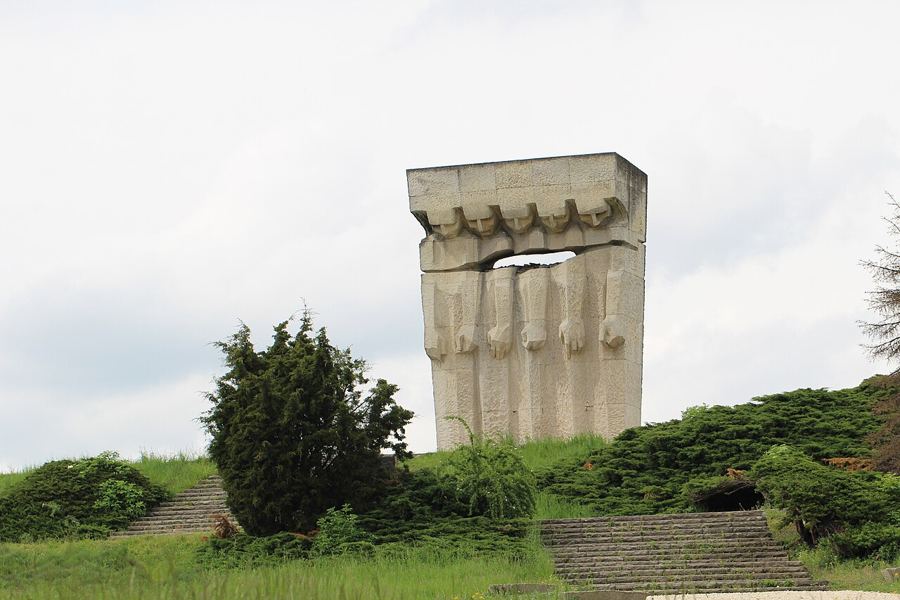 Town, ghetto and campWhat does the monument hold at Płaszów?
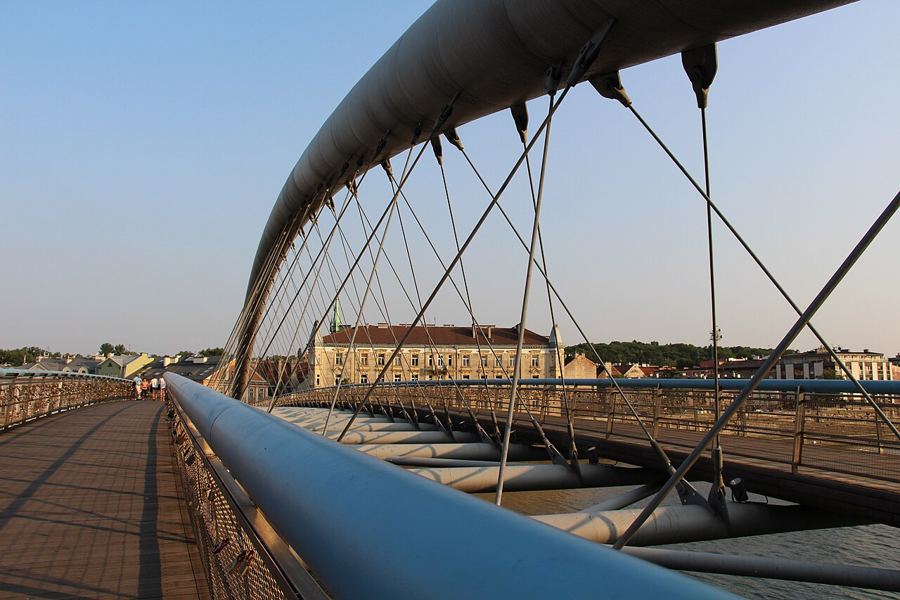 Town, ghetto and campFather Bernatek’s footbridge, joining Kazimierz and Podgórze
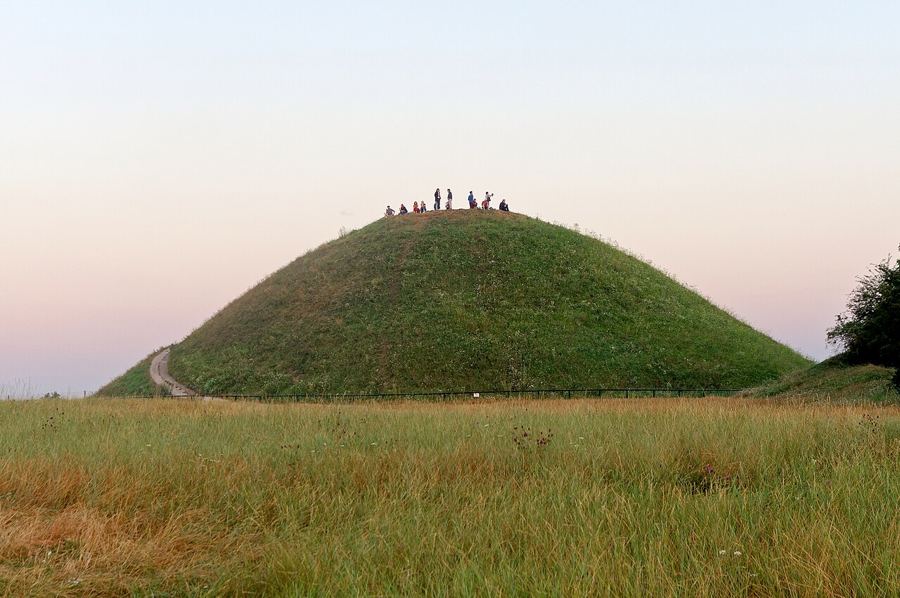 Mound and quarryThe hill that keeps its oldest question
Photographs used: Adrian Grycuk — Creative Commons BY-SA 3.0; Igor123121 — Creative Commons BY 4.0; Ingo Mehling — Creative Commons BY-SA 4.0; serwacy01 — Creative Commons BY-SA 4.0; Fred Romero from Paris, France — Creative Commons BY 2.0; Jakub Hałun — Creative Commons BY-SA 4.0