- Period
- 20th century
- Distance
- 15 min from the Rynek
Walking the Vistula boulevards
Below Wawel and beside Kazimierz, the riverside promenades show Kraków from the water’s edge: bridges, boats, birds and a long curve of river.
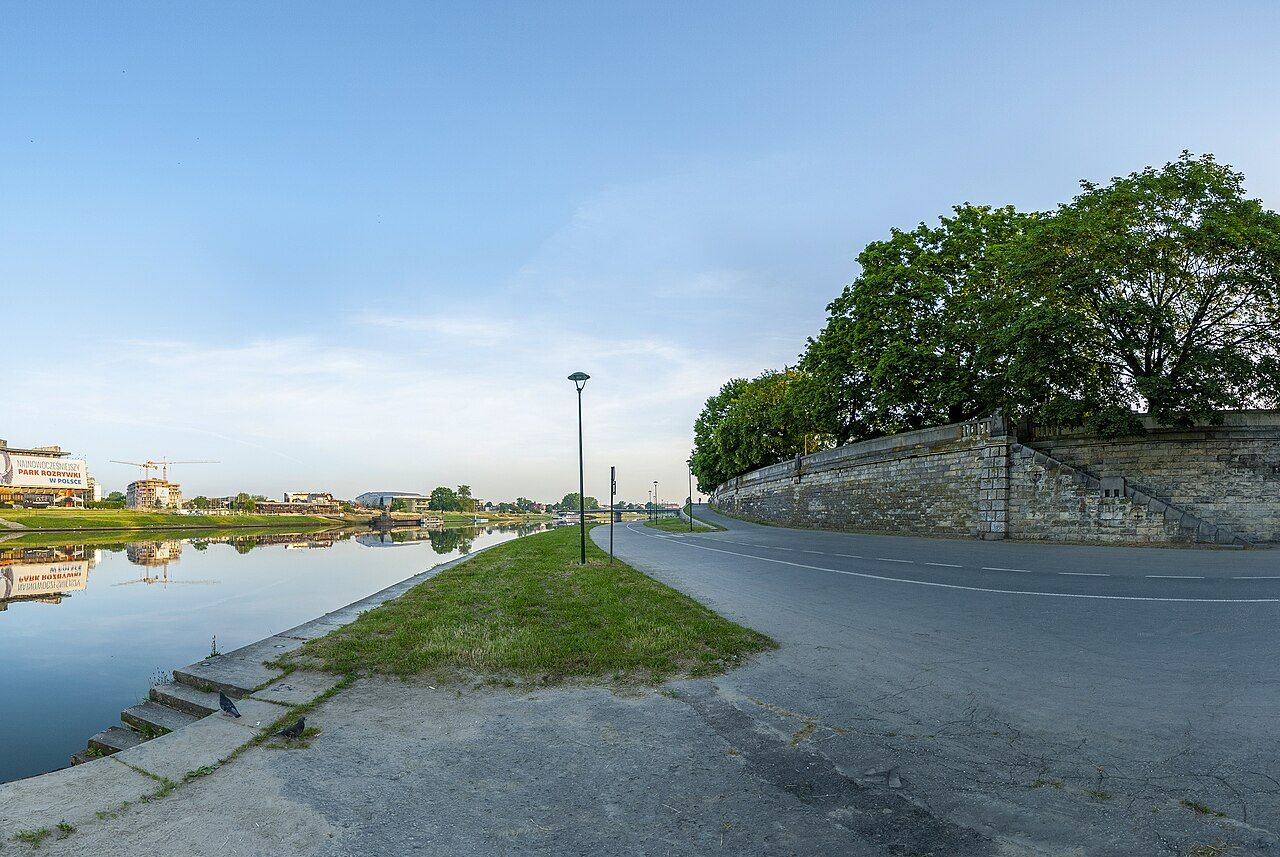
The Vistula is Poland’s longest river, about 1,050 kilometres long. In central Kraków, it curves around the foot of Wawel Hill, and the boulevards keep the water close to the city’s daily life. I find the view changes in this direction: the river is not a backdrop behind the buildings, but the line the city follows.
Is the riverbank only a view of Wawel?
Myth: The stretch below Wawel is just a place to look up at the hill. Fact: The Czerwieński Boulevard runs directly below it, with the Vistula at the edge of the walk. From here, Wawel belongs to the river scene, but so does the movement along the bank: people walking, cycling and sitting on the grass in summer.
I like the simplicity of that arrangement. The river curves; the boulevard follows. The Dębnicki and Grunwaldzki bridges cross the Vistula close to Wawel, giving the water’s edge a clear sense of connection across the river. The view is not held still for long, even when I am.
Were the boulevards made only for leisure?
Myth: These promenades began as a pleasure walk. Fact: The riverside boulevards were laid out in the early 20th century as part of flood defences. Their later uses sit alongside that practical beginning: walking, cycling and summer pauses on the grass.
What lies along the river below Kazimierz?
- The Czerwieński Boulevard runs directly below Wawel.
- The Kurlandzki, Inflancki and Wołyński boulevards continue downstream past Kazimierz.
- The Dębnicki and Grunwaldzki bridges cross close to Wawel.
- In summer, moored boats serve as stages and cafés.
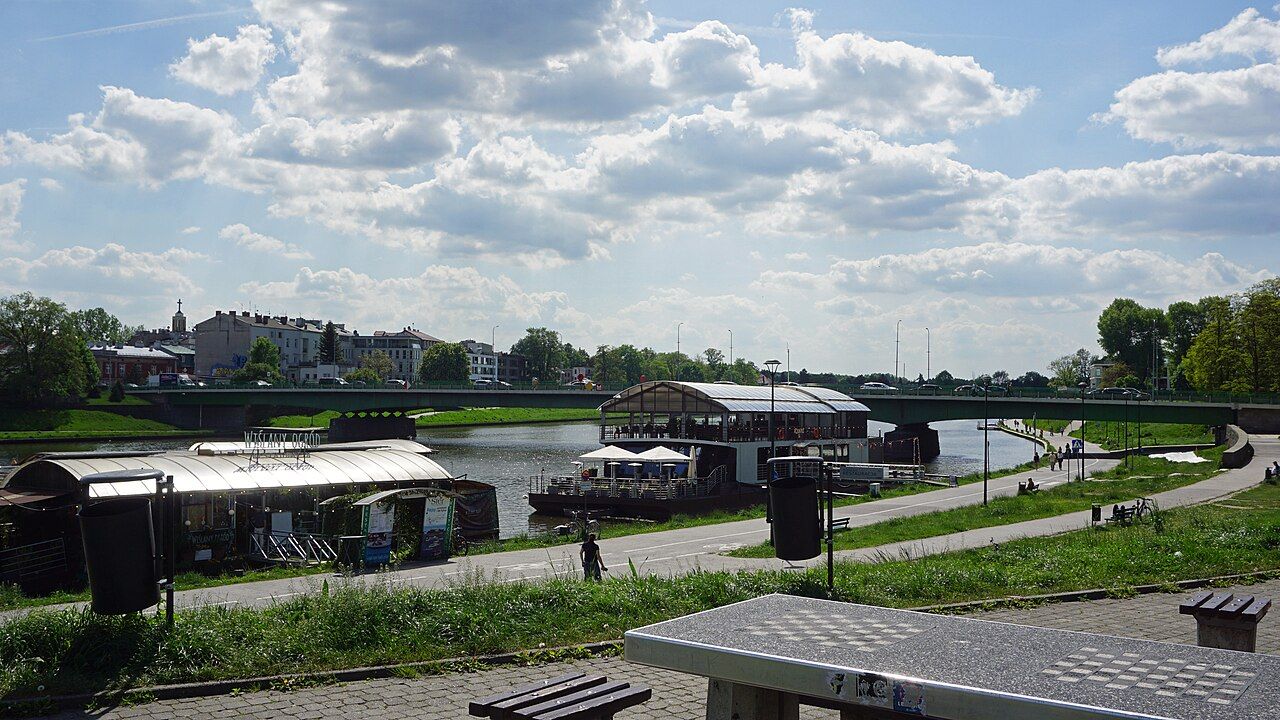
The names continue downstream, and the river seems to carry the walk with them. Along the bank, swans and ducks gather below Wawel. I notice how easily the scene holds different scales at once: birds on the water, bridges across it, and the hill just above.
Is the river quiet in summer?
Myth: The boulevards are only a place to pass through. Fact: People sit on the grass, and moored boats become stages and cafés in summer. The Wianki midsummer festival takes place on the boulevards below Wawel. The linked stories of the midsummer wreaths and a June parade on the river carry those festival associations beyond this stretch.
That summer life does not take the river away from its quieter details. The swans and ducks remain below Wawel; the bridges remain near it; the current keeps its own course. I find the combination gently familiar, as if the city has made room for both a walk and a pause.
Does the river stop at Kazimierz?
Myth: The waterside walk belongs only to the part below Wawel. Fact: The boulevards continue downstream past Kazimierz, along the river’s curve. The names change, but the Vistula stays the thread. From the water’s edge, Kraków appears less like a set of separate quarters and more like a city gathered beside one long river.
More from Zwierzyniec and the West and beyond
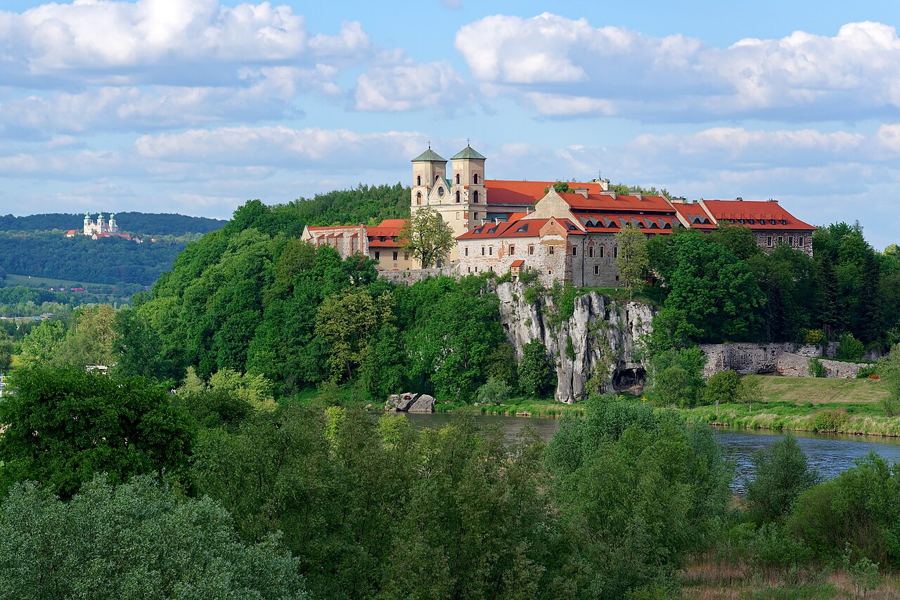 Along the VistulaTyniec Abbey, where the river leads out of Kraków
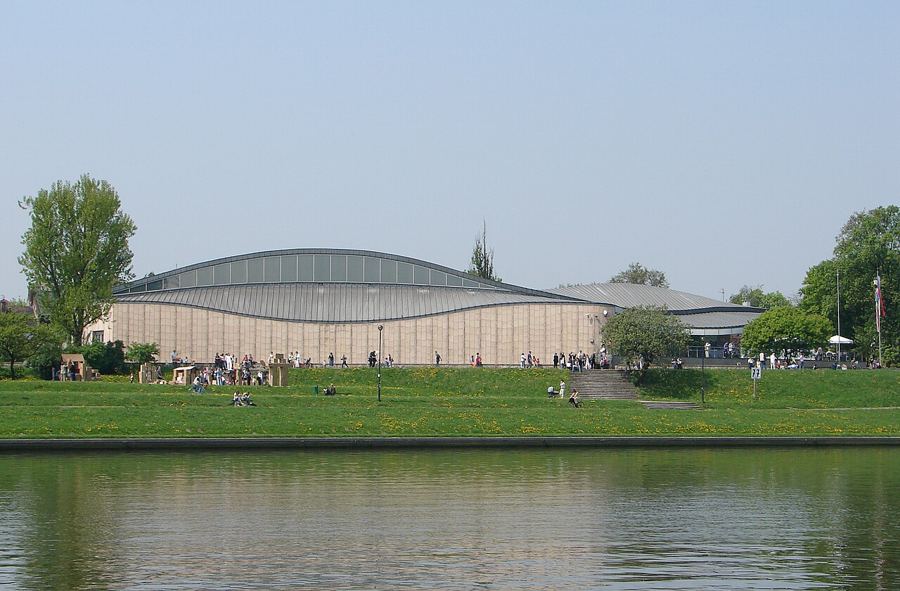 Along the VistulaJapan on the bank opposite Wawel
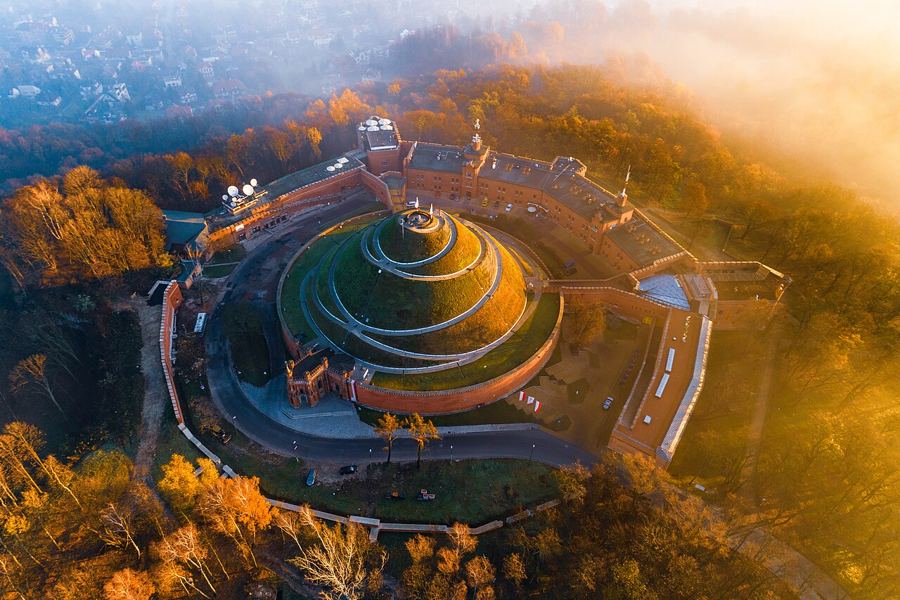 MoundsA mound built for Kościuszko
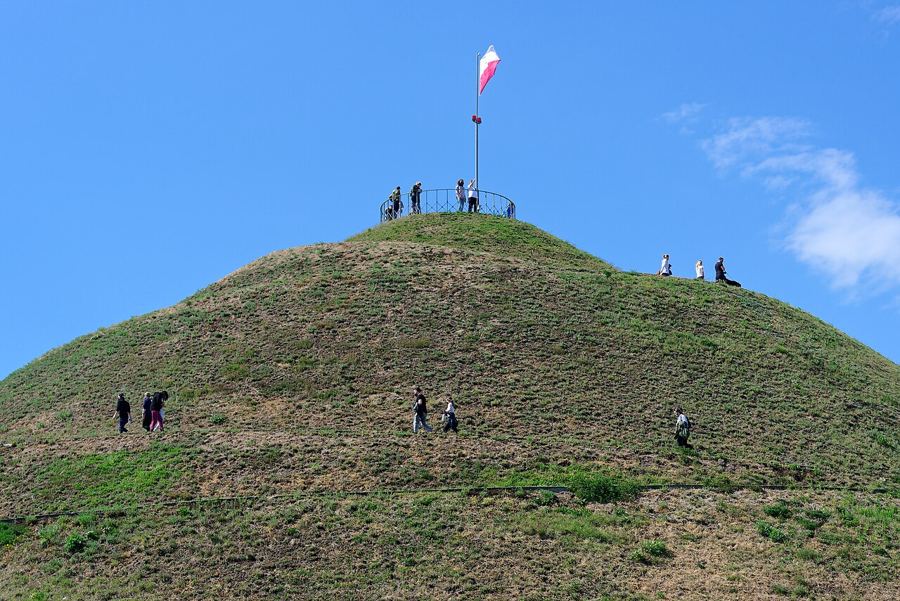 MoundsPiłsudski Mound: soil from the battlefields of independence
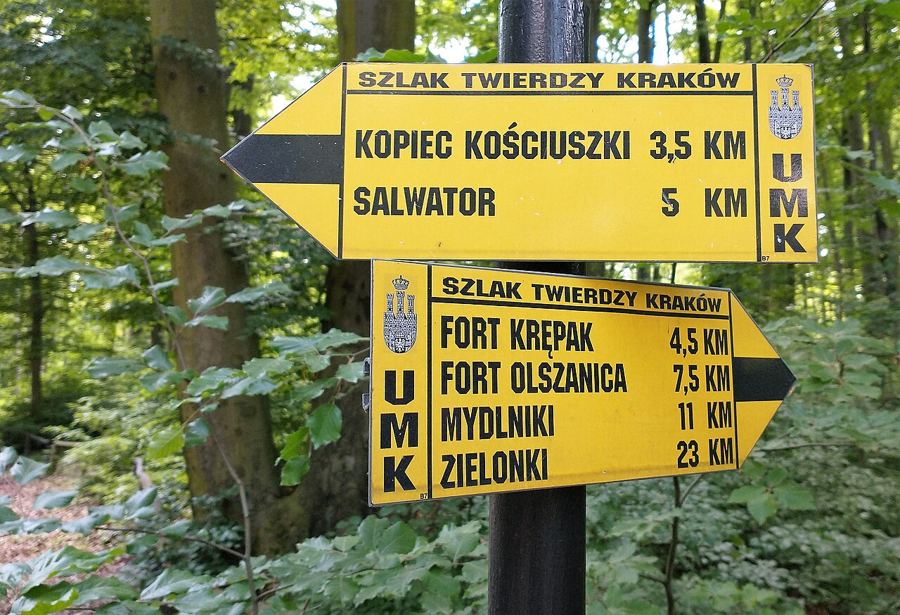 Forest and hermitageThe Wolski Forest at Kraków’s edge
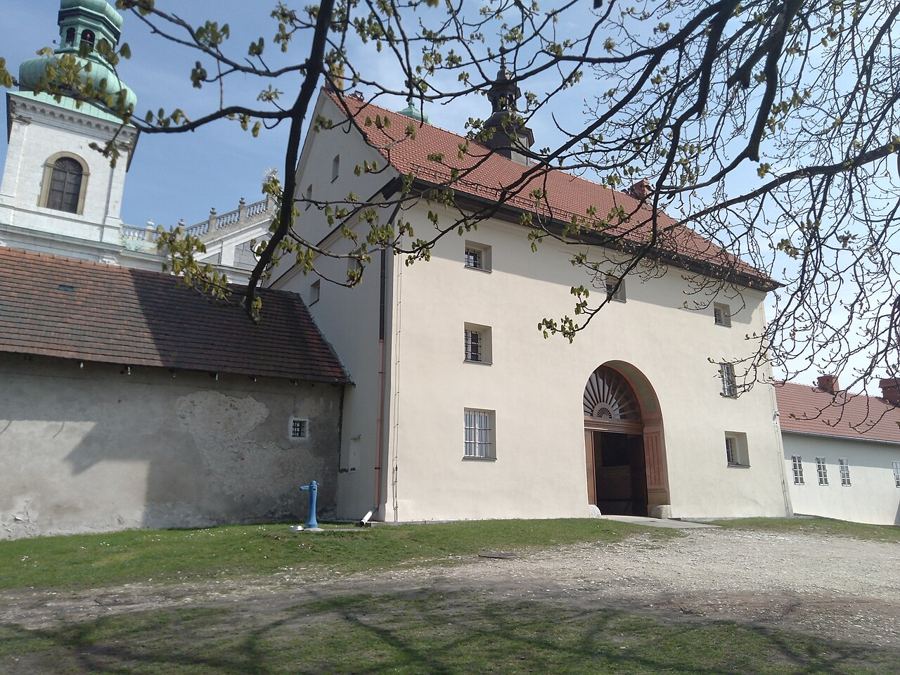 Forest and hermitageHow does Bielany hold its silence?
Photographs used: Jakub Hałun — Creative Commons BY-SA 4.0; Luke_33 — Creative Commons BY 2.5; Pawelsuder — Creative Commons BY-SA 4.0; Jakub Hałun — Creative Commons BY-SA 4.0; MOs810 — Creative Commons BY-SA 4.0; Kkuba678 — Creative Commons BY-SA 4.0