- Period
- pre-Christian custom; today
- Distance
- 15 min from the Rynek
Wianki: wreaths on the Vistula at midsummer
An old Slavic midsummer custom meets a city celebration on the Vistula below Wawel, with wreaths, open-air concerts and fireworks.
What is Wianki?
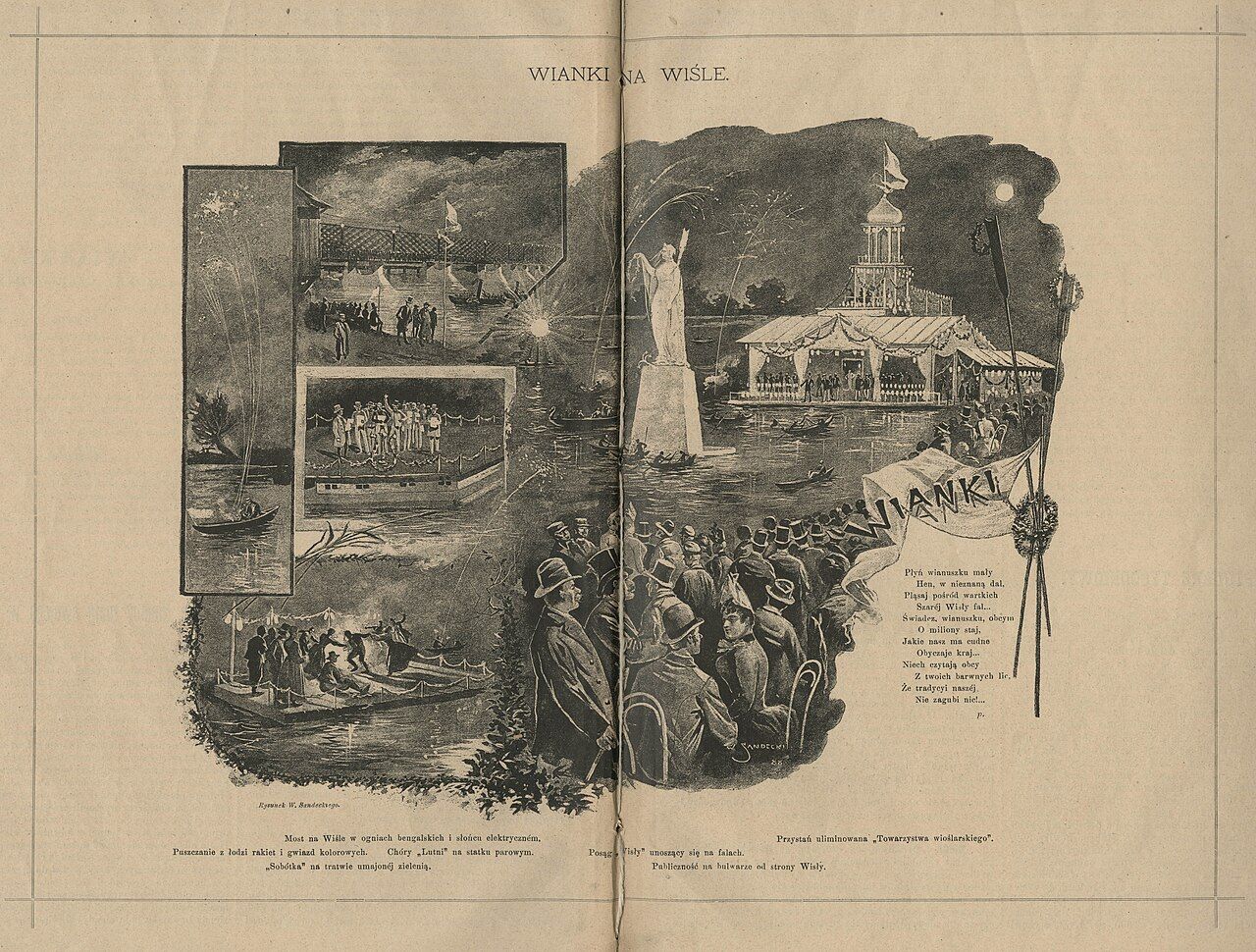
Wianki is a midsummer festival held on the Vistula boulevards below Wawel. It takes place around 23 June, the eve of St John’s Day. The name brings wreaths to mind, and the old custom beneath the celebration reaches back to pre-Christian Slavic Kupala night. I find myself returning to that meeting of an old rite and a city evening beside the river.
What did the old custom involve?
By tradition, young women floated wreaths of flowers and candles on the water. A young man who caught a wreath was said to be destined for its maker. It is a compact story, carried by a few things: flowers, candlelight, moving water, and the hope attached to a wreath as it drifts away. I picture the custom less as an explanation than as an image that has lasted.
Could I place the festival in a few facts?
- Setting: the Vistula boulevards below Wawel
- Timing: around 23 June, the eve of St John’s Day
- From Rynek: 15 min
- Era: pre-Christian custom; today
How does Kraków mark Wianki today?
Kraków’s festival includes open-air concerts on the riverbank, and fireworks over the Vistula close the evening. The setting remains close to the water: the old custom belongs to wreaths floated there, while the present celebration gathers around the riverbank. The route through the story feels clear to me, from a midsummer ritual to a public festival.
When I think about where it happens, I think of the promenades below the castle, with Wawel above and the Vistula beside them. That pairing gives the festival its particular shape; its older customs are not separate from the place where Kraków celebrates them.
What other names does the midsummer celebration have?
In Poland, midsummer celebrations are also called Noc Kupały or Sobótka. Those names keep the older custom close to the present-day festival. I like the way the names hold different parts of the evening together: the midsummer gathering, the river, and the wreaths remembered from the tradition.
What stays with me about Wianki?
There is a gentle distance between the old story of a wreath finding its maker and the modern festival of concerts and fireworks. Yet both belong to midsummer on the Vistula. I return to the small image at the heart of it: flowers and candles set afloat, moving across the water under the name of a city celebration. The river is not simply a backdrop in that image; it is where the custom takes place.
More from Zwierzyniec and the West and beyond
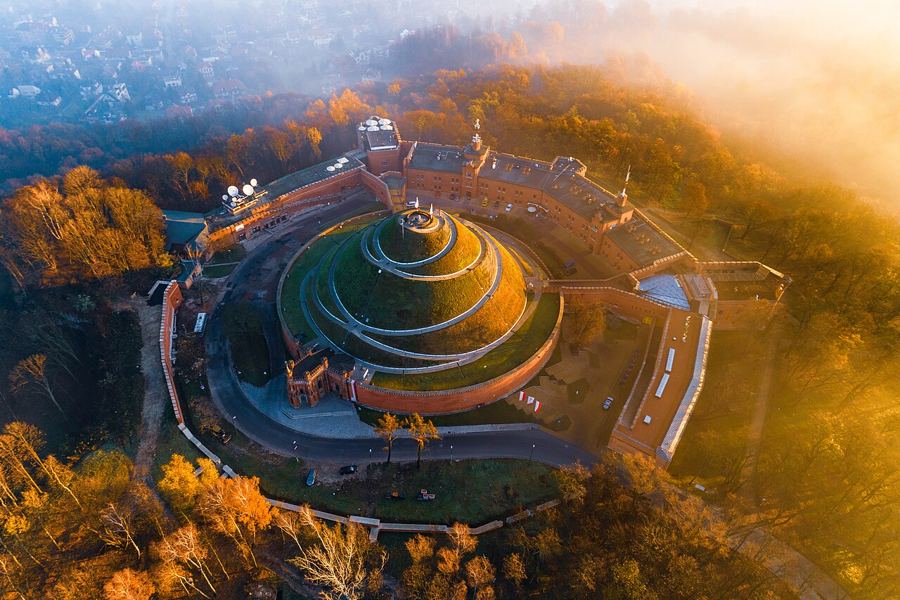 MoundsA mound built for Kościuszko
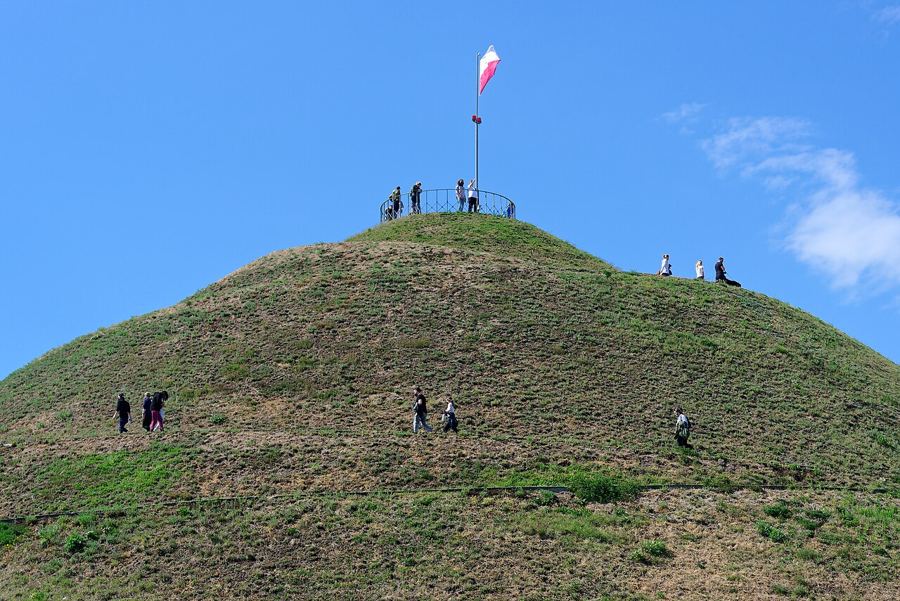 MoundsPiłsudski Mound: soil from the battlefields of independence
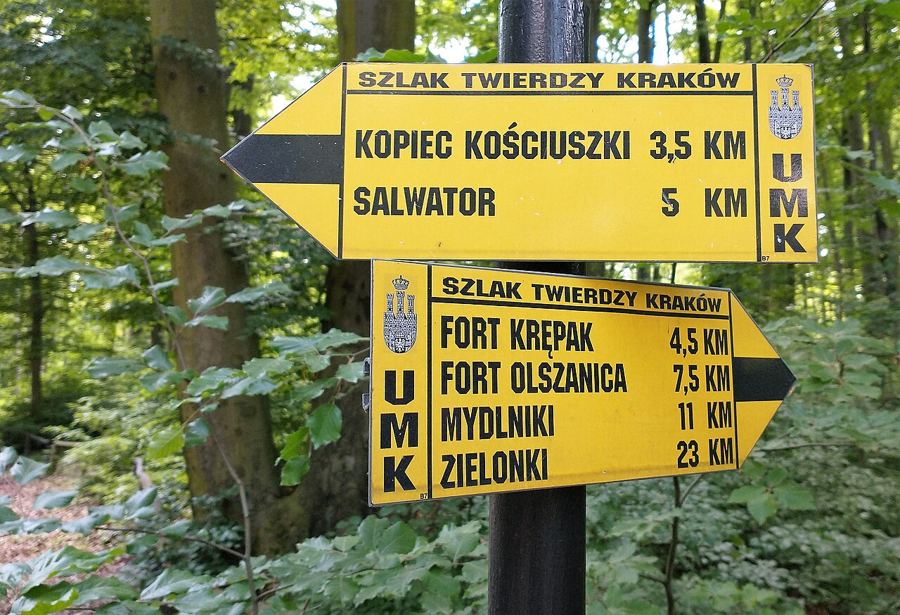 Forest and hermitageThe Wolski Forest at Kraków’s edge
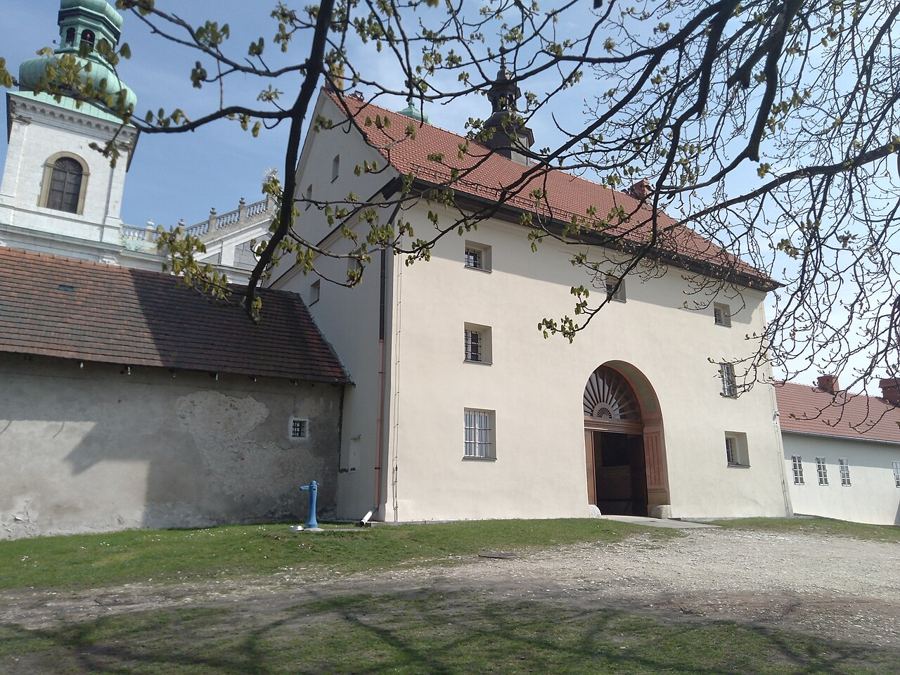 Forest and hermitageHow does Bielany hold its silence?
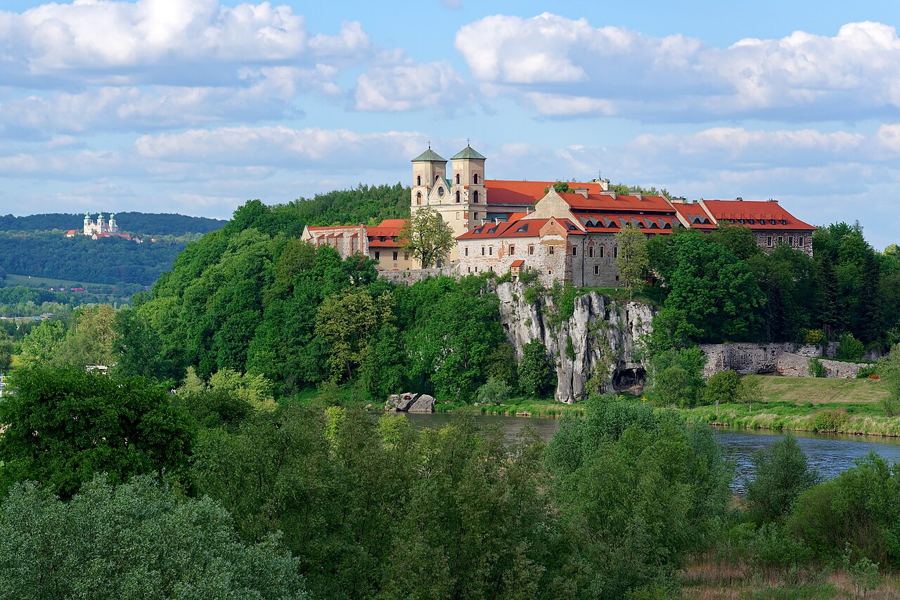 Along the VistulaTyniec Abbey, where the river leads out of Kraków
Photographs used: Pawelsuder — Creative Commons BY-SA 4.0; Jakub Hałun — Creative Commons BY-SA 4.0; MOs810 — Creative Commons BY-SA 4.0; Kkuba678 — Creative Commons BY-SA 4.0; Jakub Hałun — Creative Commons BY-SA 4.0