- Period
- 11th century
- Distance
- 1 h by bus or bike from the Rynek
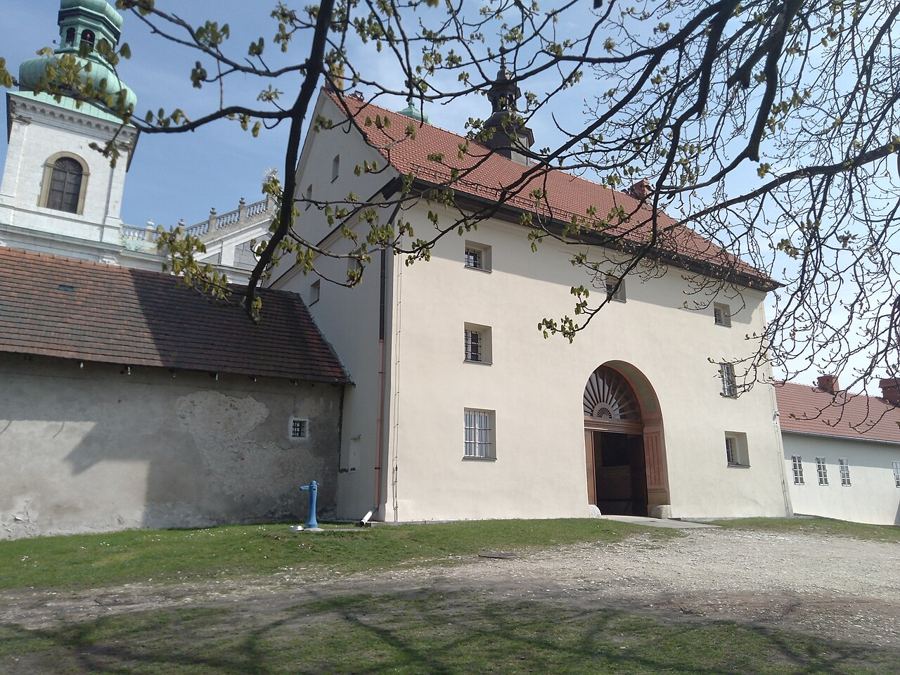
Tyniec Abbey, where the river leads out of Kraków
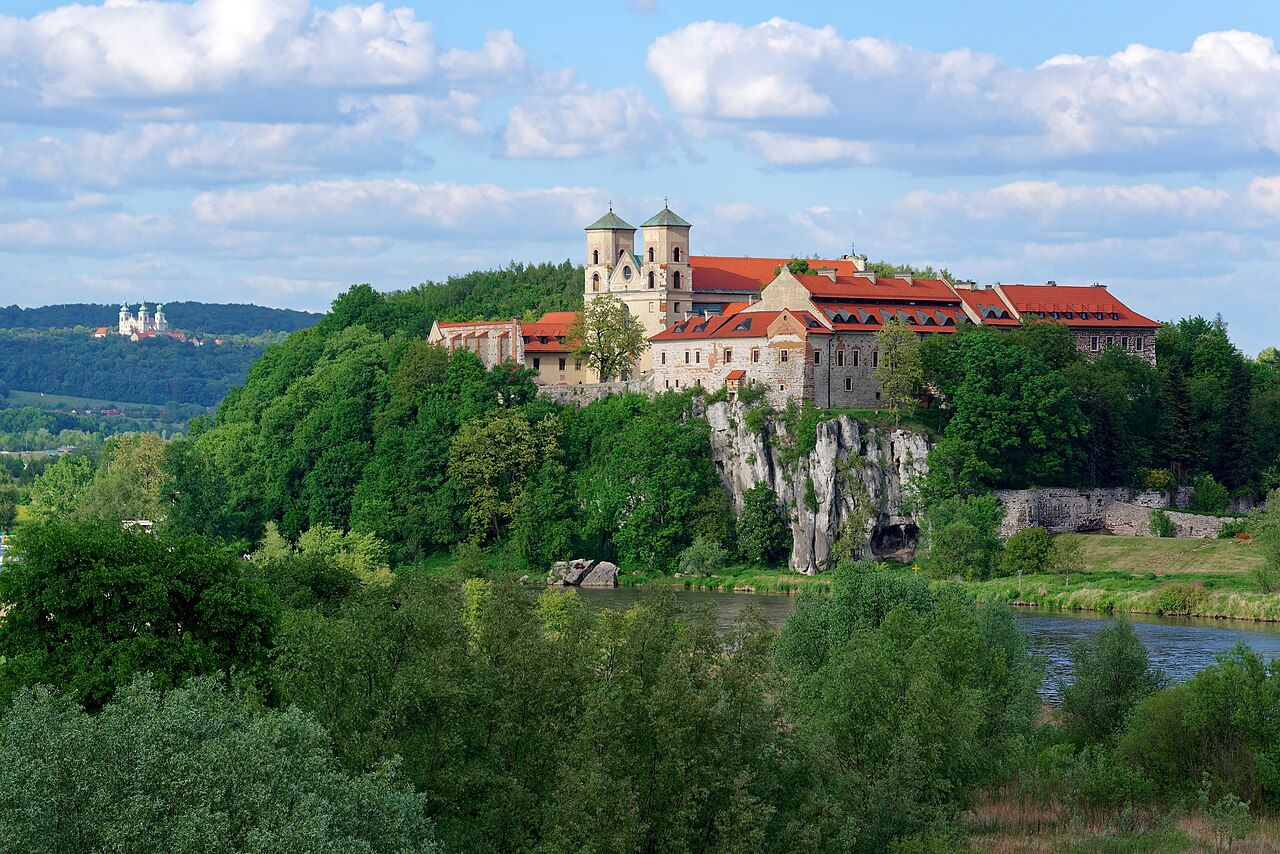
A Benedictine abbey on a limestone cliff above the Vistula, about 12 kilometres upstream of the Old Town, reached by a path that follows the river from central Kraków.
What is Tyniec Abbey?
The Benedictine Abbey in Tyniec stands on a limestone cliff above the Vistula, about 12 kilometres upstream of Kraków’s Old Town. The river gives the place its direction: looking towards Tyniec means following the water out from the city, rather than leaving it behind all at once.
I like to think of this as a river route with an abbey at its far end. The view and the journey belong together. Tyniec is one of the oldest monasteries in Poland, but its setting is not just a frame around its history. The cliff rises above the Vistula, and the valley opens in long views both up and down the river.
The distance is modest enough to keep the city in mind, yet the abbey belongs to a different scale of looking. From Kraków, the route draws a line upstream; at Tyniec, that line becomes the broad river valley. The river makes the distance feel like a line of thought rather than a gap.
Why is the abbey set above the river?
The facts leave the limestone cliff and the Vistula together, without needing much explanation from me. The abbey stands above the water, and the long views extend along the valley in both directions. I find that simple arrangement enough: stone, height, river, distance.
It changes how I picture the way out of Kraków. A road can be thought of as a route between points; here, the river keeps its own course beside the journey. The abbey gives that course a landmark, one that is visible in the mind well before the history is untangled.
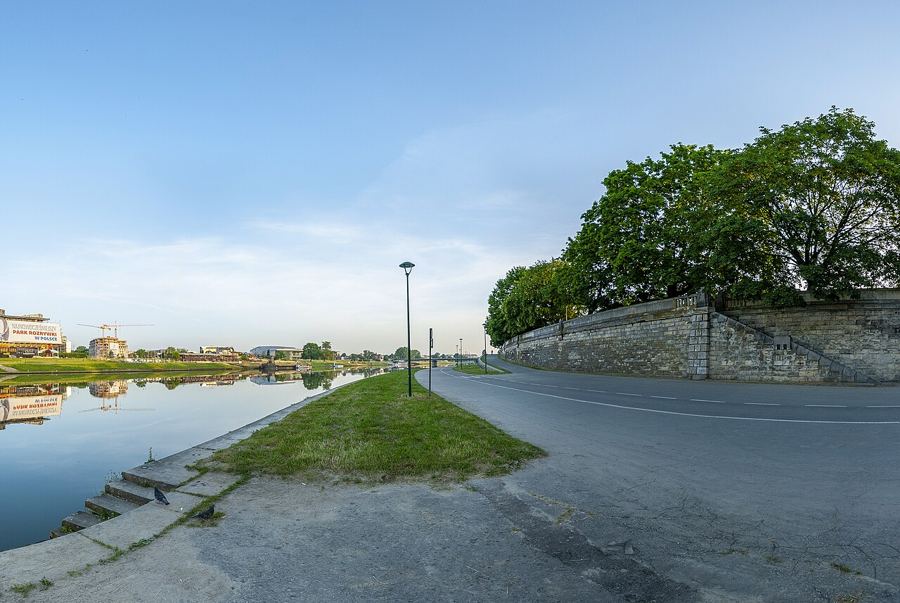
From the city, the route follows the Vistula rather than turning away from it. The the riverside boulevards mark one point in that riverward idea, while Tyniec gives it a destination beyond the Old Town. I am drawn to the gradualness of it: the water remains the connecting line, and the abbey appears as a place to arrive at, not merely a name on a map.
How old is Tyniec Abbey?
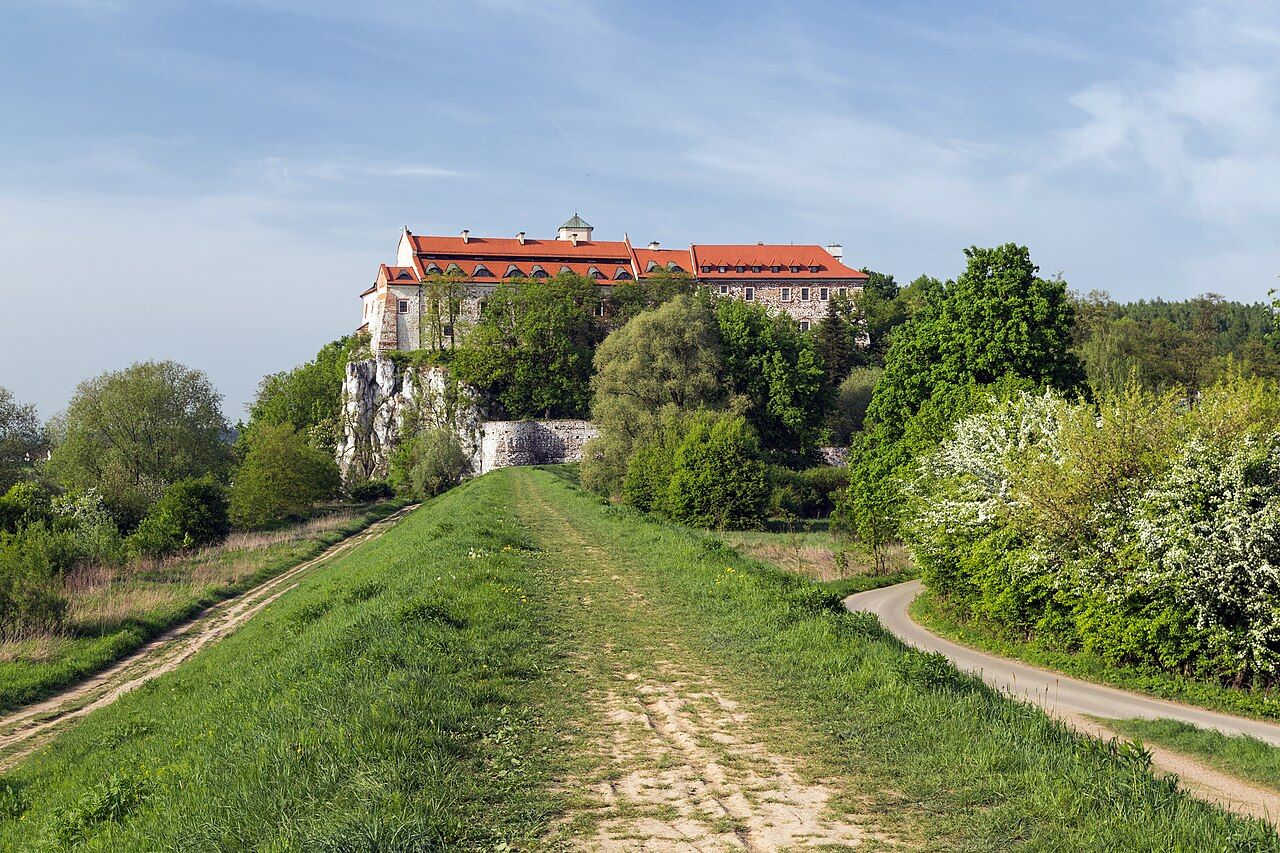
Tyniec Abbey is thought to have been founded around 1044 by Casimir I the Restorer. Remains of the abbey’s first Romanesque church have been found by archaeologists. Those traces make the long span of the place feel less abstract: an early church is present in what has been found, while the abbey’s story continues through later changes.
The present abbey church is largely Baroque in its furnishings. I notice the contrast in the facts themselves: Romanesque remains, and a church whose furnishings belong largely to a later style. There is no need to make the past look unbroken. The history is more affecting when its changes are allowed to show.
The Austrian authorities closed the abbey in 1816. Benedictine monks returned to Tyniec in 1939. Tyniec became part of the city of Kraków in 1973, and the abbey’s walls and towers were partly rebuilt in the second half of the 20th century. These are not small changes in the life of a place. Read in order, they give the cliff a history of closure, return and repair.
What is the river route like?
A paved cycle and walking path follows the Vistula from central Kraków to Tyniec. That is the clearest practical detail, and it keeps the journey close to the subject of the story: the river. In summer, pleasure boats sail on the Vistula between the Wawel boulevards and Tyniec. The path and the boats offer two ways of following the same stretch of water.
- A paved cycle and walking path follows the Vistula from central Kraków to Tyniec.
- In summer, pleasure boats sail between the Wawel boulevards and Tyniec.
- The abbey stands about 12 kilometres upstream of the Old Town.
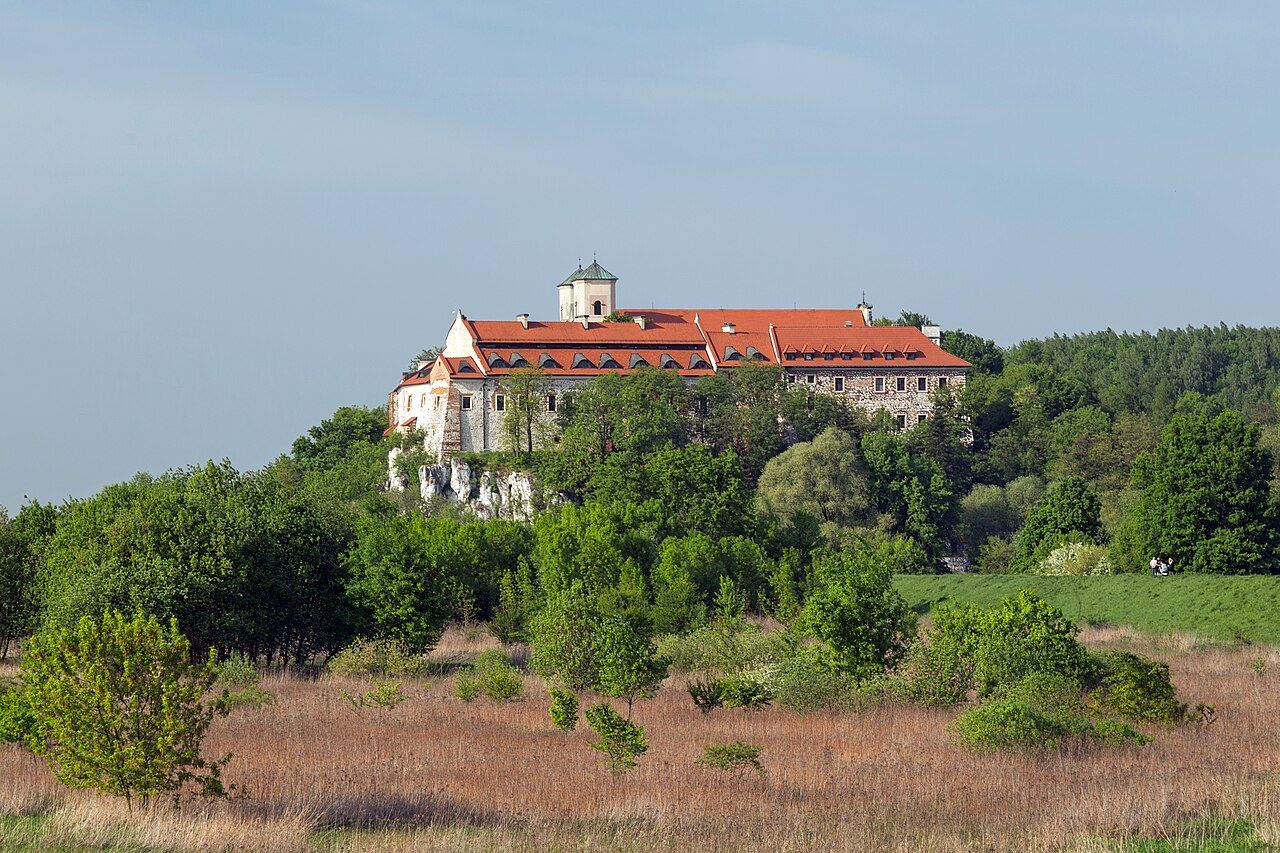
I keep returning to the idea of leaving the centre by the river. The route does not need a grand beginning: it starts with the city beside the water and carries on upstream. At the other end, the cliff gives the journey a clear point of arrival. The distance is part of the pleasure of imagining it, with the city still close enough to belong to the same story.
The river makes the distance feel like a line of thought rather than a gap.
What remains in view at Tyniec?
The abbey’s walls and towers were partly rebuilt in the second half of the 20th century. I find the word “partly” important. It leaves room for the changing shape of the place, rather than suggesting that every stone stands untouched by history. The abbey is old, but its visible form carries more than one period.
The cliff remains the simplest way to hold the scene together: the abbey above, the Vistula below, the valley stretching up and down. From this point, the river is not a line that separates Kraków from somewhere else. It is the way the two places stay connected in my mind.
The river route also makes me think of the hermitage on Silver Hill, as another name in the wider landscape around Kraków. Tyniec remains its own place: a Benedictine abbey above the Vistula, with a path following the water from the city.
Why does Tyniec stay with me?
Perhaps because the history does not arrive separately from the setting. The abbey’s founding is placed around 1044; the Romanesque church survives in the archaeological remains; the present church is largely Baroque in its furnishings. Closure, return and rebuilding belong to the same account. Above them all, the river continues to give the place its orientation.
I think of Tyniec as a threshold in the landscape, though not an abrupt one. The path follows the Vistula from central Kraków, and the abbey stands upstream, on its limestone cliff. The city remains in the journey; the valley takes over the view. That is enough to make the route feel complete in my mind: a way out that still follows something familiar.
More from Zwierzyniec and the West and beyond
 Along the VistulaWalking the Vistula boulevards
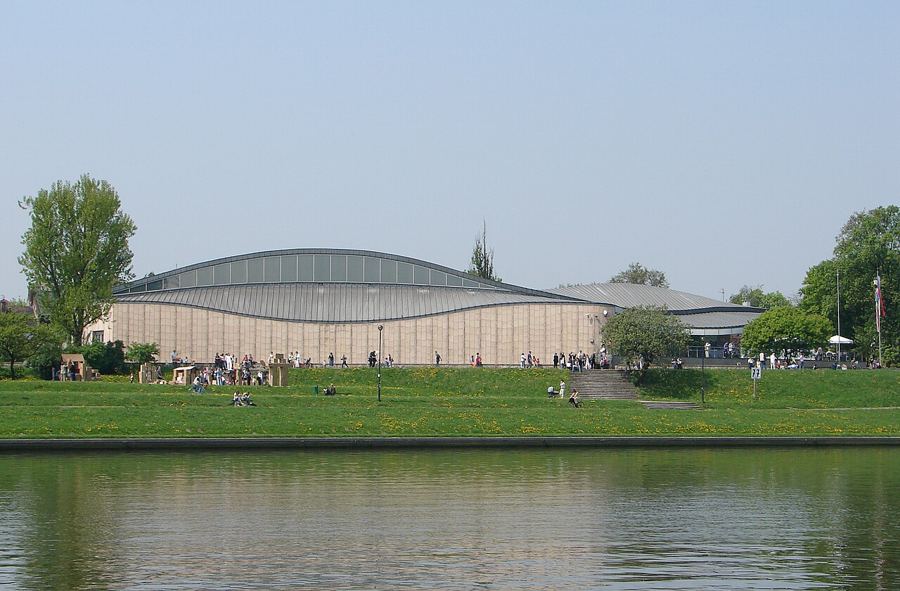 Along the VistulaJapan on the bank opposite Wawel
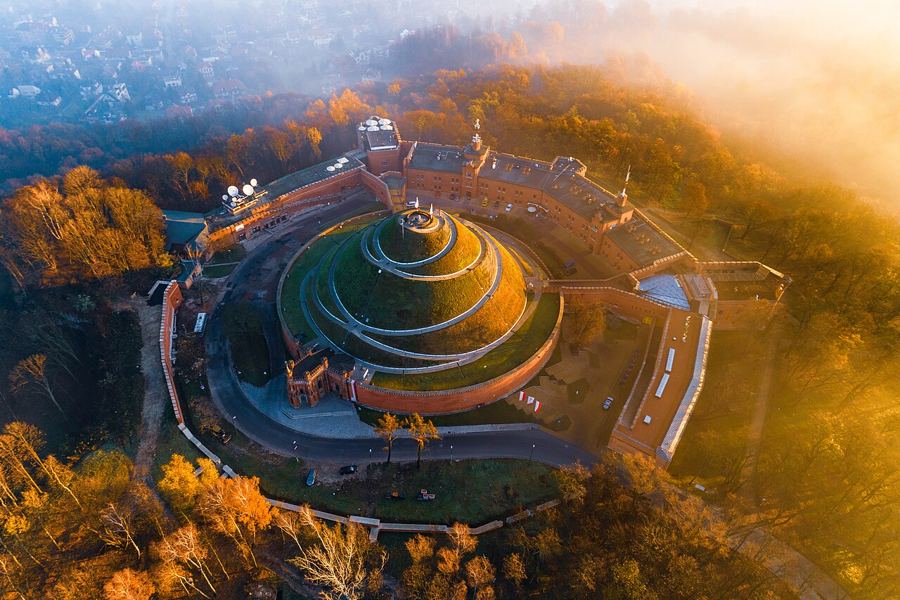 MoundsA mound built for Kościuszko
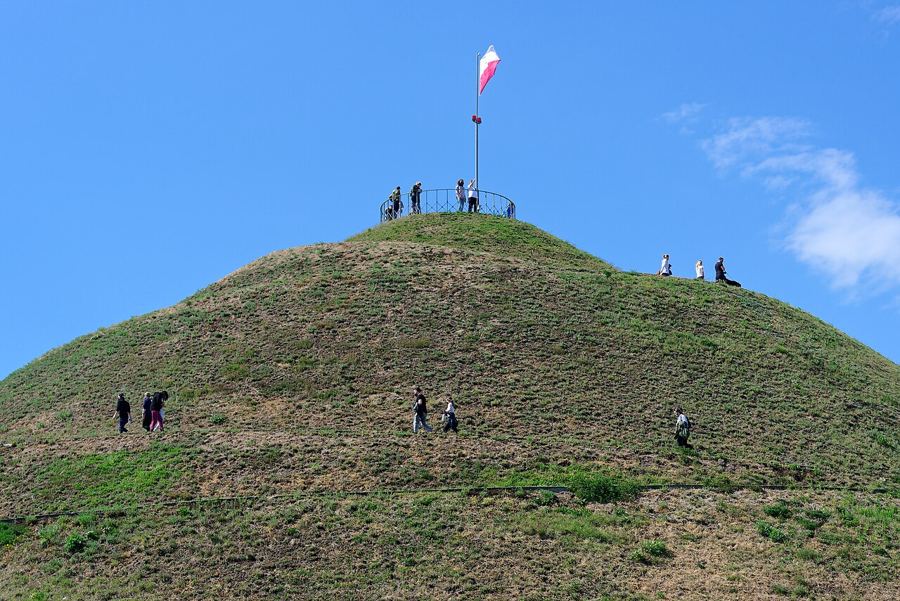 MoundsPiłsudski Mound: soil from the battlefields of independence
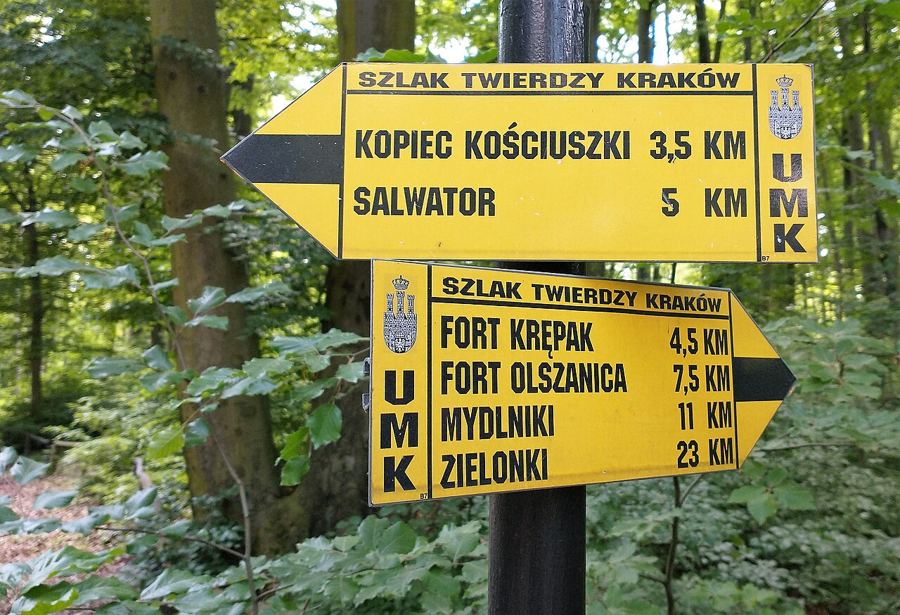 Forest and hermitageThe Wolski Forest at Kraków’s edge
 Forest and hermitageHow does Bielany hold its silence?
Photographs used: Panoramer360 — Creative Commons BY-SA 4.0; Luke_33 — Creative Commons BY 2.5; Pawelsuder — Creative Commons BY-SA 4.0; Jakub Hałun — Creative Commons BY-SA 4.0; MOs810 — Creative Commons BY-SA 4.0; Kkuba678 — Creative Commons BY-SA 4.0