- Period
- custom since at least the 18th century
- Distance
- 45 min from the Rynek
How does the Lajkonik ride from Zwierzyniec?
A district custom sets out from the Norbertine convent, dances through Kraków and reaches the Rynek Główny with music, legend and a touch of luck.
The Lajkonik is a figure in Tatar costume riding a hobby horse. The procession begins in Zwierzyniec and makes its way to the Rynek Główny, carrying the name and character of one district through the wider city.
How do I follow the custom in order?
Begin with the day: the procession takes place on the Thursday after the feast of Corpus Christi. It sets out from the courtyard of the Norbertine Sisters' convent in Zwierzyniec. The convent was founded in the 12th century on the bank of the Vistula. That beginning gives the route a particular point of belonging; it does not start as an abstract city celebration, but in a named district.
Keep the rider in view as the procession moves through the streets towards the Rynek Główny. The Lajkonik dances along the way, accompanied by a band, and the journey takes several hours. I like the thought of a custom whose central figure does not simply appear in the square. It travels there, with the district of its departure still attached to it.
Notice the mace, too. The Lajkonik strikes passers-by with it, and the touch is said to bring luck. A small gesture carries a lot of the custom's character: playful, public and close enough to the people along the route to be remembered. I find this detail makes the procession feel less like a picture held at a distance and more like a story passing among people.
Hold the legend alongside what can be seen. It links the custom to raftsmen of Zwierzyniec who defeated a Tatar raid in the 13th century. The rider's Tatar costume and the tale of the raftsmen sit together in the procession's identity. The legend gives the figure a past, though the travelling, dancing Lajkonik is what brings that past into the streets.
Follow the route to the Rynek Główny. There the city's mayor greets the Lajkonik and offers a cup of wine. The arrival is part of the sequence, not a separate spectacle: the procession that began at the convent reaches the city's central square, and the greeting marks its end.
Which details help me keep the route straight?
- Day: the Thursday after the feast of Corpus Christi.
- Start: the courtyard of the Norbertine Sisters' convent in Zwierzyniec.
- Along the way: dancing through the streets, accompanied by a band, over several hours.
- End: the Rynek Główny, where the city's mayor greets the Lajkonik and offers wine.
Why does this custom feel rooted in Zwierzyniec?
This is where the procession gets under my skin: its path keeps the district in the story. The Lajkonik is one of the symbols of Kraków, yet the custom does not lose its particular origin as it moves towards the Rynek. It sets out from the courtyard of the Norbertine Sisters' convent in Zwierzyniec, a convent founded on the bank of the Vistula, and the legend itself names the raftsmen of Zwierzyniec. The city's wider symbol and the district's own memory travel together. I find that combination unusually affecting (perhaps because it lets a place remain specific even as its story is shared).
The procession also gives time a shape. A legend reaches back to the 13th century; the Lajkonik dances through the streets in the present, accompanied by a band; and the arrival in the Rynek Główny brings the route to a clear close. The years are not all the same kind of history, but they meet in one figure and one journey. I think of my bad knee on descents, and of how this custom moves through the city by dancing instead. The route keeps Zwierzyniec inside the story all the way to the Rynek.
The name also brings to mind the glittering Christmas cribs; I keep these Kraków words together in my mind, each with its own way of holding a story. And the Lajkonik's journey is one I like to think of from its starting point outward: not just as a symbol arriving in the square, but as a custom whose home district remains visible along the way.
The route keeps Zwierzyniec inside the story all the way to the Rynek.
What remains after the procession?
The present Lajkonik costume was designed by Stanisław Wyspiański in 1904. It is decorated with coral and pearls. Between processions, the city history museum keeps the costume. I find something moving in that pause: the costume belongs to a lively journey through the streets, and then rests between those journeys, still holding its recognisable form.
The procession begins in Zwierzyniec, crosses the city in dance and reaches the Rynek Główny. Its legend, its band, its mace and its carefully decorated costume all belong to that movement. I find the Lajkonik most compelling as a district custom carried into the city, without leaving its beginning behind.
More from Zwierzyniec and the West and beyond
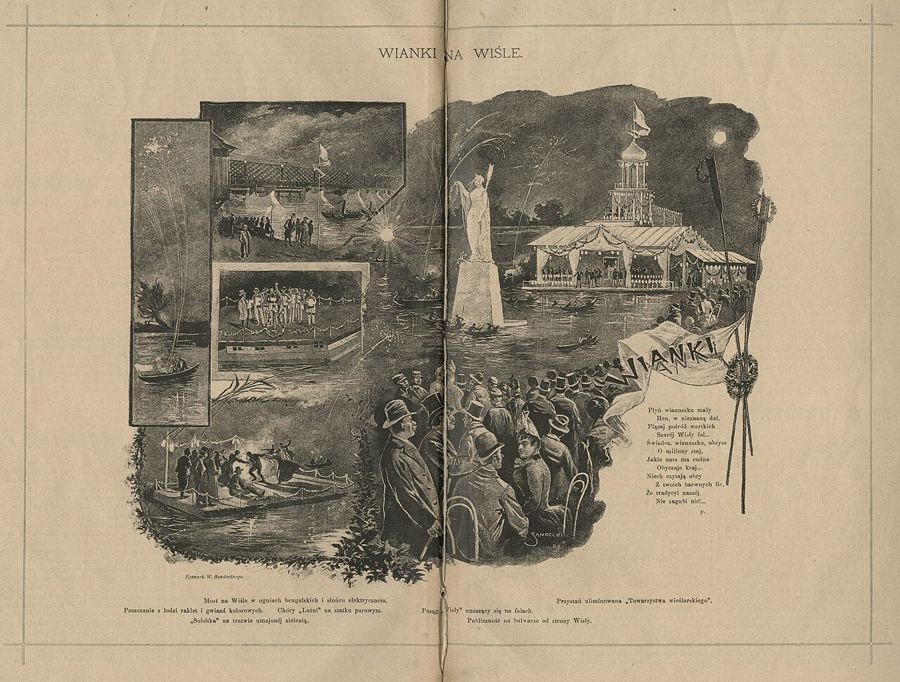 Feast daysWianki: wreaths on the Vistula at midsummer
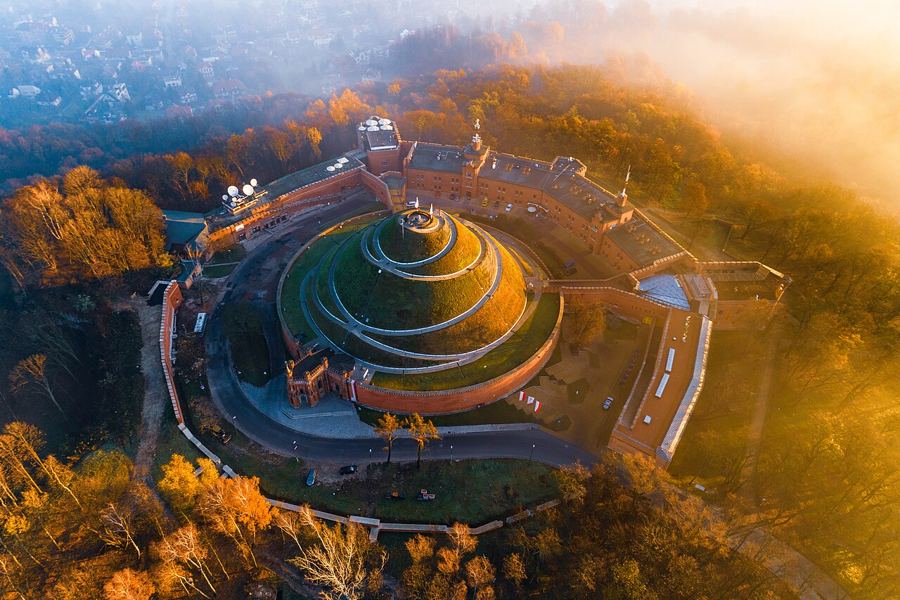 MoundsA mound built for Kościuszko
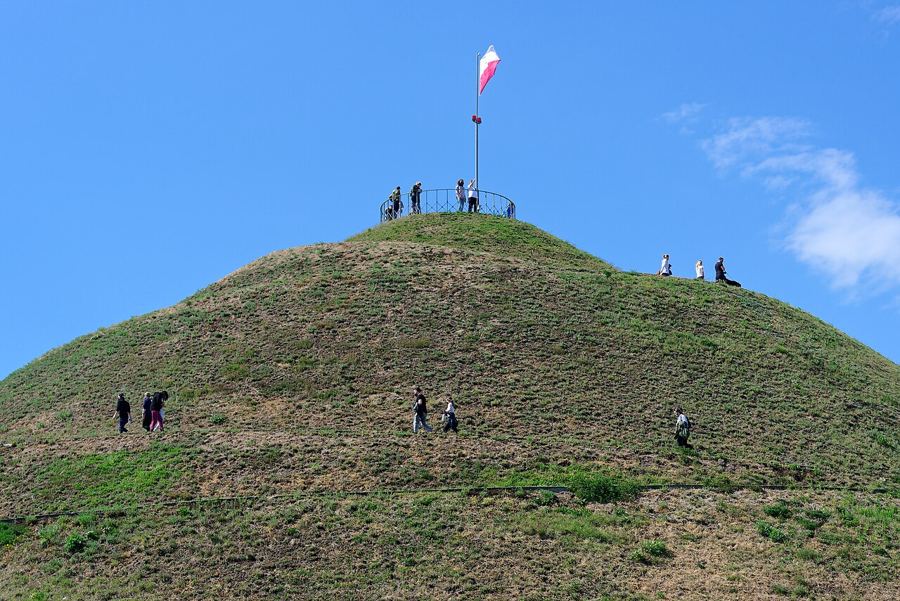 MoundsPiłsudski Mound: soil from the battlefields of independence
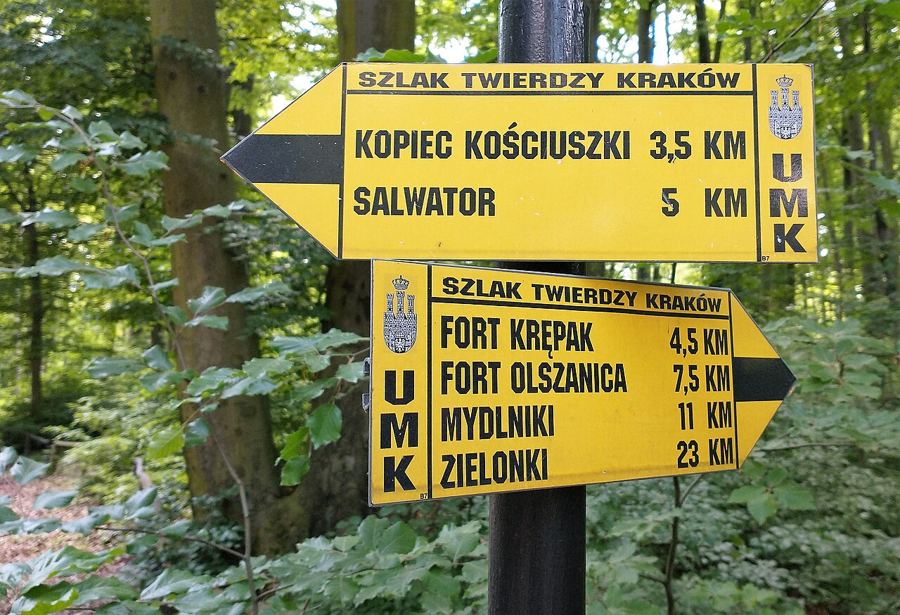 Forest and hermitageThe Wolski Forest at Kraków’s edge
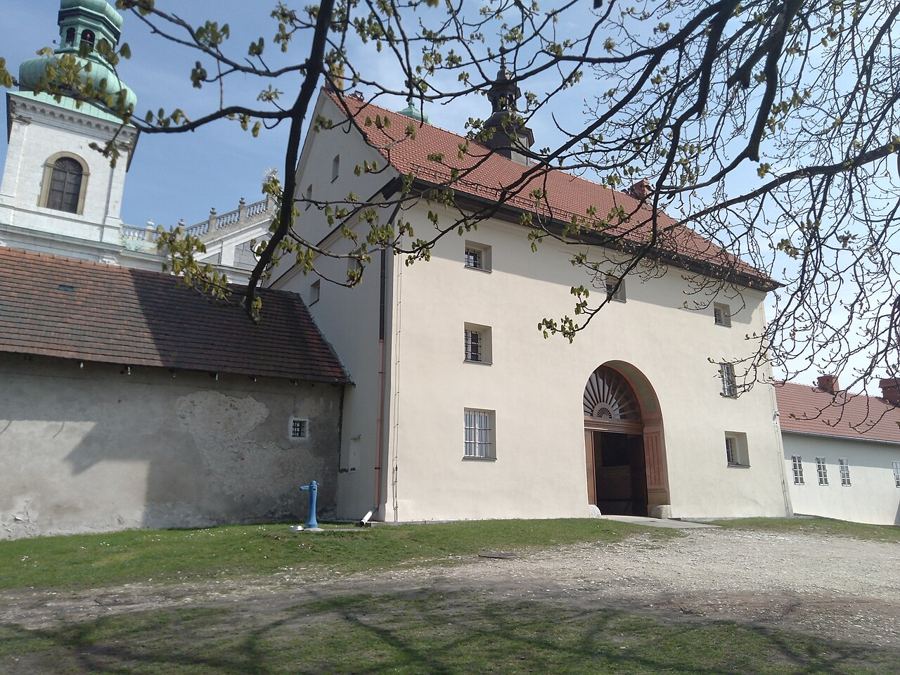 Forest and hermitageHow does Bielany hold its silence?
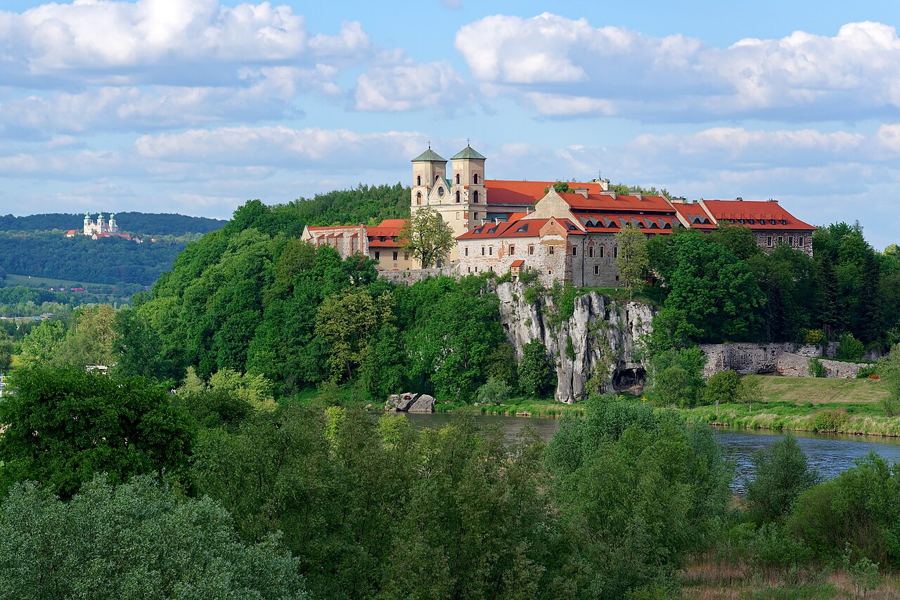 Along the VistulaTyniec Abbey, where the river leads out of Kraków
Photographs used: photographer unknown — public domain the file; Pawelsuder — Creative Commons BY-SA 4.0; Jakub Hałun — Creative Commons BY-SA 4.0; MOs810 — Creative Commons BY-SA 4.0; Kkuba678 — Creative Commons BY-SA 4.0; Jakub Hałun — Creative Commons BY-SA 4.0
